

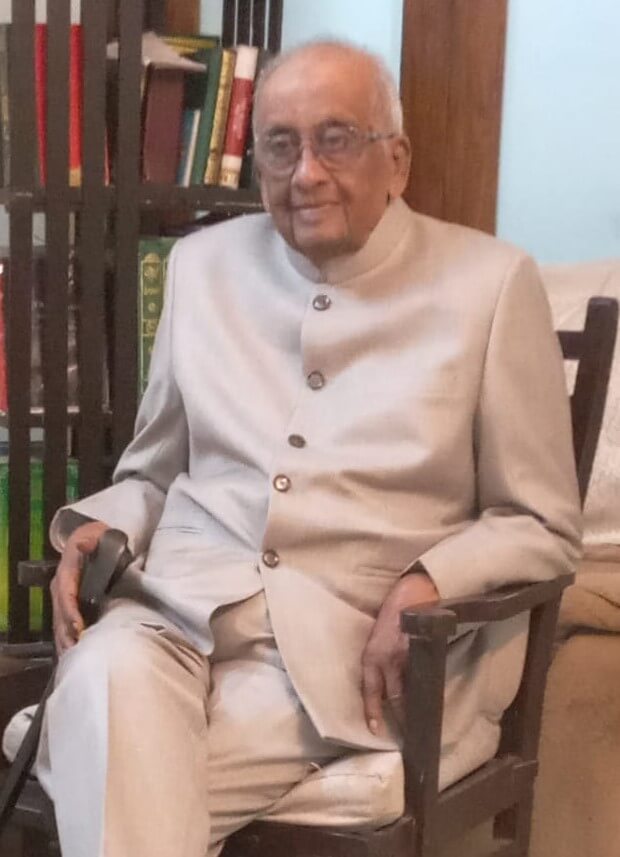
Mr Asif Pasha, a renowned personality of Hyderabad, India, left us for heavenly abode on 28 Dec 2025 at the age of 96. His son, Mr Zahoor Ahmad, a civil engineer, has lived in Sydney for more than 20 years.
Mr Asif Pasha, who served as Minister for Law in Andhra Pradesh during the Congress rule in the mid-1970s, devoted himself not only to public office but also to decades of dedicated community service, holding key leadership positions in a range of social and voluntary organisations.
An alumnus of Aligarh Muslim University, he graduated in law with first-class honours and went on to practise as an advocate for several years.
Although successful in the legal profession, his deeper interest in public life led him to serve society through principled leadership and institutional reform.
Mr Pasha hailed from the influential Lal Imli family of Vijayawada.
Interestingly, he shared a close childhood friendship with the legendary N T Rama Rao during their primary school years.
A passionate lover of Urdu, he remained deeply concerned about the preservation and promotion of the language, which had played a significant role during the Nizam period.
Believing that Urdu deserved institutional support comparable to Telugu, he forcefully presented his case in the State Assembly for the establishment of an Urdu Academy. The then Chief Minister, Mr J Vengala Rao, endorsed the proposal and called for a formal representation.
With the formation of the Urdu Academy, Mr Pasha was appointed its first President. Under his leadership, the Academy took its initial shape through a range of cultural and literary initiatives.
His notable contributions included the organisation of major Mushairas that drew eminent Urdu poets and film stars, such as Dilip Kumar and Faiz Ahmad Faiz from Pakistan.
The foundations laid during this period enabled the Urdu Academy to grow steadily in stature. Over the years, it has evolved into a vibrant institution, publishing a monthly journal, hosting Mushairas and seminars, and instituting prestigious awards.
Widely known for his exceptional organisational skills, Mr Pasha successfully hosted the All India Muslim Educational Society (AIMES) Conference in 1976, an event of national significance inaugurated by the then President of India, Mr Fakhruddin Ali Ahmed.
In recognition of his commitment to minority welfare and inclusive governance, he also served as Chairman of the Minority Commission, where he continued to advocate for educational advancement, social justice, and equitable representation.
Mr Asif Pasha was the first Minister in the Andhra assembly to take the oath in Urdu in 1974, which was given wide coverage by the state media.
During his tenure as Minister for Law, Prisons, and the Printing Press, Mr Pasha undertook several measures in the public interest, particularly to address the systemic underrepresentation of Muslims in government departments.
Observing a clear bias in appointments, he worked to ensure greater inclusivity by advocating merit-based representation. For the first time, six Government Pleaders and Public Prosecutors from the Muslim community were appointed during his term.
Disturbed by the lack of Muslim representation in senior academic and judicial positions despite the availability of qualified candidates, he persuaded the then Chief Minister, Mr K Vijaybhaskar Reddy, to appoint Hashim Ali Akhtar as Vice-Chancellor of Osmania University and Justice Sardar Ali Khan as a Judge of the Andhra Pradesh High Court.
The political turmoil that followed the Emergency rule imposed by Prime Minister Mrs Indira Gandhi in 1975 led to significant unrest within the State Congress Party. In its aftermath, Mr Pasha chose to withdraw from active politics.
According to a recently released biography “No Regrets: The Life and Times of Asif Pasha”, the 1947 partition was the most painful and divisive chapter in the subcontinent’s history.
To Mr Pasha, Jawahar Lal Nehru was as responsible for it as was Muhammad Ali Jinnah and the British Rulers. A more accommodating and federal approach by the Congress leadership, especially Nehru, might have prevented the Partition.
The Cabinet Mission Plan of 1946 embodied precisely such an approach – a united India with strong provincial autonomy. Jinnah accepted it. Jawaharlal Nehru’s public assertion that prior agreements would not bind the Constituent Assembly effectively nullified the compromise and pushed Jinnah to revert to the demand for Pakistan”, notes the book.
The roots of partition were sown much earlier, with the introduction of separate electorates by the British under the Indian Council Act of 1909 (also known as the Morley-Minto Reforms, according to Mr Pasha.
Mr Asif Pasha played a pivotal role in the establishment of several landmark institutions, including the Maulana Azad National Urdu University and Deccan Medical College. These enduring contributions reflect his deep commitment to education, cultural advancement, and the empowerment of future generations.
During the visit of Sheikh Zaki Yamani, the distinguished Petroleum Minister of the Kingdom of Saudi Arabia, to Hyderabad, Mr Pasha was appointed Minister-in-Waiting and entrusted with the responsibility of coordinating the high level visit.
His gracious conduct and effective stewardship earned special appreciation, and as a mark of goodwill, Sheikh Yamani presented him with a Gold Platted Dagger.
A devout Muslim, Mr Pasha played a significant role in the development of a five-storey complex on Waqf land and adjoining Jama Masjid in Vijayawada, now known as Imdad Ghar.
Conceived as a community-oriented initiative, the complex provided affordable commercial spaces to small Muslim merchants, enabling them to conduct their businesses at nominal rents and thereby supporting economic self-reliance within the community.
Mr Pasha was also closely associated with the Nizam family of Hyderabad, a connection strengthened through his father-in-law, Abdul Sattar Ghatala, who served as Secretary to the Seventh Nizam.
Through this association, Mr Pasha maintained close and enduring ties with prominent members of the Asaf Jahi household, including Nawab Kazim Nawaz Jung, Moazzam Jah Bahadur, and Shahzadi Pasha.
In later years, he continued his association with Mukarram Jah and Muffakham Jah Bahadur, and in more recent times remained in touch with Princess Esra and Azmet Jah Bahadur, the ninth Head of the Asaf Jahi dynasty, reflecting a lifelong relationship.
As a senior Congressman, Mr Pasha had the distinction of meeting several leaders of national significance, including Prime Ministers, Indira Gandhi and Rajiv Gandhi, among other prominent figures, reflecting his stature within the political landscape.
In 2024, the Telangana government honoured him with the prestigious Maulana Abul Kalam Azad National Award.
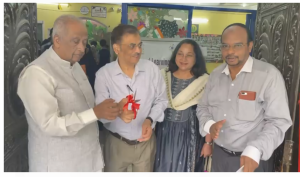
I had the honour of meeting the esteemed Asif Pasha Saheb during my visit to Hyderabad in September 2022, when he graciously inaugurated the Hyderabad chapter of the Indian Minority Education Society of Australia Inc (IMESA).
His presence and support for educational initiatives reflected his lifelong commitment to the empowerment of minority communities and the promotion of learning.
The passing of Mr Asif Pasha was deeply felt across the political and social circles of Hyderabad, where he was held in high esteem as an eminent public figure and community leader.
Among those who paid their respects was the renowned Indian cricketer and current State Minister for Minorities, Mohammed Azharuddin, who personally visited the family to offer condolences and to pay tribute to his lasting contributions.
Mr Asif Pasha is survived by two sons and a daughter. His son Mr Zahoor Ahmad resides in Sydney, while Mr Afaq Tanveer and Ms Husna Anjum live in Hyderabad.
May Allah grant the late Mohtaram Asif Pasha Sahib the highest place in Jannah and bestow patience and strength upon his family.



Comments