


“Only two worship in Mosque now”; “Last but one”; “… and soon only the Mosque itself will stand to remind the curious that once Allah was worshiped within the boundaries of Adelaide” were the newspaper headings in 1940’s
It was all about Adelaide City Mosque formerly known as the Afghan Chapel, the oldest permanent mosque in Australia built in 1888–1889 by Afghan cameleers, with its four distinctive minarets added in 1903.
After some 70 years of dedicated service, as the cameleers died, or those out of job returned to their country, the mosque became decrepit. Deep pain felt by the fast vanishing Afghans must have turned into fervent prayers as visualised by Poet Faiz:
(Gulon men rang bhare …): Filling the flowers with colours, let the breeze of early spring blow; Oh, come at last [the breeze]! so the affairs of the garden may flourish.
‘In the darkest hour there was the faint ray of a new dawn – Muslim migrants from Europe led by Ahmed Skaka established the Islamic Society of South Australia… reading of the Qur’an was heard again in the mosque’ (Australian Minaret).
“Things were so bad that everyone would have thought that after the last Afghan dies, Islam will die in Adelaide…”, told Imam Skaka, the Imam of the Adelaide Mosque, to the author back in 1976.
From a distinguished family, charismatic, Ahmed Skaka had studied theology to become Imam in famous Gazi Husrev Bey Medresa in Sarajevo then enlisted in the Yugoslav Army before being imprisoned by the Nazis in Bosnia.
He migrated to Australia on General Stewart in 1950 initially landing in Melbourne.
After moving to Adelaide from Melbourne, he came to know of the existence of the mosque found the mosque where the congregation consisted of only two or three aged Afghans.
Imam Skaka organised Muslim community anew in Adelaide, became its Imam and then served the society as voluntary Imam for over 30 years.
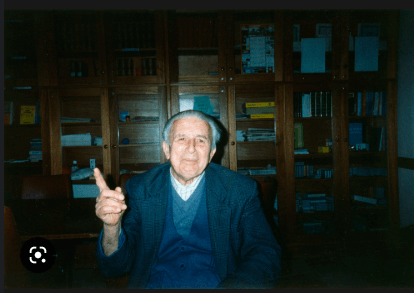
Imam Ahmed Skaka.
Hadji Mullah Mairbain, retiring to Adelaide after leading camel teams on the Australian Overland Telegraph Line becoming a respected spiritual leader, led the initiative to build the Adelaide Mosque, initially called the Afghan Chapel by Australians.
The mosque (plot) was mortgaged (perhaps for the construction of Mosque building). The mortgagee sold the property (see this author’s Islam’s Struggle in Early Australia 1976) but merchant Abdul Wade of Quetta origin , most famous cameleer in Bourke, NSW (with 400 camels and 60 drivers), purchased the property later and willed it as a mosque.
Gool Mahomet, donated money for mosque, served as Charismatic since 1940 CE, died in 1950. Then, Ahmed Skaka became full time resident voluntary caretaker Imam. He worked for the living. There were only 2-3 Afghans including caretaker Izet Khan but seven people attended the Eid prayers 1951.
The First most religiously educated Imam and First Muslim marriage celebrant in post-1950 Australia, Skaka revived the almost defunct Mosque and cemented the Muslim community.
He Performed wedding ceremonies, organized Islamic classes for children and adults, visited Muslim communities across Australia, contributed to broad community building and interfaith understanding, help found Australian Federation of Islamic Societies and Australian Minaret, and Performed Hajj 1976.
His also contributed to revival of modern Islamic Astronomy.
We could say that in the second half 20th century Adelaide, Imam Ahmed Skaka stands out as a great Muslim leader, as articulated by Australia’s former Prime Minister Gough Whitlam.
Muslim organisations should consider to recognise Imam Skaka publicly through naming an Australian national Muslim award after him.




Comments