

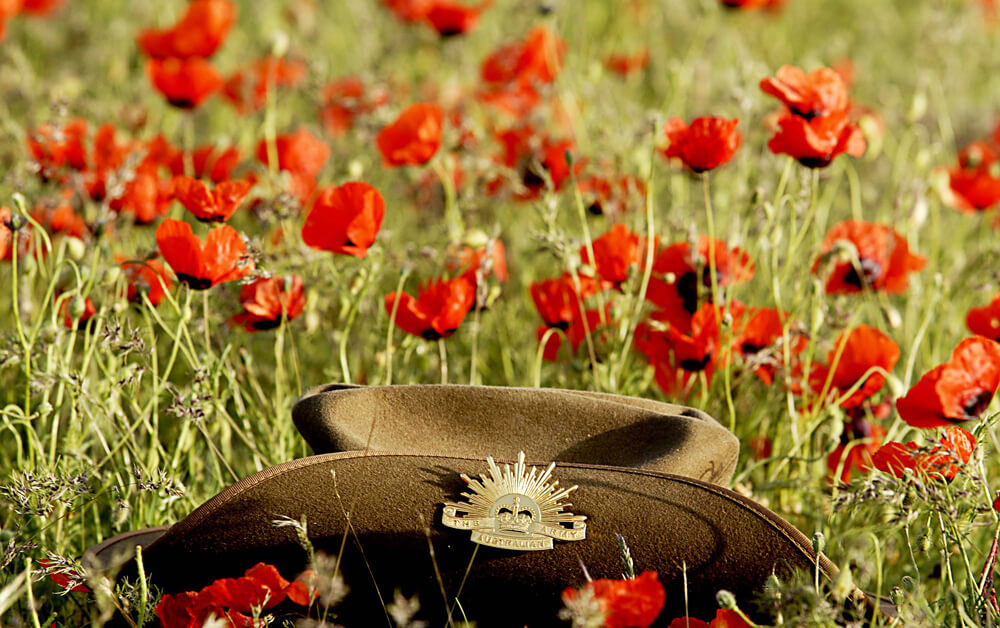
For this day of remembrance I am writing about my family the Reid family, my father’s family and the Ross Munro family on my mother’s family and their involvement in World War I and World War II.
My father’s father was Sir George Houston Reid GCB, GCMG, KC. Reid was elected top of the poll to the New South Wales Legislative Assembly as a member for the electoral district of East Sydney in 1880. Later he became Premier of New South Wales, fourth Prime Minister of Australia and then first High Commissioner to the UK (for two terms) during World War I. He was then voted into the House of Commons.
While outwardly supportive of our troops role in World War I his personal diaries reveal he had reservations about the ANZAC deployment to the Dardanelles in 1915.
He received a letter at the time from his friend, the First Sea Lord in the British War Cabinet, Lord ‘Jackie’ Fisher, who resigned from his position in disgust at the First Lord of the Admiralty, Winston Churchill’s (as Fisher saw it) misguided push for the ill-fated Dardanelles campaign.
Reid had travelled to Egypt in early 1915 where he inspected the Australian troops and was hugely impressed with their standard of training before they embarked for the Dardanelles. He also liked very much the many Muslims he met in Egypt and spent much time with them. He had long discussions with Sir George Chauvel in England (Harry- known as the boy from the bush) an Australian senior officer, about the needs for training in Egypt because of the difficulties training in England.
However my father, Clive Reid, George Reid’s younger son, who was attending Westminster School in London at the time told me that his father, George Reid, was extremely concerned about the concept of the Dardanelles because he believed it was a misguided attempt to fight the Germans through the back door and was not sufficiently thought through. He was extremely concerned about the immense amount of deaths when the Australians troops were fighting in France at the Battle of Fromelles.
Reid’s older son Douglas had two sons Ian and Bruce who were both killed in World War II.
My mother the daughter of William Ross Munro, had two older brothers – Colin and Keith Ross Munro, both killed in World War 1.
My father, Reid’s younger son Clive, served in the army in World War II.
George Reid’s wife Flora Anne who I was named after, was created one of the first Dames of the British Empire for her work in assisting Australian soldiers recuperating in London during World War I. She was appointed a Dame Grand Cross of the Order of the British Empire (GBE) in August 1917, being in the first list of appointments to the order, which had been created in June 1917As a result of what was considered to be her magnificent service during world caring for the wounded.
Gorge Reid remained in the UK until his death in 1918.
Geoffrey Fairbairn, my husband was a Professor in Manning Clarke’s Department of History at the ANU. He served for a couple of years while very young in the Navy in World War 2. Fairbairn airport in Canberra is named after his father,
AUSTRALIAN WAR VETERANS
We honour our old veterans, we honour them with pride,
And read of all the horrors they have carried deep inside.
We know they served in Europe and New Guinea’s highland rains,
Vietnam and in Africa where many men were slain.
David J Delaney (Australian poet).




Interesting story. My mother’s and father’s families saw service in both WW1 and WW2. The military connection on my mothers side goes back to a Cornish great-great grandfather who enlisted in the Queens 50th Regiment when Australia was still a penal colony. He came to Australia escorting a group of convicts and landed in Hobart. From there he marched to Launceston. He later came to NSW and was stationed at Parramatta. The standard tour of duty took soldiers first to Australia then to India. His journey to India was curtailed when his ship ran aground on the Great Barrier Reef and sank. The survivors were carried on the remaining ships but were dropped off in Indonesia till another ship could take them to rejoin the rest of his comrades in India. While in India he was stationed in the Khyber region. Shortly after he was invalided out of the army due to a knee injury his former company marched into Afghanistan where they were all killed except for the company doctor who was released and returned by the tribesmen who had defeated them. After returning to Cornwall he later migrated to Australia, Initially settling on the Ballarat goldfields before packing his family up nd moving to the WA goldfileds.
Both my parents had uncles who served in WW1 and my mothers brothers served in WW2. Two of my uncles on my father’s side served in the infantry in WW2. My father joined the Royal Australian Air Force and was stationed in Darwin at the height of the Japanese bombing. He flew in Hudson bombers as a wireless operator and air gunner. These slow twin engined bombers were extremely vulnerable to Japanese fighters and his squadron was eventually disbanded after around 80% were killed and they were reduced to two serviceable planes. For thier courage and tenacity in facing the Japanese his squadron was awarded the Presidential Unit Citation, the highest award given to a unit in the American military, Because it was a foreign award they were not allowed to accept it.This was only corrected in the 1990’s when the squadron was reformed and the surviving members of the original squadron were flown to Darwin to receive their reward. When he wore the decoration in Anzac Day marches he was warmly welcomed by any American veterans he came across. Dad was later posted to a joint American-Australian squadron flying LIberator heavy bombers. Eventually an Australian Liberator squadron was formed and he trained for high altitude bombing of Japan. Thankfully the war ended before he had to do that. He reached the highest non-commissioned rank of Warrant Officer and was interviewed for promotion to and officer but was passed over. He later got hold of his service record and discovered that the officer interviewing him decided that he didn’t have the “right” background or attended the “right” school.
My father was strongly opposed to war and supported my views on the obscenity of the Vietnam War which was inflicted on my generation. I was strongly opposed to it and consider that the veterans returning from that conflict were treated very badly. My father only spoke of his war service in his later years because many of the memories were still fresh and extremely painful. He put in a lot of service with the RSL including trying to advocate for and support Vietnam veterans. During one of our conversations around the time of the long overdue welcome home parade for these veterans he mentioned that he always walked out of the room when news of the war appeared on the TV. because It stirred up too many unpleasant memories.