


According to a 2025 Australian survey by Finder, 30% of Australians — around 6.3 million people — feel pressured to live a lifestyle they cannot afford. Holidays, cars, houses and clothing were among the things Australians felt pressured to spend more on than they really should.
It is not difficult to understand why.
Every day, we are shown something new to want. A holiday. A new phone. A pair of shoes. A beautifully renovated home. Before long, we can find ourselves asking, “Why can’t I have that too?”
There is nothing wrong with wanting good things. Wanting to improve our lives, provide for our families or work towards a goal can be healthy and motivating.
The real challenge begins when we allow those desires to be chosen for us.
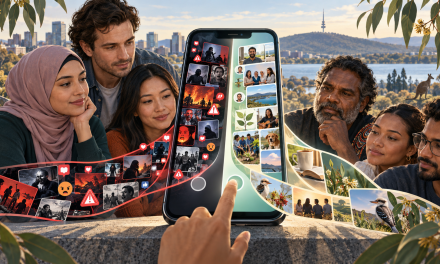
The digital world makes this easy. Every advertisement, recommendation and social media post introduces another possibility, another product or another experience that we had not even been thinking about a few moments earlier.
As a teacher, I once saw an example of this. One student came to school with a shiny new pencil case. Before the end of the day, another student wanted it too and decided to take it for himself even though he has a perfectly fine pencil case of his own.
As adults, we may not exactly want someone else’s shiny pencil case but we may want their holiday, their home, their car or their lifestyle instead. The feeling is the same. We see something, we desire it, and suddenly what we already have no longer feels quite enough.
An Islamic reflection
The Prophet Mohammad (s) said:
“If the son of Adam had a valley full of gold, he would desire another valley. Nothing fills the mouth of the son of Adam except dust, and Allah accepts the repentance of whoever turns to Him.”*
(Sahih al-Bukhari and Sahih Muslim)
This hadith is not a criticism of wealth or ambition. Islam encourages us to work, to earn and to enjoy the blessings Allah has provided.
Rather, it reminds us that desire has no natural finish line.
There will always be something newer, bigger or better. Learning to manage our desires is part of learning to be content with what Allah has already entrusted to us while continuing to strive for what is good.
Tonight’s digitalDeen action
The next time you find yourself wanting something you have seen online, pause and ask:
– Do I really need this?
– What would it take to earn it?
– Can I be grateful even if I never have it?
Sometimes you will still decide to work towards it. Sometimes you may realise that the desire disappears as quickly as it arrived.
May Allah give us strength to manage our desires, grant us wisdom in what we pursue, and contentment in the blessings He has already given us.
Source: Finder Consumer Sentiment Tracker, March 2025.





Comments