

The current Israeli regime has killed hundreds of thousands of innocent civilians, including men, women, and children, over the past couple of years. They waged a war in Gaza and, soon after being forced into a ceasefire, Israel renewed threats against Iran. They successfully persuaded US President Donald Trump to attack Iran for the second time within a year.
USA, after destroying a a number of Muslim countries over the past few decades, headed to destroy one more.
During four weeks of an extensive air campaign by the United States and Israel, Iran suffered significant losses to its infrastructure. Thousands of targets were struck across the country, including military bases, energy facilities, petrochemical plants, and industrial sites, as well as research centres, nuclear and strategic infrastructure.
Top political and military leaders were assassinated. Hospitals, schools, universities were not spared, and more than 30,000 residential buildings also suffered serious damage.
The reported death toll of more than 3,000 is widely believed to be significantly underreported, with a far greater number of people injured. It is deeply distressing that Muslim countries have shown so little collective urgency or moral force in responding to the scale of human loss.
Religious beliefs and prophecies seem to have played a role. Zionists, apparently to fulfil the prophecy of Greater Israel, have ignored international law in attacking their neighbours.
There are allegations that some US soldiers were indoctrinated into Christian “end times” rhetoric, telling troops the war was “part of God’s divine plan” and referencing biblical events like Armageddon.
Among Iranians too, some linked the conflict to end-times beliefs involving the arrival of Imam Mahdi. The Abrahmic faiths continued infighting, ignoring the call for unity among them.
As the United States and Israel engaged in conflict with Iran, the world largely watched in silence. The United Nations did not proactively pursue peace, and its Security Council meetings produced limited results.
Not only did the UN fail to play a more active role as circumstances demanded, major Muslim organisations also remained largely muted. The Organisation of Islamic Cooperation (OIC) did not come together to take any meaningful collective steps, and the Arab League likewise failed to raise a strong or unified voice.
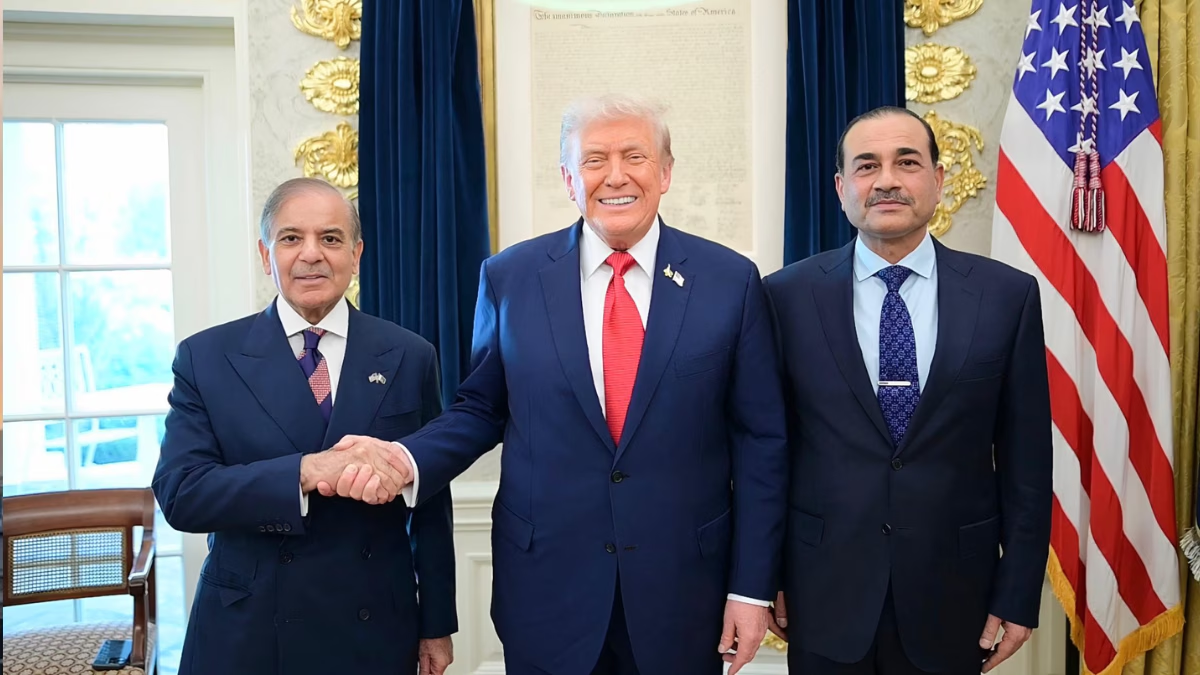
Once enough damage was done, Pakistan found a role in pursuing peace. Its army general Asim Munir had developed a friendship with US President Trump during the 4-day India-Pak war in May 2025.
Within Pakistan, Asim Munir is seen as someone who assumed the position of Field Marshal by force and perpetuated the regime change that removed the popular government led by much admired Imran Khan, by manipulating the 2024 elections.
Pakistan, an important Muslim country, has maintained good ties with various regional/Muslim blocs, including Saudi Arabia and other Gulf Cooperation Council (GCC) states on one hand, and Iran on the other.
It has also pursued a pragmatic foreign policy, developing close strategic ties with its powerful neighbour China while simultaneously maintaining engagement with the United States.
Pakistan successfully positioned itself as a diplomatic actor capable of encouraging de-escalation by balancing complex regional dynamics. As Pakistan pursued mediation between Tehran and Washington, it sidelined Israel and kept them out of the process, which some view as a strategic political decision.
As Israel and the US threatened to blow up Iranian power plants, Iran, in return, threatened to destroy the electricity and water plants of GCC countries. Such a move by the warring parties would severely damage key economic resources of the Muslim world, potentially aligning with Israel’s strategic interests.
Iran had already attacked all GCC countries specifically targeting, causing major concerns about the safety of the entire region.
While Iran claimed that it was targeting only American assets in the region, airports, oil refineries and other infrastructure also suffered damage. Most of the Iranian missiles and drones were intercepted, indicating that GCC countries were well equipped to face such threats.
If they did not have the interceptors, the damage would have been catastrophic. Many Muslims criticise the political policies of GCC countries, yet these nations provide livelihoods for millions of people from developing countries.
With deep distrust between Sunni Arabs and Shia Iran, particularly since the Syrian civil war and the conflict between Shia militias and Sunni forces in Iraq, the sectarian divide seems to have further worsened. The conflicts in Syria and Iraq had resulted in the deaths of tens of thousands of people,
Recent reports suggest that US bases in the Gulf region may have sustained substantial damage that the Pentagon has not publicly disclosed. At the same time, Iran’s military capabilities do not appear to be as severely diminished as President Trump has claimed since the ceasefire began.
Iran stood firm against the superpower and, despite suffering significant losses, has garnered international political support, both from the East and the West. The United States, under Donald Trump, lost credibility on several fronts.
During the Iraq and Afghanistan wars, the US had secured international support, albeit on contested grounds; however, this time, neither NATO nor its European allies came to its support, and many openly opposed US actions.
The tragic phase of the past few decades of Muslim history continued. hundreds of thousands of Muslims have been killed and multiple countries have been destabilised.
With the extreme right continuing to govern Israel, Iran, now having a more radical regime than before, and fresh rivalry between Iran and the GCC, tensions are likely to prevail in the region in coming years.
The biggest benefactor of the war may be China, with the USA losing significant influence in the region.





Comments