

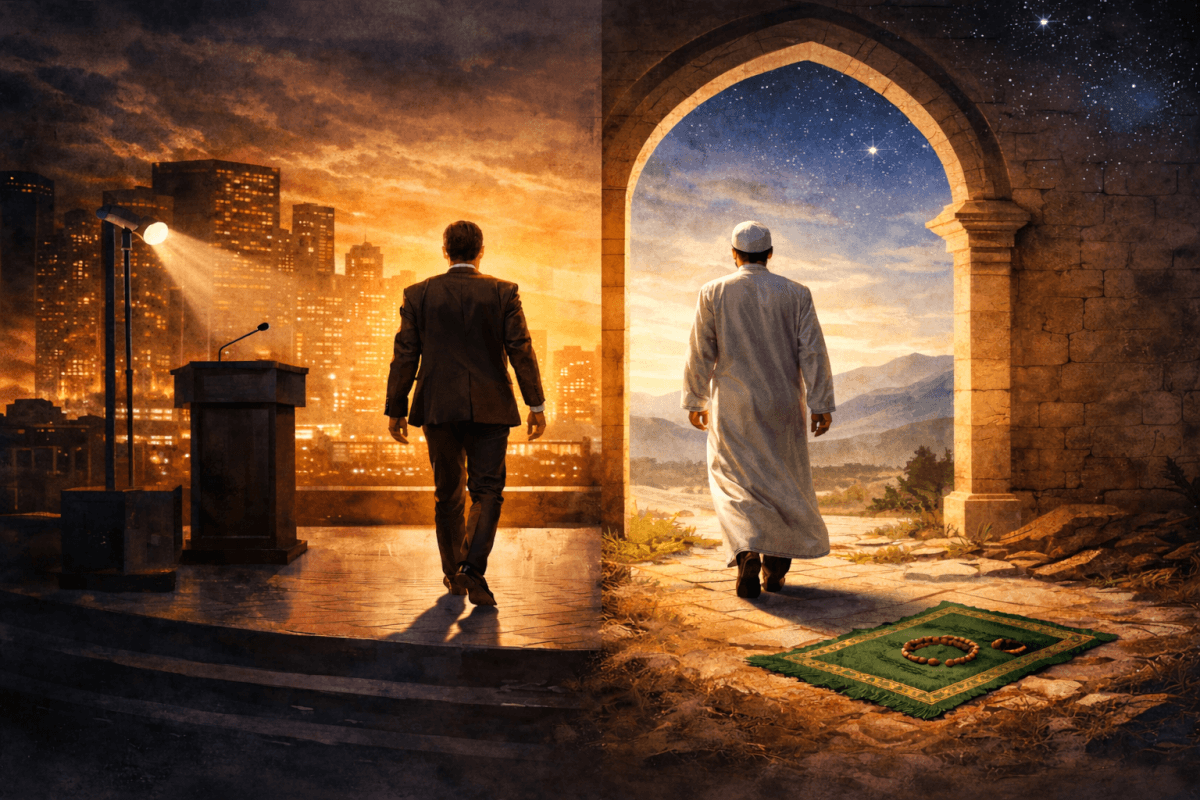
The real test is not the discipline of the month. It is who you are when the structure ends.
We live in an age that confuses performance with leadership. We polish our image, refine our presence, and are sometimes even told to “fake it till you make it.” In that environment, leadership becomes something to display rather than something to become.
Performance is visible and rewarded. Leadership emergence is slower and Leadership emergence is slower and socially negotiated.
Serious leadership research confirms what our tradition already understands: authority is not self-declared. It is conferred through consistent patterns of behaviour that signal amanah (trust), steadfastness and credibility. You cannot perform your way into being trusted. You can only live your way there, especially in moments that seem ordinary.
Modern workplaces, especially Western corporations, reward signalling. The confident voice in a high-stakes meeting and the polished presentation in a town hall often stand in for leadership. Yet the deeper test is less theatrics: Are you dependable late in the day when no one senior is present? Do you respond with ihsan when feedback feels unfair? Do you honour your word when the stakes are mundane?
Ramadan offers us a lived laboratory. It imposes sabr, restraint of the nafs, deliberate slowdown and communal accountability. Many of us become more measured, more reflective, more conscious of Allah in our speech and conduct. People around us notice the shift.
The real question though is what happens when the structure ends.
Ramadan is often described as a reset, but renewal is a better word. A reset suggests failure. Renewal recognises that even the committed require recalibration. The fast weakens impulse and strengthens taqwa. Night prayers stretch discipline. The Qur’an recentres intention. But the month is scaffolding. It creates conditions. It does not automatically construct character.
The Sīrah shows us how leadership identity is formed long before titles appear. Before revelation, the Prophet (s) was known as Al-Amīn. That was not a brand. It was a reputation built through years of consistent conduct in trade, arbitration and community life. His emergence preceded his mission.
During the Year of Sorrow, he lost Khadijah (r) and Abu Talib in close succession, stripping away emotional and political protection. Soon after, he travelled to Taif seeking support and was publicly humiliated and physically harmed. When offered the opportunity for decisive retaliation, he declined. There was no audience to applaud mercy. There was only character.
Then came Al-Isrā’ wal-Miʿrāj. After rejection on earth, he was taken on a journey beyond it. At Masjid al-Aqsa, he led all previous prophets in prayer. This was not merely symbolic. It was a divine affirmation of his leadership emergence. In the unseen realm, leadership was recognised even when visible success was absent.
Recognition followed character, not performance.
That sequence matters. Leadership in Islam is not established by force, charisma or optics. It emerges through amanah under pressure, sabr in humiliation and tawakkul when outcomes are uncertain. It is then granted by Allah and recognised by people.
Ramadan trains these qualities. It disciplines appetite, sharpens intention and increases awareness of accountability before Allah. But once Shawwal arrives, the scaffolding comes down.
The real test is the first difficult meeting after Eid. The moment when a colleague takes credit. The choice between silence and principled speech. The temptation to return to old reflexes once the fast is no longer there to restrain you.
Leadership is not what you felt in the last ten nights. It is what others experience from you in the first ten days back at work.
Ramadan does not manufacture leaders. It reveals who is emerging beneath the performance.
That is the measure that endures in this world and the next.






Comments