

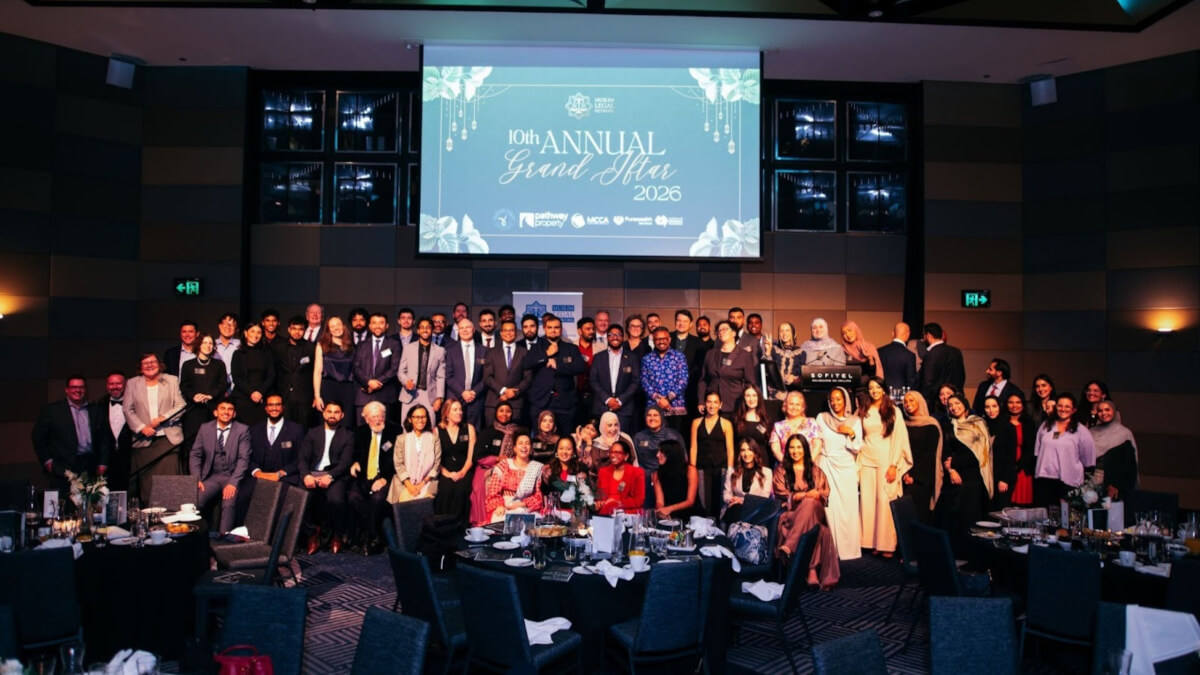
Over the past few months, Australia has been marked by heightened social tensions and renewed conversations about faith, identity, and belonging. The Muslim Legal Network (MLN) hosted its 10th Annual Grand Iftar, bringing together members of the legal profession, community leaders, and allies under one powerful and timely theme: Mercy.
Held during the sacred month of Ramadan, the 2026 Grand Iftar was in many ways, a firm yet hopeful response to rising religious intolerance both locally and globally.
Recent incidents across Australia, including the foiled anti-Muslim terror plot in Western Australia, have underscored the urgent need for interfaith solidarity and principled leadership.
Speakers throughout the evening acknowledged that hatred against any faith community threatens social cohesion and the right to freedom of religious belief.
A night anchored in ‘Mercy’ (رحمة): Justice Amanda Chambers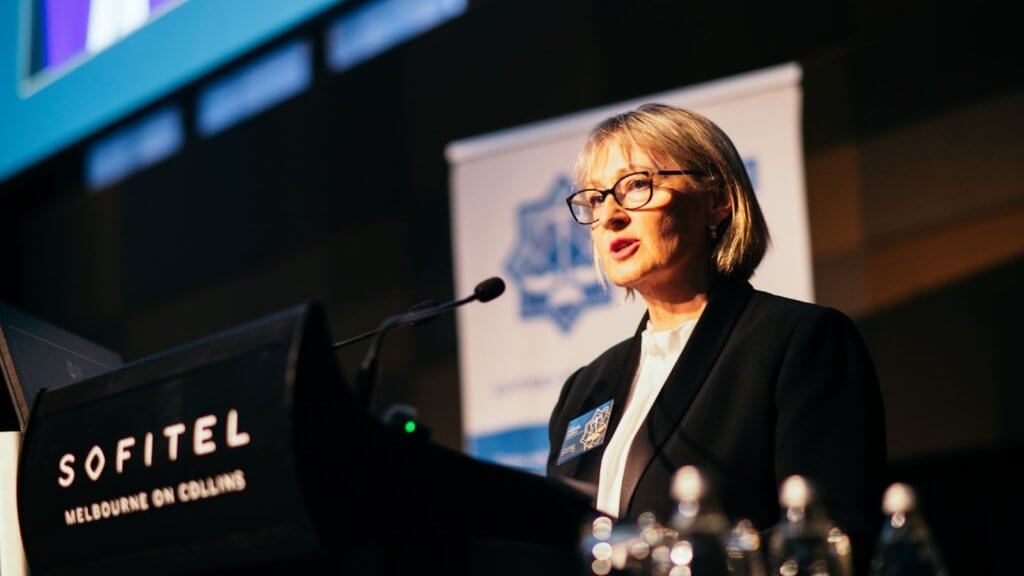
The evening’s first keynote address was delivered by Justice Amanda Chambers of the County Court of Victoria (CCV). Her reflections centered on an often-overlooked dimension of Ramadan: Mercy.
Drawing on the spiritual essence of the holy month, Justice Chambers reminded attendees that mercy is not merely a theological concept, but a living principle that must inform modern legal systems.
In her address, she highlighted how compassion, proportionality, and humanity are foundational to justice when applied with wisdom.
Justice Chambers also took the opportunity to make remarks about the current state of the legal profession, where she pointed out that the number of Muslims (one) on the bench has not changed in 10 years.
For many in the room, her reflections spoke directly to the challenges of practicing law and administering justice in contemporary Australia.
Progress and persistence: Rabea Khan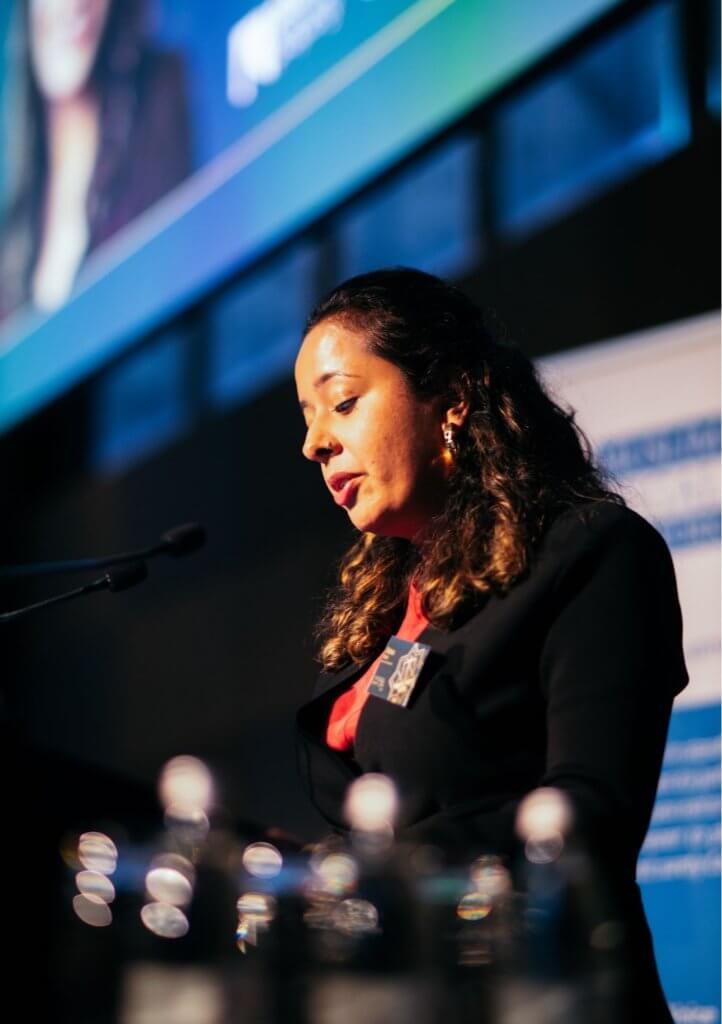
The second keynote was delivered by Barrister Rabea Khan, who offered a powerful reflection on the evolving landscape for Muslim legal professionals in Australia.
Having begun her career in Sydney, Rabea spoke candidly about the challenges Muslim lawyers once faced, from overt prejudice to subtle barriers, and how the profession has gradually become more inclusive. Yet, she was clear-eyed about the work that remains.
Her speech acknowledged the progress made in the profession while emphasising the continued need for resilience and collective effort. For many young professionals in attendance, her journey stood as both validation and inspiration.
A personal journey of faith: Robert Martin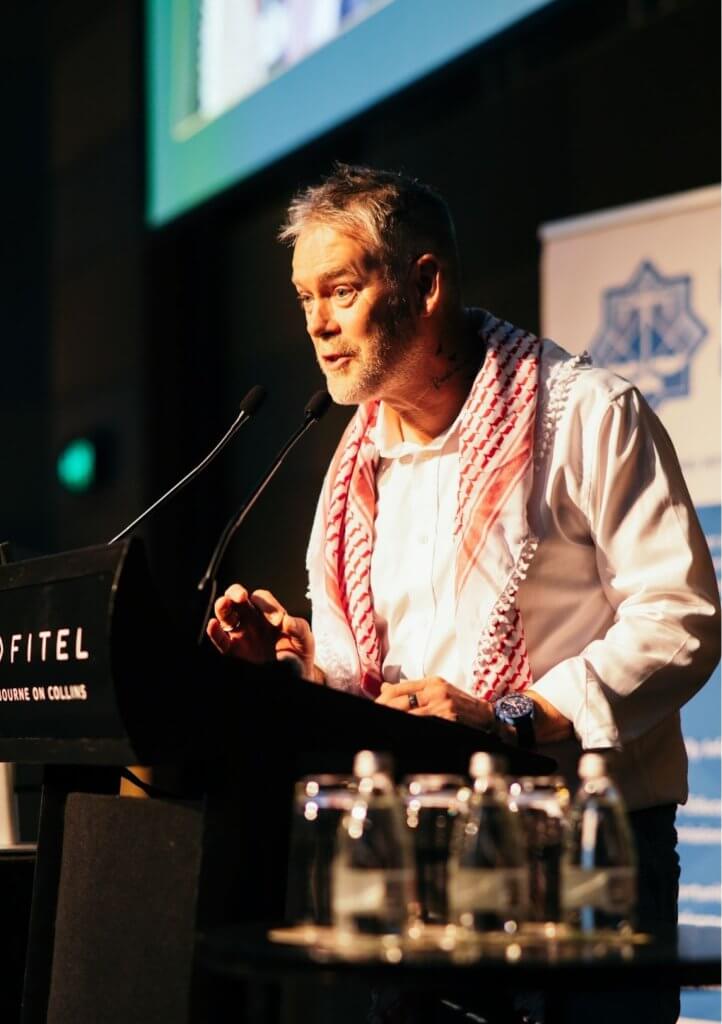
The final guest speaker was Robert Martin, whose deeply personal story moved many in the audience.
Growing up as an atheist, Martin described feeling spiritually unanchored and disconnected. It was only after traveling to Palestine that his worldview began to shift.
Witnessing firsthand the generosity, dignity, and faith of Palestinian Muslims, even amidst profound hardship, contradicted much of what he had previously encountered in mainstream media narratives surrounding the Israeli-Palestinian conflict.
Upon returning home, Martin began reading the Qur’an. He spoke about how its language and message resonated with him in ways he had not anticipated.
Recently embracing Islam, he reflected on how easily those born into the faith might take its blessings for granted.
His address served as both a reminder and a renewal, urging Muslims to cherish, embody, and protect their faith through character and conduct.
Spiritual highlights: Qur’an and the call to prayer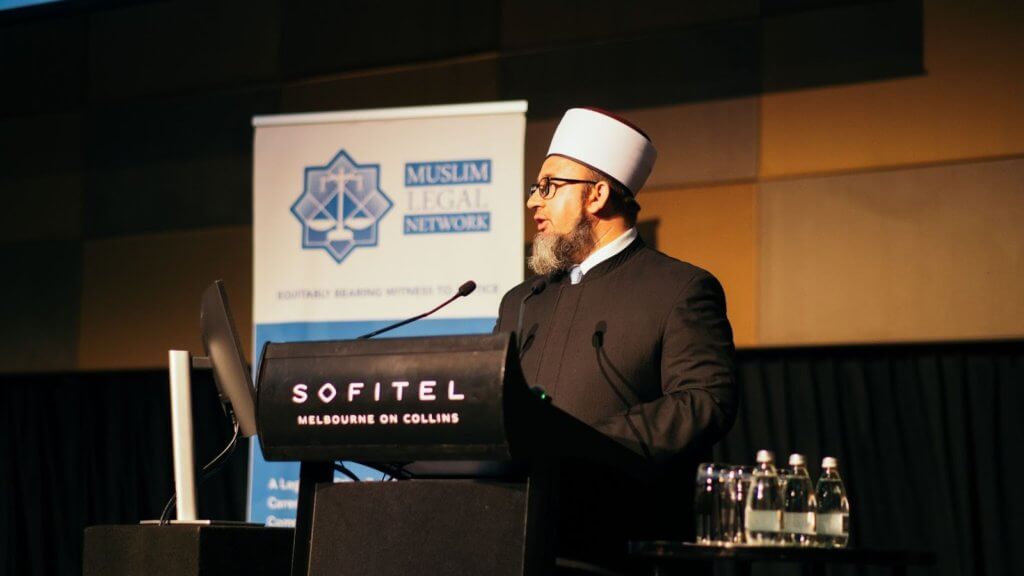
A particularly moving moment of the evening came with the recitation of the Holy Qur’an and the Call to Prayer (Azan), delivered by Imam Ismet Purdic.
As his voice filled the hall, a reflective stillness descended. The recitation served as a spiritual anchor for the evening, grounding discussions of social justice and public advocacy in the sacred rhythms of worship that define Ramadan.
Honouring service: The MLN awards
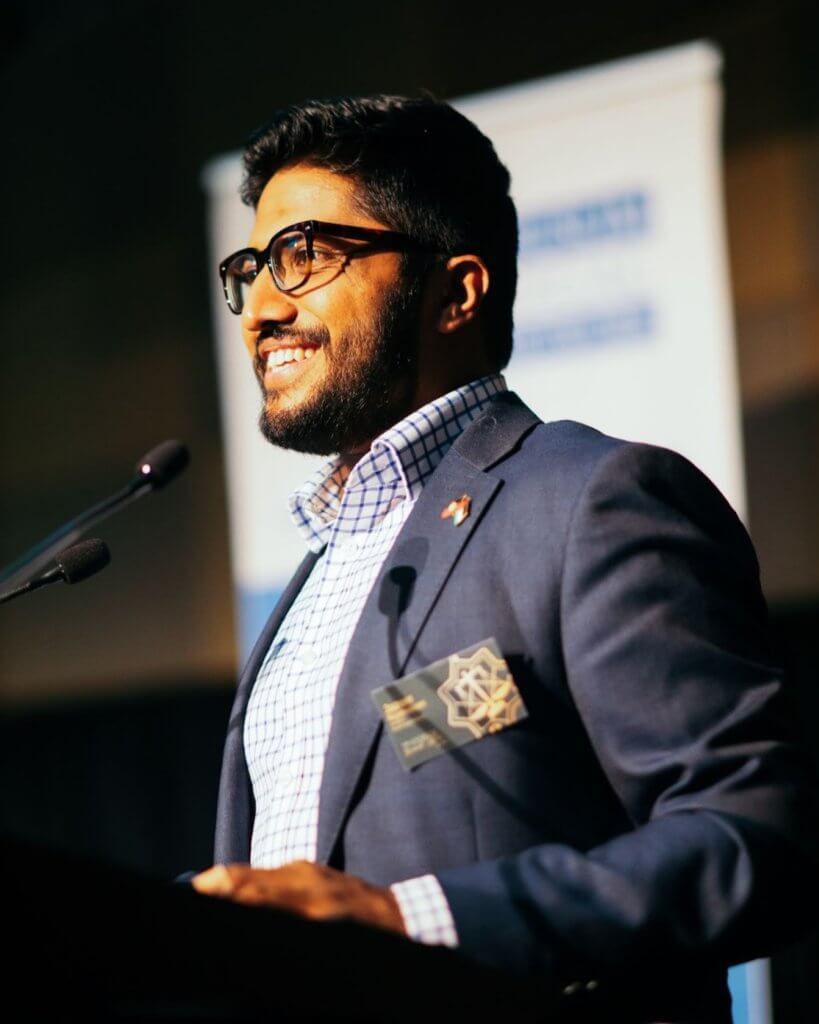
Jazeer Nijamudeen, President of the Muslim Legal Network, spoke about the MLN’s history of helping to establish MLN NSW and MLN WA. He also reflected on past Keynote speakers during the last 10 years and their insights, as well as the MLN’s past contributions to the profession more broadly.
Jazeer emphasised that 15 March, the International Day to Combat Islamophobia, has been recognised by the Victorian Government and should not be neglected by the Courts and the profession in implementing their significant days of the year.
In recognition of the dedication that sustains the organisation year-round, three awards were presented. The Ihsan Award was presented to the volunteer of the year, Sana Raja, who has consistently demonstrated attention to detail, proactive dedication and excellent communication skills during the past year. The decision was a very close contest with Aysha Saeed receiving the runner up award.
The night saw the introduction of a new Award for a Board Member who has made a remarkable and defining contribution to the MLN. Sam Bektas received this award for his extensive contributions to stakeholder engagement, financial sustainability and strategic planning.
 Together, these honours reflected the Network’s appreciation for those who work quietly yet tirelessly behind the scenes.
A decade of impact
This year’s Grand Iftar marked a significant milestone: the 10th anniversary of the MLN’s flagship Ramadan gathering.
Over the past decade, these Iftars became platforms for dialogue, professional mentorship, interfaith engagement, and principled advocacy.
In times of social division, they have stood as reminders that Muslim Australians are not only participants in the nation’s legal and civic life, but contributors shaping its future.
As guests departed, the message of the evening lingered: confronting Islamophobia requires more than reaction. It demands mercy in justice, courage in advocacy, gratitude in faith, and unity across communities.
In its tenth year, the MLN’s Grand Iftar demonstrated that these values are not abstract ideals, they are lived commitments.
And in a climate where division too often dominates headlines, that may be the most powerful statement of all.



Comments