

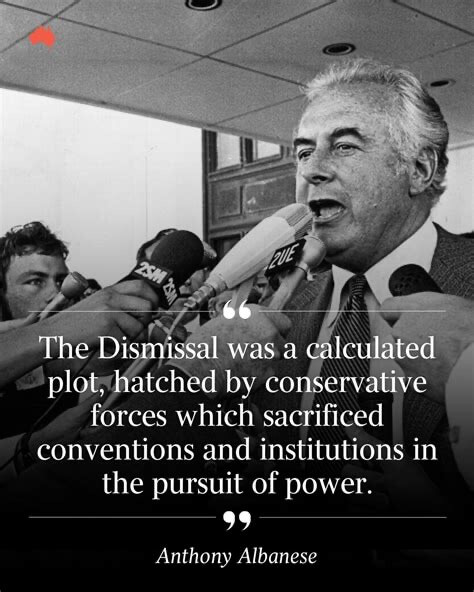
I remember the day as if it were yesterday. I had been following the impasse in Federal Parliament, but on 11 November 1975, Whitlam stood on the steps of Parliament, sacked by the Governor-General.
Like millions of others, I sat in stunned disbelief. How could a democratically elected government, barely halfway through its term, be dismissed by a representative of the British Crown? I had followed Gough Whitlam’s remarkable rise—his courage, intellect, and his vision of a fairer, more independent Australia.
Whitlam’s government achieved what few had dared imagine: free tertiary education, universal health care through Medibank, equal pay for women, land rights for Indigenous Australians, diplomatic recognition of China, and an end to conscription and the Vietnam War.
He sought to loosen Australia’s subservience to the United States and Britain and to re-orient our nation towards Asia and the global South. For the first time, Australia seemed to be becoming independent—and that, it seems, was unforgivable.
The plot to remove Whitlam
The Dismissal was the culmination of a long-running effort to remove a prime minister who dared challenge imperial and intelligence power. During Whitlam’s period in office, ASIO was responsible for domestic security and counterintelligence within Australia, while ASIS was the secret foreign intelligence service, focused on collecting overseas intelligence.
In 1973, Whitlam discovered ASIS was secretly assisting the CIA with intelligence activities in Chile against Allende’s government. Deeply concerned by Australia’s role in efforts to destabilize another democracy, Whitlam ordered the ASIS operation in Chile to be shut down and sacked ASIS head Bill Robertson over concerns about its autonomy and operations.
Whitlam was also troubled by unchecked CIA activities in Australia and, in 1974, ordered ASIO to stop directly sharing intelligence with the United States—a directive that sent alarm bells ringing in Washington and London.
Declassified documents and testimonies reveal that senior figures in both the CIA and MI6 considered Whitlam a “security risk” and feared he might close the joint US-Australian spy base at Pine Gap, a pivotal node in America’s global surveillance network.
In 1974, the United States sent Marshall Green—an ambassador known for aiding Suharto’s Indonesian coup—to Canberra to “manage the Whitlam problem.” Washington, London, and their local allies discussed contingency plans.
Within Australia, ASIO and elements of the bureaucracy resisted Whitlam’s reforms. American officials warned that if Whitlam’s policies continued, intelligence cooperation would be reconsidered. The CIA cabled ASIO, calling Whitlam “a serious threat to existing intelligence arrangements.”
Meanwhile, Governor-General Sir John Kerr, with deep ties to the security establishment, was in secret correspondence with Buckingham Palace.
The 2020 release of the Palace Letters confirmed what many had long suspected: the Queen’s private secretary, Sir Martin Charteris, was informed of Kerr’s intentions and raised no objection.
A year later, Prince (now King) Charles wrote to Kerr, praising his “courageous decision” to dismiss Whitlam and assuring him that “most Australians seemed to endorse your decision when it came to the point.”
Shockingly, Chief Justice Sir Garfield Barwick, despite his constitutional conflict of interest, advised Kerr that he had the power to dismiss an elected government—contradicting convention and misusing his authority.
In an effort to resolve the political impasse, Whitlam wrote to Kerr to request a half-Senate election—a constitutionally sound move—unaware that Kerr was plotting to overthrow his government.
All these moves positioned Whitlam for removal by powerful interests. It was a collusion of elites: the judiciary, the Crown, intelligence agencies, and foreign powers—a soft coup, executed in plain sight.
A betrayal of democracy
The dismissal of Gough Whitlam was not merely a political event; it ruptured the moral and democratic fabric of Australia, allowing an unelected figure to overturn the will of the people.
The Liberal–Country Party opposition, led by Malcolm Fraser, blocked supply in the Senate to create a crisis, deliberately weaponising the budget process to achieve what they could not win through the ballot box. It was a cynical and dangerous manipulation of democratic norms, setting a precedent that still casts a shadow.
The legacy of subservience
After Whitlam’s dismissal, Australian foreign policy fell back into line. Successive Labor and Liberal governments have essentially accepted American suzerainty and given up real sovereignty.
Pine Gap remains untouched. Australia has followed Washington into every major war—Afghanistan, Iraq, the so-called “War on Terror”—at a cost of hundreds of thousands of civilian lives.
Today, another Labor government has endorsed the LNP-initiated AUKUS pact, further binding us to US strategic ambitions. This disastrous multi-billion-dollar entanglement compromises Australia’s independence, economy, and moral standing.
And as Israel wages what the International Court of Justice has called a plausible genocide in Gaza, Australia’s refusal to speak clearly and act courageously reveals how little of Whitlam’s independent spirit remains.
If Whitlam’s campaign for intelligence independence had succeeded, the nation might have taken a different path.
In the early 2000s, ASIS spied on Timor-Leste’s cabinet during oil and gas negotiations, betraying a fledgling democracy and resulting in international scandal and the prosecution of Australian whistleblowers.
It is plausible that, had Whitlam’s reforms prevailed, such abuses—using intelligence to exploit, rather than protect, vulnerable neighbours—might never have occurred.
The Liberal Party’s cynicism and Labor’s silence
The Liberal Party’s actions in 1975 were not only cynical but corrosive—a deliberate subversion of democracy for partisan gain. Yet Labor in later decades failed to restore or defend the principles Whitlam embodied.
From Paul Keating’s deregulation to Anthony Albanese’s silence on Gaza and submission to AUKUS, Labor has too often traded moral clarity for expediency.
Until we confront that legacy, we remain a nation half-free.
Reclaiming the vision
I can still hear Whitlam’s final words on the steps of Parliament: “Well may we say, ‘God save the Queen’—because nothing will save the Governor-General.” But what needed saving was Australia itself—its independence, dignity, and democracy.
Fifty years on, we face a moral choice. We can continue as a subordinate state, mouthing platitudes about sovereignty while aligning ourselves with every war and every injustice.
Or we can reclaim Whitlam’s vision of an Australia confident enough to speak truth to power, to act on principle, to stand for peace and fairness in the world.
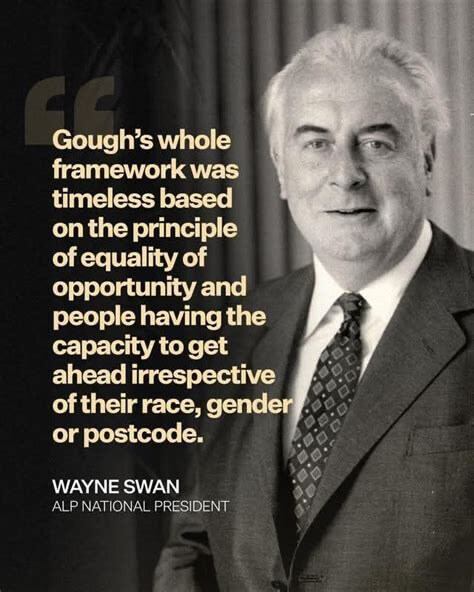
The Dismissal was more than a coup—it was a warning. Democracy dies not only through tanks and guns, but through secrecy, timidity, and the quiet surrender of sovereignty.
Will Australia have the guts to truly honour Whitlam’s legacy and gain our independence?






Comments