

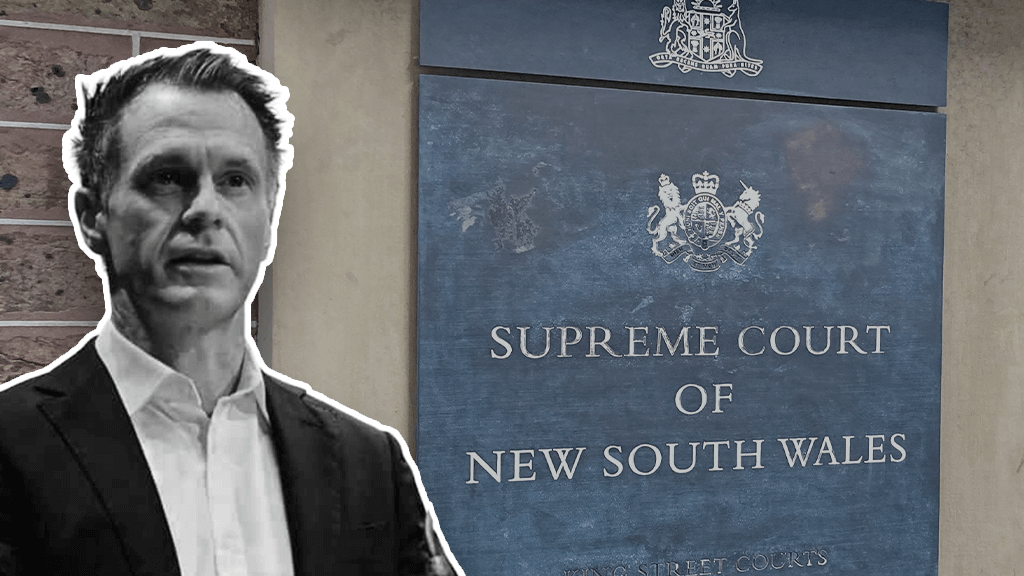
In a landmark victory for free speech and civil dissent, the New South Wales Supreme Court has struck down key provisions of the Minns government’s protest laws, declaring them invalid for unlawfully burdening the implied constitutional freedom of political communication.
The judgment delivered on Thursday 16 October 2025 marks a major reversal for Premier Chris Minns, who had aggressively pushed these laws under the banner of safeguarding religious groups, a push many now view as having been influenced by the demands of powerful pro-Israel lobbies and amplified fears of anti-Semitism largely based on shaky and over-inflated incident claims.
Justice Anna Mitchelmore found the move-on powers granted to police were overly broad and constitutionally impermissible.
In a statement, the Australian Federation of Islamic Councils (AFIC) welcomed the landmark decision by the NSW Supreme Court saying that this is a significant victory for democratic rights and civil liberties in Australia.
Minns first floated the legislation in December last year, citing a (later contested) attack at Melbourne’s Adass synagogue as proof of a mounting threat to religious communities.
He framed the new police powers as urgently needed to protect worshippers from harassment or obstruction — even though the laws were drafted in such sweeping terms that protestors near a place of worship could be moved on regardless of whether their demonstration had anything to do with the religious institution itself.
When the laws advanced in early 2025 — despite dissent within Minns’ own Labor ranks — concerns roared from civil society, legal experts, and even Labor MPs, who warned that such draconian powers risked silencing legitimate protest.
One Labor MP, Anthony D’Adam, attempted an amendment to restrain policing powers, but was overruled. Greens MP Sue Higginson later described the law as a “Minns captain’s call” born of moral panic, not legal need.
The turning point came in court, where the Palestine Action Group, represented by activist Josh Lees, challenged the law on the grounds that it allowed arbitrary suppression of protest activity.
Lawyers argued that police could direct demonstrators to cease or relocate simply because they were “near a place of worship,” even where no worshipper was threatened or obstructed — a power that clearly exceeded acceptable bounds.
The state contended the law had a legitimate protective purpose, but Justice Mitchelmore rejected that attempt to cabin the statute.
Mitchelmore found the move-on power “impermissibly burdens” political communication, and struck it down as inconsistent with constitutional limits on state legislative power.
The ruling does not affect the separate criminal penalties against harassment or obstruction of worshippers, which remain in force — a distinction Minns was quick to emphasise in his public response.
But legal observers and civil rights advocates see the decision as a decisive repudiation of Minns’ gambit. Lawyers had warned that iconic protest sites in Sydney — which lie adjacent to or in proximity to places of worship — could be blanketed by the new law, chilling democratic expression.
Now, those fears have been borne out: the court has affirmed that governments cannot weaponise zones of religious sensitivity to suppress political dissent.
The ruling also comes at a thorny time for Minns’ narrative of an anti-Semitism surge — which underpinned his urgency to pass both protest and hate speech laws. NSW Police have since admitted that dozens of incidents in their high-profile antisemitism taskforce,
Operation Shelter, were misclassified, inflated, or duplicated, including pro-Palestinian speech mis-recorded as anti-Semitic, or incidents unrelated to the Israel–Gaza conflict. Officials conceded there were “consistency and veracity” problems in the catalogue of 367 reported incidents used to justify Minns’ crackdown.
Critics say those procedural flaws—combined with the revelation that the Dural caravan “terror plot” was likely a hoax or con job — expose the pretext behind the Minns government’s panic-driven legal overhaul.
Josh Lees said, “Now [Minns] has massive egg on his face. These laws have been ruled out, and we’ve upheld the right of the people of NSW to protest.” The broader implication: governments cannot gag dissent under the guise of protecting sensitive communities, especially when the justification rests on distorted or manufactured fear.
With the move-on power struck down, pressure will now mount on Minns to repeal or radically overhaul related protest and hate speech statutes.
The court’s decision sends a warning: constitutional limits on political communication are not negotiable, and the right to protest remains a founding pillar of democracy.






https://youtu.be/r6SsMD0pswE?si=TPPxiRto8eGREEre