


Sydney came alive with words, ideas, and creativity on Sunday 10 August 2025, as the South Asian Film, Arts & Literature Festival (SAFAL fest) hosted its much-anticipated Literature Day & Book Fair in Sydney at the Redgum Centre, Wentworthville.

The event, organised by the Australian South Asia Forum Inc. (ASAF), brought together academics, artists, writers, journalists, and community members in a vibrant celebration of South Asia’s rich cultural and literary heritage.

An inclusive platform beyond borders
The very concept behind ASAF – an inclusive platform embracing all of South Asia beyond political borders – was reflected in every detail of the festival. Representing the eight nations of Afghanistan, Bangladesh, Bhutan, India, Maldives, Nepal, Sri Lanka, and Pakistan, SAFAL fest has become a unique space where diversity thrives, heritage is honoured, and dialogue is encouraged.
ASAF Founder and President Ash Gholkar, along with Co-Founder and SAFAL Fest 2025 Chairperson Kedarnath Pagaddinnimath, emphasised that the festival is “one of its kind in the world showcasing the rich art, culture and literary heritage of the dynamic South Asian region.”
The inclusivity was evident not only in the diversity of speakers but also in the range of themes explored—from political discourse and media ethics to poetry, fiction, and youth creativity.
A rich and varied program
The day unfolded with a full schedule designed to engage audiences of all ages and interests:
Morning Launch & Book Fair: The festival began with the inauguration of the book fair, curated by Palitha Ganewatta (Sri Lanka) and convened by Rajan Chittar (India), featuring stalls of books and publications with South Asian themes. Attendees had the chance to meet authors and enjoy signings.

-
Keynote address: Dr Salvatore Baroness, Associate Professor, School of Social and Political Sciences, The University of Sydney talked about his book, “Dharma Democracy: How India Built the Third World’s First Democracy” presenting a dispassionate assessment of India’s democratic evolution.

-
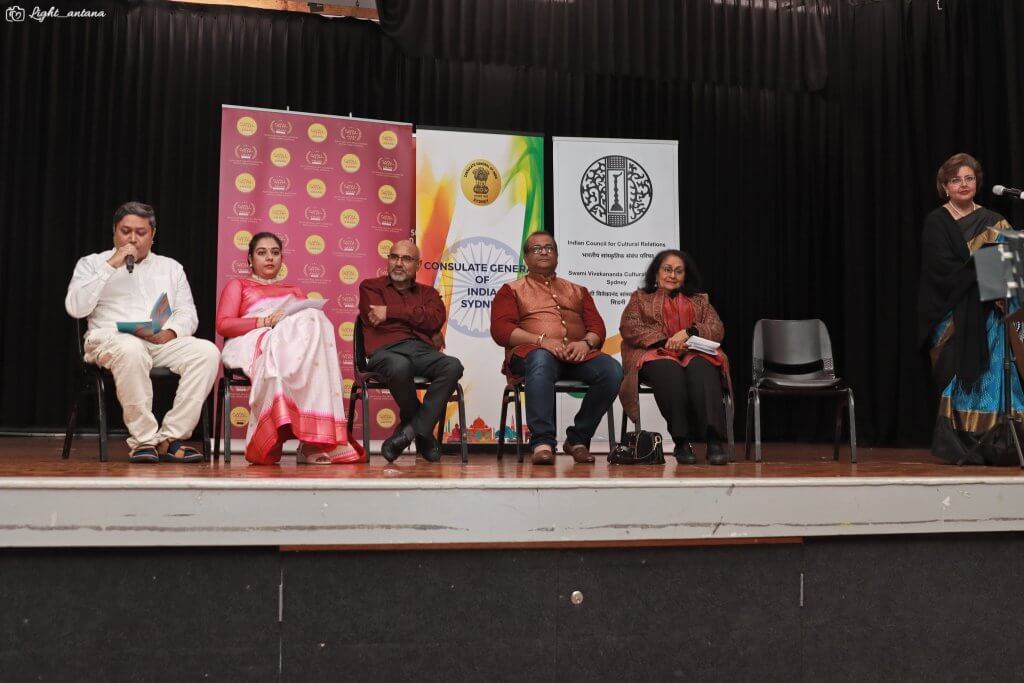
Media Panel – “Foreign Funding of Regime Changes in South Asia”: Moderated by Kedarnath Pagaddinnimath, this panel brought together voices like Zia Ahmed (India), Rishi Acharya (Nepal), Tito Scohel (Bangladesh), and Don Wickrama (Sri Lanka) with addition of Dr Salvatore Baroness (Australia) for a lively discussion on geopolitics and journalism.
-
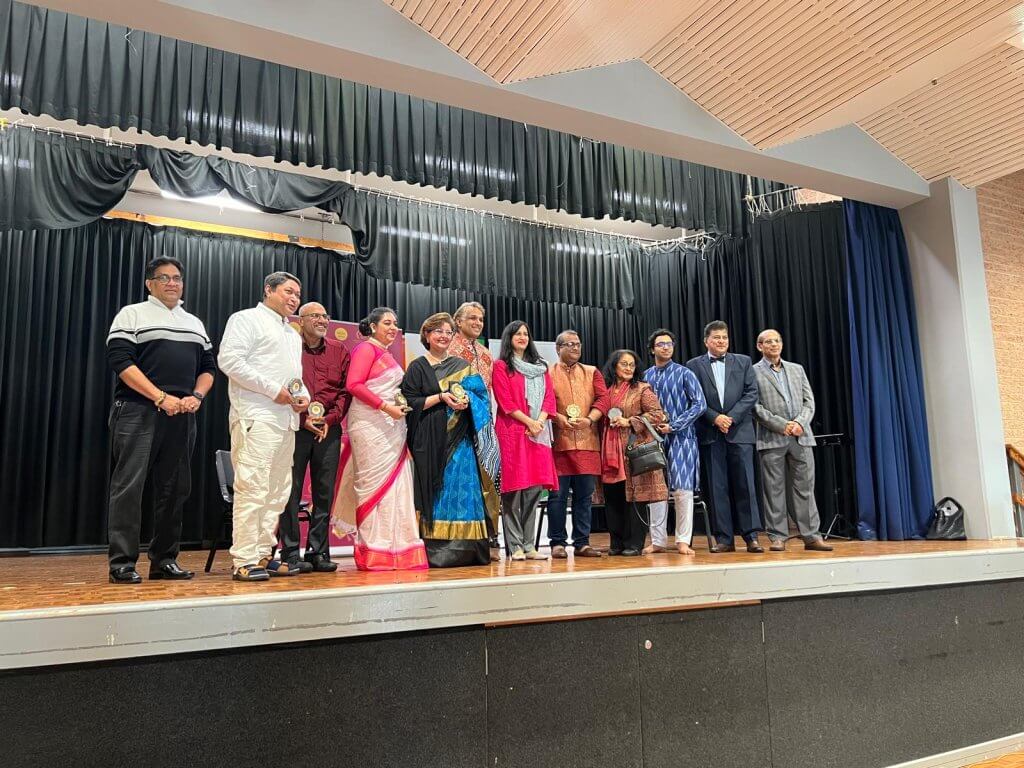
India Panorama Poetry Panel: This multilingual poetry showcase connected culture and identity through voices spanning Tamil, Sanskrit, Urdu/Hindi, Maithili, Gujarati, and Assamese, led by moderator Preeti Thadaniand featuring poets such as Dr. Balu Vijay, Saba Zaidi Abdi, and others.
-
Author Panels: Two back-to-back sessions offered diverse literary perspectives. Roanna Gonsalves moderated the first panel with authors from India, Sri Lanka, Bangladesh, and Afghanistan. The second, moderated by Farzana (Afghanistan), featured voices from Bhutan, India, and Australia, including Dr Charmaine O’Brienand Elana Benjamin.
-
Youth Writing Workshop & Competition: A special feature encouraged young South Asians in Sydney to find their voice through creative writing, ensuring the next generation is nurtured and celebrated.
-
Evening Poetry Slam: The event concluded with a spirited poetry slam convened by Hasitha Adhikariarachchi (Sri Lanka). Contestants delivered powerful verses judged by a panel including Ingita Thakkar and Subhashini Jayatilake, showcasing raw talent and contemporary concerns.
Diversity, Dialogue, and Community Spirit
The Literature Day and Book Fair was not only about books and panels—it was about community, hospitality, and cultural connection. Attendees networked in a welcoming atmosphere, enjoyed subcontinental cuisine, and discovered works that reflected the plurality of South Asia.
The event’s success was made possible through the support of Multicultural NSW and the City of Ryde, with AMUST serving as media partner. The collaborative spirit of sponsors, organisers, volunteers, and artists underscored the festival’s inclusive mission.
A growing legacy
From film to art to literature, SAFAL fest has become a beacon for celebrating South Asian creativity in Australia. Literature Day 2025 reaffirmed that stories, poems, and ideas have the power to bridge divides, preserve heritage, and create belonging across borders.
As one participant aptly put it: “It was an enriching event networking with a diverse group of people in a most hospitable atmosphere. Well done SAFAL and the organising committee and the panellists.”
With its commitment to inclusivity and diversity, SAFAL Fest continues to carve out a unique cultural space in Sydney, ensuring that South Asian voices remain strong, connected, and celebrated.






Comments