

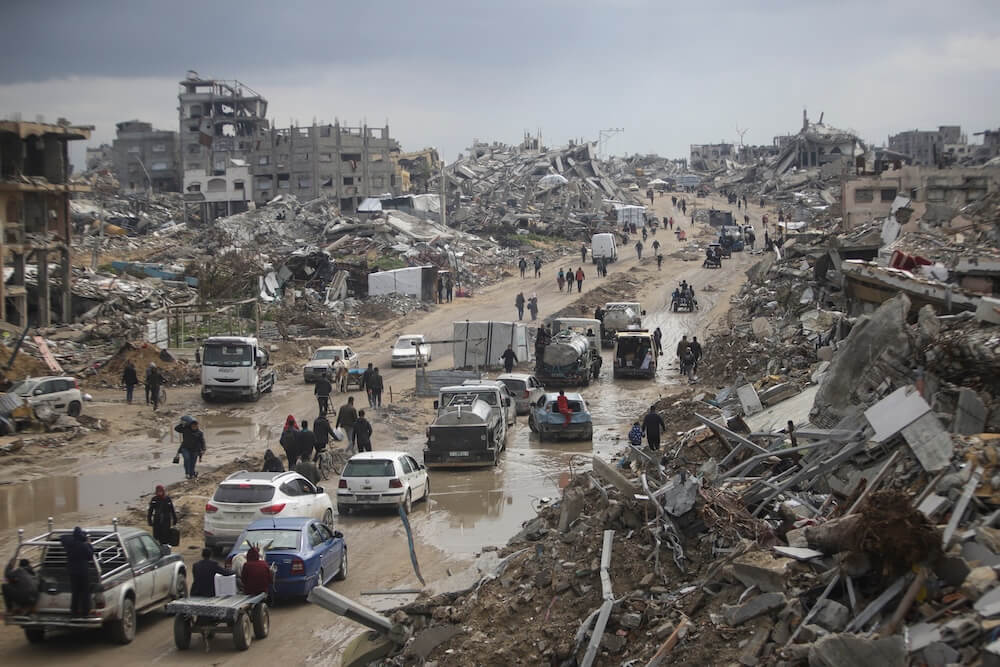
While President Donald Trump and Prime Minister Benjamin Netanyahu have been working out deals at the White House advancing a new peace framework for Gaza, Israeli bombs continued to rain down over Gaza City, leaving dozens dead, many missing, and entire neighbourhoods reduced to rubble.
The juxtaposition is stark: as Netanyahu discussed ceasefire prospects in Washington, Israeli forces pressed forward with what critics call a brutal siege of Gaza’s densest districts.
In devastated urban zones, wounded civilians await rescue; hospitals groan under the weight of casualties; critical infrastructure — water, power, sanitation — is in tatters.
Trump’s 20-Point Plan: Summary and Context
At the White House, Trump and Netanyahu unveiled a 20-point proposal they say could end the war if Hamas agrees. The core elements are:
-
Gaza will become a deradicalised, terror-free zone.
-
Gaza will be redeveloped for the benefit of its people.
-
War ends immediately upon mutual agreement; Israeli forces withdraw to pre-agreed lines; all hostilities freeze until conditions are met.
-
Within 72 hours of Israel accepting the deal, all hostages, living and dead, will be returned.
-
After hostages are returned, Israel will free 250 life-sentence prisoners and 1,700 Gazans detained since October 7, prioritizing women and children. For each returned Israeli corpse, 15 Gazan remains will be released.
-
Hamas members who commit to peaceful coexistence and decommission weapons will get amnesty; those wishing to leave Gaza get safe passage.
-
Full humanitarian aid flows into Gaza, matching the volumes agreed January 2025; infrastructure (water, power, hospitals, roads) will be rehabilitated.
-
Aid distribution will be conducted via the UN, Red Crescent, and other neutral agencies; Rafah crossing reopens both ways per the January 2025 mechanism.
-
Gaza under a temporary transitional technocratic Palestinian committee, staffed by qualified Palestinians and international experts.
-
This committee is overseen by a new “Board of Peace,” chaired by Trump, with other states (including Tony Blair) involved.
-
A panel of international experts will generate an economic development plan for Gaza to attract investment and jobs.
-
A special economic zone will be created with preferential tariff and access rates.
-
No forced displacement: people free to leave or return; residents remaining encouraged to rebuild Gaza.
-
Hamas and other militant factions will have no role in governance, directly or indirectly.
-
All military, terror, and offensive infrastructure (tunnels, weapons production) will be destroyed and not rebuilt. Gaza must be demilitarised under independent monitoring and an internationally funded weapon buy-back and reintegration scheme.
-
Regional partners guarantee Hamas/faction compliance and ensure Gaza poses no threat to neighbours.
-
A temporary International Stabilization Force (ISF) will deploy in Gaza, working with Palestinian police and coordinating border security with Israel and Egypt.
-
Israel affirms it will not annex Gaza; forces will withdraw progressively, handing territory to ISF and the transitional authority, except for a security perimeter until Gaza is secure.
-
If Hamas delays or rejects, the scaled-aid program proceeds in terror-free areas handed over to ISF.
-
An interfaith dialogue process is established to shift narratives, emphasising co-existence; meanwhile, a political horizon toward Palestinian self-determination/statehood is envisaged, with U.S.-brokered Israel–Palestine dialogue.
If Hamas accepts, Trump and Netanyahu assert the war ends. But if Hamas refuses — or accepts but obstructs — Israel retains the right to resume full hostilities under US backing.
The plan has drawn warm statement from several Arab states. In a joint declaration, foreign ministers of Saudi Arabia, Jordan, the UAE, Qatar and Egypt said they were “ready to cooperate” to finalise and implement the deal.
Yet in Gaza the mood is bitterly skeptical.
“This plan is unrealistic,” said 39-year-old Ibrahim Joudeh in al-Mawasi. “It’s drafted with conditions the U.S. and Israel know Hamas will never accept.”
Abu Mazen Nassar, displaced from northern Gaza, called the proposal manipulative: “What does it mean to hand over prisoners without credible guarantees of ending the war?” He added, “We as a people will not accept this farce.”
The international community watches warily: can a plan launched amid a city-wide bombing campaign survive the realities on the ground?
As Netanyahu pledged to complete Israel’s objectives if Hamas obstructs the deal, critics warn the violence will only intensify.
For Gaza’s civilians, the warnings ring hollow. Diplomatic words will save no lives buried under rubble, no wounded souls, no homes obliterated.
And while leaders negotiate, the bombs fall — a grim reminder that peace proposals can be overshadowed by ongoing brutality.



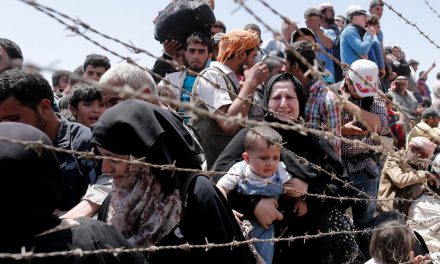


Gaza Humanitarian Foundation is bullet for food, a devious death trap. The 20-point peace or piss plan is a treacherous finalisation of the Gaza Genocide Plan. The architect in chief, Netanyahu and the beholden approver, Trump, merrily endorse their treachery. Meanwhile, the impotent UN and the World look on, utter some platitudes, and the charade continues. Recognising the State of Palestine devoid of Palestinians could, in some ways, salve the conscience of our Enlightened World.