


In the heart of Paris—amid cathedrals, cobblestone lanes, and cafés echoing with centuries of art and philosophy—stands a structure that offers not just contrast, but comfort. The Grand Mosque of Paris, or La Grande Mosquée de Paris, is one of the city’s quiet marvels—less known to tourists, yet unforgettable to those who enter its gates.
At 2bis Place du Puits de l’Ermite, near the famous Jardin des Plantes, the mosque does not demand attention. It invites it. Its tall minaret does not rise in arrogance, but in grace—offering a spiritual still point amid the motion of the city.
A monument built in gratitude
The Grand Mosque was inaugurated in 1926, a gift of remembrance and recognition from the French state to the more than 100,000 Muslim soldiers, largely from North Africa, who died fighting for France during World War I. It was not just a gesture of diplomacy—it was a brick-and-mortar acknowledgement that the Muslim presence in Europe is deep-rooted and dignified.
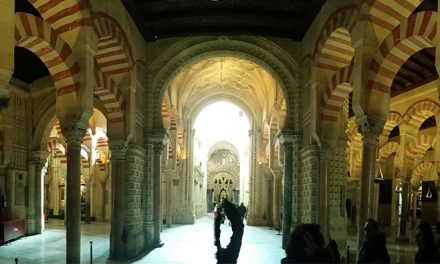
The design was inspired by the mosques of Fez and Córdoba, echoing Islamic Spain’s legacy of beauty, wisdom, and coexistence. It features carved cedarwood, turquoise tiles, fountains, and Andalusian gardens. The architecture does not overpower it whispers. It does not announce it welcomes. The stillness of the space speaks volumes.

Architecture that breathes faith
From the moment one enters the mosque’s stone courtyard, the atmosphere shifts. Olive trees shade the path, water trickles in carved fountains, and Arabic calligraphy adorns the walls like visual dhikr. Every detail feels intentional. It’s a reminder that in Islam, beauty is not excess—it is expression.
Inside the prayer hall, time itself seems to slow. Light plays on tiled walls. The scent of stone and wood is grounding. Silence is not absence here—it is presence.
What moved me most was how familiar it felt. As a Muslim far from home, I didn’t need to explain anything to feel at home. The qibla was there. The call to prayer echoed softly. Even surrounded by strangers, I was not alone.

Not just a mosque, but a cultural heart
Beyond its role as a place of worship, the Grand Mosque houses a traditional hammam, a halal North African restaurant, and a rich library. It hosts interfaith dialogues and cultural events, providing a space for mutual respect and shared understanding.
In a continent where questions of identity and integration can stir tension, this mosque offers a quiet yet powerful answer: that Islam has long been part of the West—not as a visitor, but as a contributor.
Reflections from a distance
Praying at the Grand Mosque of Paris for the first time brought me back to my early experiences in Australia—where mosques often began as converted halls or scout sheds.
As a local councillor and someone deeply passionate not only about Muslim community infrastructure but also about Islamic architecture—which I believe serves as a creative bridge for introducing Islam to non-Muslims—I’ve seen how these humble spaces can evolve into landmarks of identity. Punchbowl Mosque, once a simple shelter of tin and prayer mats, now stands as a symbol of faith and community in my own neighbourhood.
My visit to Paris reaffirmed what I’ve long believed: that no matter where a mosque stands—Sydney, London, Paris, or Granada—it carries the same quiet strength. Mosques are more than places of worship. They are spaces of reflection, belonging, and beauty, built with the same purpose: to bring us closer to God and offer a meaningful introduction to Islam for those unfamiliar with it.
The true gift: Welcome, peace, and beauty
The Grand Mosque of Paris is not merely a stop on a city tour, nor a relic of another era. It is a living heart in a global city—welcoming, radiant, and resilient.
For Muslim readers in Australia—many of whom come from migrant journeys, carry dual identities, and often navigate faith through layers of culture and distance—this mosque stands as a global symbol of what is possible: that Islam can flourish with elegance and dignity, even far from its traditional heartlands. In this space, I did not feel like a visitor.
I felt like part of something enduring—of peace and beauty. And that, perhaps, is the true gift of the Grand Mosque of Paris.



Comments