

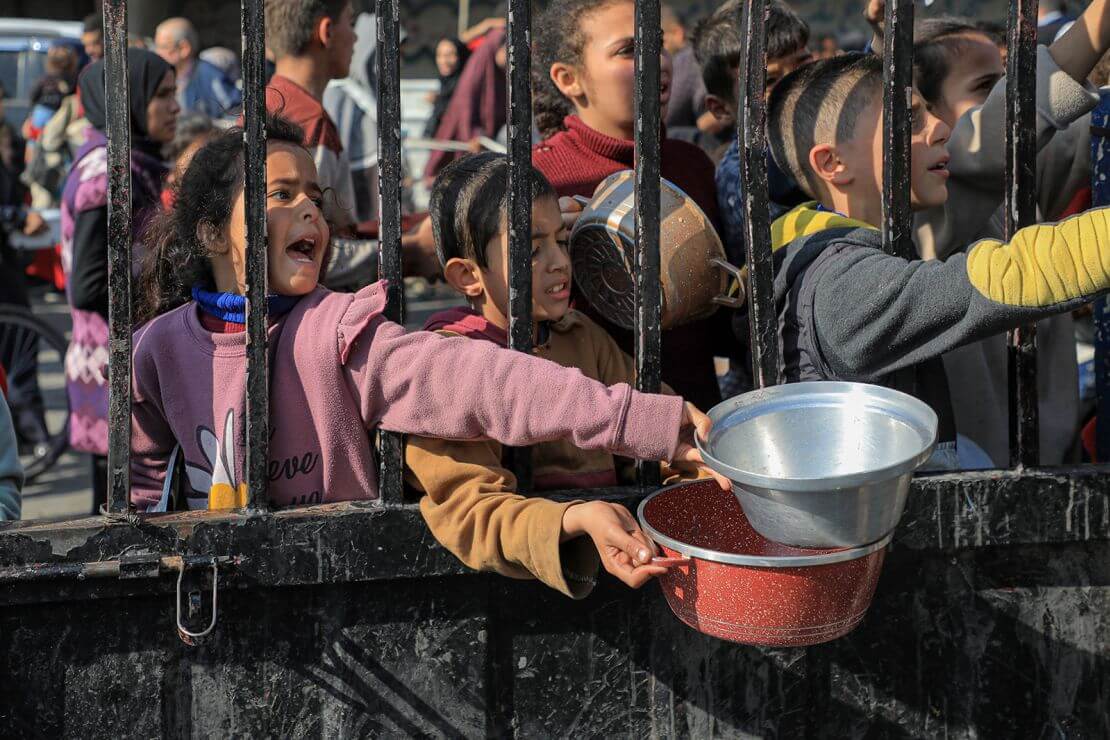
Calls for the Australian Government to take meaningful action against Israel’s ongoing genocide of Palestinians are growing louder and increasingly impossible to ignore. What began as cautious statements of concern has evolved into a crescendo of condemnation from within Australia and abroad, placing immense pressure on Australian Prime Minister Anthony Albanese to move beyond rhetoric and act decisively.
According to the Palestinian Health Ministry, the death toll in Gaza has now surpassed 50,000 people. More than half of the victims are women, children, and the elderly. This staggering loss of life has amplified international alarm and put Australia’s continued inaction under a searing spotlight.
Australia’s close allies, including the UK, France and Canada, have gone beyond statements. The UK has paused trade talks with Israel; others have threatened consequences for its continued obstruction of aid.
The Australian Centre for International Justice has made a detailed submission to the government calling for Australia to sanction Israeli Finance Minister Belazel Smotrich and National Security Minister Itama Ben-Gvir over patterns of conduct they allege constitute “incitement to violence, complicity in serious human rights violations, and responsibility for policies that have exacerbated settler violence and resulted in the displacement, dispossession and death of Palestinian civilians”.
While Prime Minister Albanese has labelled Israel’s actions “completely unacceptable” and condemned the blockade of humanitarian aid as “an outrage,” advocates argue that his government’s actions remain woefully inadequate.
So far he has ruled out the prospect of joining any international effort to impose sanctions on leading Israeli politicians over the war in Gaza and settlement building in the occupied West Bank.
Asked if Australia would join Canada, UK and France in imposing further sanctions on Israel, Albanese said: “No, we follow our own path and Australia determines our own foreign policy. And we’ve been very consistent the whole way through. And what people don’t say when they put forward ideas like this is what that means.”
Former Minister Ed Husic, who has faced political cost for his position, made it clear that the time for talk is over. Speaking to Triple J, he urged Australians to “please do not stop speaking up,” and said, “Words have been expressed. Now we need to contemplate what is the shape of action.”
Senator Mehreen Faruqi described the situation as a “hellscape of a reality,” lamenting the Albanese Government’s “hollow words” and refusal to utter the word “genocide.” She called out the government’s lack of action: “Nothing and no one can excuse inaction. Yet they do.”
She added: “Sanction Israel. Force them to lift the siege. Stop the killings. Stop the starvation and end the occupation. That’s what needs to happen.”
Former Foreign Minister Gareth Evans, who served from 1988 to 1996, has backed calls by former cabinet minister Ed Husic for Australia to introduce targeted sanctions against senior Israeli politicians.
“Imposing financial sanctions, travel bans and the like… would certainly send a powerful message in response to the ongoing, and now further escalating horror in Gaza,” Evans said.
He called for figures such as Bezalel Smotrich, Itamar Ben-Gvir and Prime Minister Benjamin Netanyahu to be sanctioned, alongside violent settlers already blacklisted last year.
Evans went further: “By far the strongest message Australia could send would be to announce… that we are immediately recognising Palestinian statehood.” Recognition, he noted, is already an Australian Labor Party (ALP) policy — the only question is timing. And as Evans put it, “the timing now is absolutely right.”
The Australian Federation of Islamic Councils (AFIC) responded sharply to the government’s stance, accusing it of issuing “hollow statements” in the face of what global experts increasingly label a genocide.
AFIC President Dr Rateb Jneid stated: “We are more than 18 months into a genocide. Children are starving. Hospitals have been bombed. Entire families wiped out… And yet the Australian Government refuses to take even the most basic actions—no sanctions, no suspension of military cooperation, no recognition of the State of Palestine.”
AFIC’s message is clear: this is no longer a question of diplomatic balance — it is a test of Australia’s moral standing. “If Australia’s only response to genocide is polite disappointment and diplomatic hedging, then we are not neutral, we are complicit.”
The Australia Palestine Advocacy Network (APAN) notes that Australia is now falling behind. While welcoming Albanese’s stronger language, APAN President Nasser Mashni warned: “Sanctions are not extreme — they are the bare minimum response to state-led atrocities… It’s beyond time for sanctions on Israel.”
In a recent statement, the Australian Islamic Medical Association (AIMA) expressed its devastation at the targeted killing of Dr Alaa Al-Najjar’s family — nine of her ten children killed in a single airstrike — calling it a violation of international humanitarian law and a clear breach of medical neutrality.
“These are not accidents of war,” AIMA said. “They are crimes that demand urgent attention and accountability.”
AIMA continues to urge medical institutions in Australia, to break their silence and defend the lives and rights of their colleagues in Gaza. Their unwavering stance stands in contrast to the troubling quiet of many professional bodies.
As images of mass suffering continue to emerge from Gaza, Prime Minister Albanese faces a stark choice: take action now, or be remembered for hesitation in the face of atrocity. The international legal obligations are clear. The political will is building. And the public demand is growing.
The time for caution has long passed. If Australia continues on its current path, it will not be remembered for its diplomacy — it will be remembered for its silence.
History will not absolve those who failed to act.





Comments