

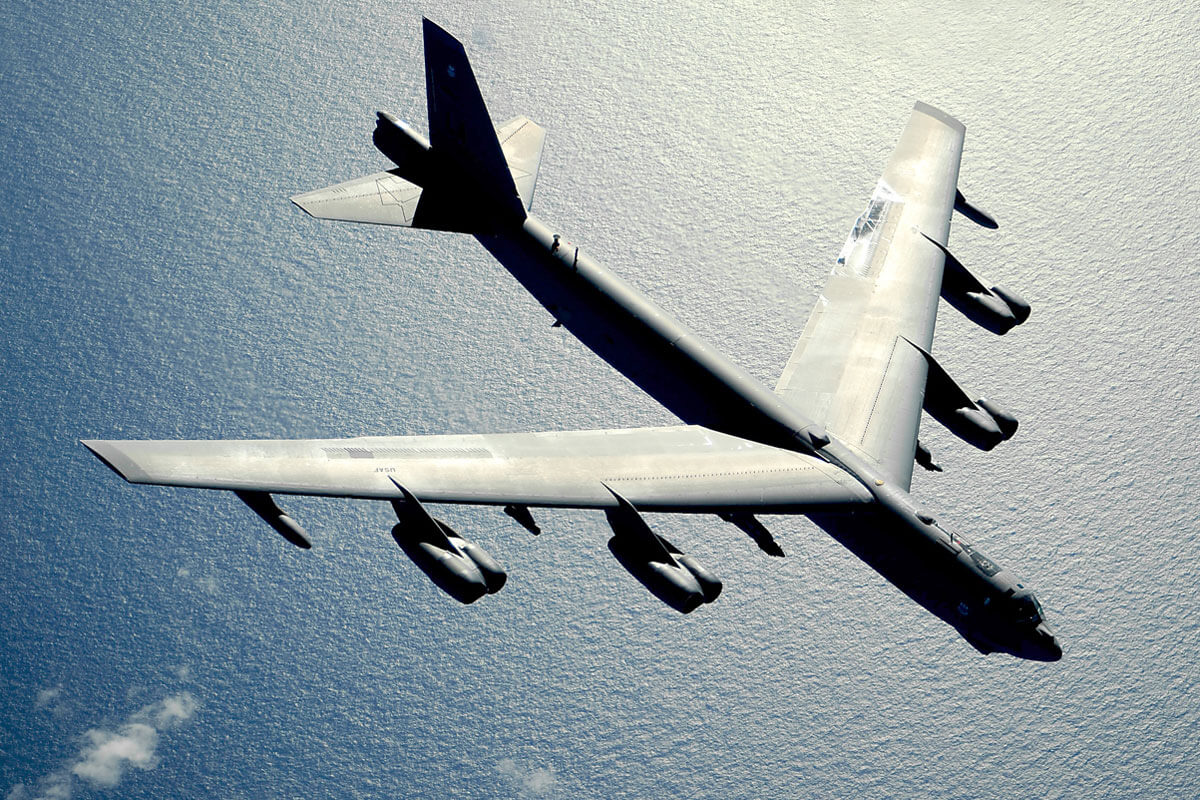
In the recent announcement of deploying US B-52’s in the Northern Territory (NT), Australia is slowly and surely drawing dangerously towards US-led conflict amid the heightened tension between China and the United States. Australia could be the unfortunate patsy of China.
Acquiring nuclear-powered submarines under the AUKUS agreement has given rise to colossal discourse in international media, especially China and Indonesia have raised concerns about nuclear proliferation in the region.
The announcement of deploying six B-52’s in the NT has further nettled China. Even many Australian ministers know nothing about this decision. The bombers are likely to be deployed in the Australian Tindal Air Force base, about 300km south of Darwin.
The deployment is seen as a part of Australia’s defence alliance with the United States, which started in 2011 while Barack Obama was President. The deal allows them to maintain a sizable US marines on rotation.
B-52 remains the deadliest long-range US strategic bomber capable of delivering nuclear bombs. The combat range of B-52 is more than 9000 miles, good enough to operate over Beijing, which should be an added concern for Beijing. The United States sends a chilling message to China amid heightened tension over Taiwan’s reunification with mainland China. Of course, China slammed the decision.
Under the AUKUS deal, Australia would be getting nuclear-powered submarines from the US or UK, but it would take more than a decade due to the involvement of complex technicalities. Until then, there was a discussion to deploy/lease US nuclear-powered submarines in Australia.
The US Submarine Group Commander, during his visit to Australia in August 2022, discussed the possibility of interoperability and joint conduct of missions from Australia based facilities. This new arrangement would give the United States dictate the terms and conditions, which would be imperative for Australia to carry out either directly or indirectly.
Now the deployment of B-52 would add more constraints on Australia to follow the US policy in Indo-Pacific, and more precisely, Australia would be compelled to be drawn to the US-led conflict with China.
Even North Korea’s most nuclear-threatened countries, Japan and South Korea, are yet to allow US nuclear weapons to be deployed on their soil. ASEAN leaders also raised concerns that Australia is drifting away from ASEAN engagement over the China issue.
Australia-China relations became an all-time low since COVID-19. After Labor Party in Australia won the elections earlier this year, CCP, in its latest move, placed four-point demand on revitalizing relationships. Australia has yet to respond to the proposal, which is certainly odd for Australia to agree with.
Given the trusted relationships between Australia and the United States, Australia is likely to extend its full cooperation with the US. On the contrary, Australia will not do the same to China, where China wants Australia to cooperate, as evidenced by its four-point demand.
That is why China is so furious with Australia and has stopped answering even phone calls from Australian counterparts. Presumably, it was Australia’s effort to arrange a brief meeting between Xi Jinping and PM Anthony Albanese at the sideline of the 17th G20 Summit in Bali without much outcome.
Deployment of US lethal nuclear bombers and weapons purport Australia’s intention in serious question. Instead of repairing the damage to the relationship between China and Australia, China would find Australia a pawn in case of heightened tension between US-China over Taiwan.
Australia still maintains its goodwill as the forerunner of the nuclear nonproliferation treaty(NPT). Although Australia may not have the audacity to distort the trusted relationships with the United States by refusing the US proposal, indeed, it puts Australia in the horn of a dilemma.
It reminds of Henry Kissinger’s famous quote, “to be an enemy of America can be dangerous, but to be a friend is fatal”. To be a good friend of the US, Australia will find it challenging to avoid fatalism.
The United States is seen trying to include all trusted allies in all US-led initiatives in the Indo-Pacific region. During the past few decades, most US-led invasions have left the invading countries in ruins, giving rise to anti-American sentiment even within its allies and partners.
It is also strongly evident from the statements former Australian PM Malcolm Frazer, who said in an interview, “United States is beginning new cold war in the Pacific; her military policy has failed in Vietnam; failed in Iraq; failed in Afghanistan; the Middle East is a mess…. we are not going to war, which are wrong wars, illegal wars, misconceived wars ….”
The fact remains that Australia will get more people’s support for not deploying nuclear-capable war pieces of machinery than by supporting the same. The question is whether Australia would consider the peace-loving people’s approval or join the US-led unjust Indo-Pacific tension over Taiwan.
Undoubtedly, awareness is growing against the lethality of nuclear weapons.





Comments