

When viewed from outside, for those without knowledge of the teachings of Islam, who know our Prophet Muhammad (s) only from Western propaganda accounts, the image of Islam is frightening.
The media’s presentation of the Islamic world is awful as it has been for generations but when we look from only the surface, via mainstream media, a negative attitude is understandable.
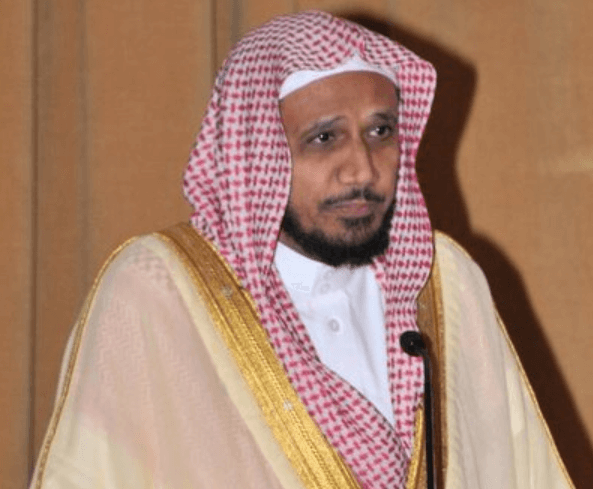
On one hand the fabulously rich Kingdom of Saudi Arabia is ruled by people who are prepared to undertake such atrocities as the Khashoggi dismemberment in Istanbul and the imprisonment of Sheikh Dr Abdullah Basfar for 12 years for leading prayers in the courtyard of Hagia Sophia in 2014. [The New Arab, 15 October 2022]
It has also come to some sort of rapprochment with the apartheid state of Israel.
The other major Muslim nation, Egypt, is under a military dictatorship which cooperates with Israel against the Palestinians, shutting off Gaza at its borders.
At the other end, we have the Islamic Republic of Iran where the population is in uproar over the lethal treatment of Mahsa Amini, a Muslim woman for inappropriate wearing of hijab. It also assists the brutal Assad Regime in Syria to remain in power.
Israel has been able to present itself to the world as a defender of the rights of Muslim women in Iran, slickly avoiding its treatment of Palestinian women and the recent shooting of a female Palestinian journalist.
Somewhere hovering around the middle between the well organised oppressive states is ramshackle Afghanistan, abandoned by its erstwhile saviours to a sectarian group of extremists who refuse the right of Afghan women to receive education, despite Islamic teachings to the contrary.
Increasing the blockage to the promulgation of the message of Islam is Daesh, still called “Islamic State” in Western media. It murders Shia Muslims at prayer in mosques and has apparently extended its activities to blowing up Sunni mosques during prayers in Kabul.
How do we cope with this picture?
Due to the paucity of positive international examples, it is important for individual Muslims to be good examples of Islam. We must begin change with ourselves.
We may not be aware of the great significance of how we behave towards others, Muslim and non-Muslim, in creating respect for Islam.
Islam emphasises the rights of all humans to respect, to decent living conditions and protection from harm. Racism is the sin of Iblis (Devil) which must be repelled.
A major issue coming up in Australia is the Indigenous Voice to Parliament which must involve a referendum and considerable political debate. The racists will emerge from their holes in shiny scales and they must be defeated.
People outside the Ummah judge Islam by the Muslims they meet, who have a more powerful influence than the media.
If you wear hijab or a sport a long beard and dress differently, advertising your status as a Muslim, and behave like an arrogant idiot, you do dawah for Shaitan (Devil).
Loud arguments, clever debating points and expressions of uninformed prejudice in person, damage the name of Islam more than media reports of Saudi, Egyptian or Iranian miscreants.
On the other hand, if you are seen as compassionate, helpful and taking a positive role in society, your actions will be noted.
Personal experience of Muslims determines attitudes.
It is vital that Muslims living in the Australian community be aware of the characteristics of the dominant culture and behave in ways which do not create apprehension in people.
Do not assume your ethnic culture can be carried across without examination. Not every aspect of your ethnic culture is “Islamic.”
Muslims in non-Muslim communities have a heavy responsibility as they are seen as representatives of the Ummah of Muhammad (s), whether they like it or not.
That cannot be forgotten for one minute.


Comments