

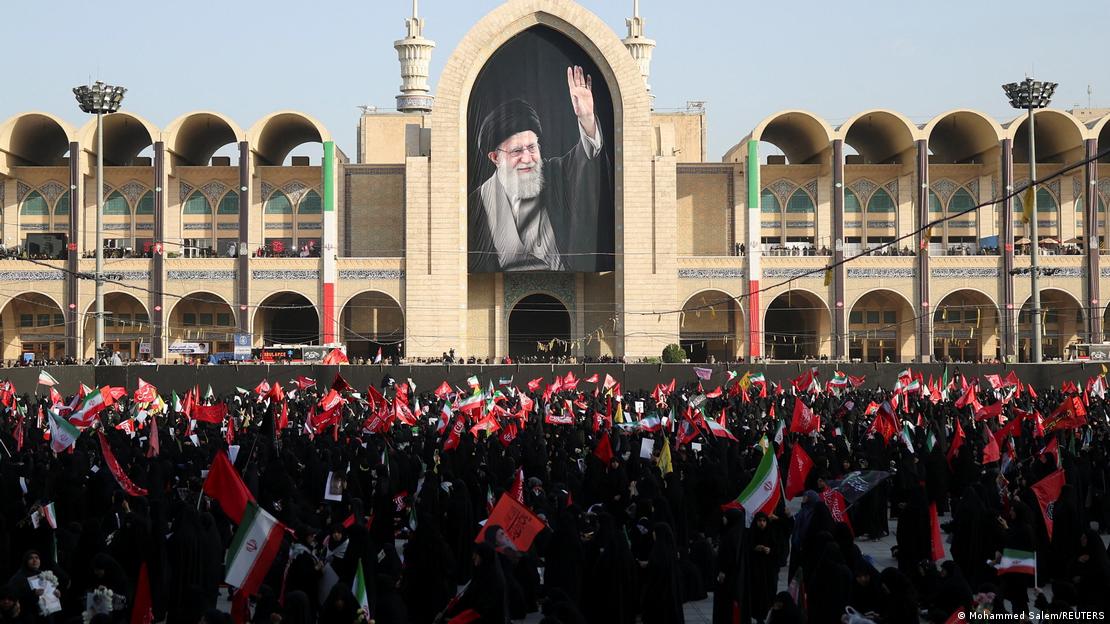
As millions of mourners filled the streets of Iran and Iraq to farewell Iran’s martyred Supreme Leader Ayatollah Ali Khamenei, US Donald Trump escalated tensions by declaring the ceasefire with Iran effectively dead, authorising fresh military strikes and unleashing a barrage of inflammatory insults against the Iranian leadership during the NATO Summit in Ankara, Türkiye.
The stark contrast between scenes of mourning across the Muslim world and renewed military escalation has deepened fears that hopes for a negotiated settlement are rapidly evaporating.
Burial at the shrine of Imam Reza
After more than four months of war and a week of unprecedented funeral processions stretching across Iran and Iraq, Ayatollah Ali Khamenei was laid to rest at the revered Shrine of Imam Reza in Mashhad, his birthplace in Iran.
The funeral procession became one of the largest public gatherings in modern Iranian history. Iranian officials estimated that well over 15 million people participated throughout the week, while some estimates placed attendance substantially higher.
Beginning in Tehran, where millions accompanied Khamenei’s coffin through a 10-kilometre procession to Azadi Square, the funeral continued through the holy city of Qom before crossing into Iraq, where mourners lined the streets of Najaf and Karbala.
The final procession in Mashhad saw such overwhelming crowds that Khamenei’s coffin had to be transported by helicopter for the last stage into the Imam Reza shrine after roads became impassable.
Representatives from various countries in general and Muslim countries in particular as well as those from Hamas, Palestinian Islamic Jihad, Hezbollah and Yemen’s Ansarallah movement joined Iranian officials during the official ceremonies, reflecting the regional significance of the funeral.
Trump declares diplomacy finished
While millions were participating in funeral ceremonies, President Trump delivered one of his most confrontational performances at the NATO Summit in Ankara.
Declaring that negotiations with Iran were effectively finished, Trump dismissed Iranian leaders in unusually personal terms.
“I don’t want to deal with them anymore. They’re scum… They’re sick people… They’re vicious, violent people… They’re cuckoo. As far as I’m concerned, it’s over,” he told reporters.
The remarks came only weeks after Washington and Tehran had signed a preliminary agreement intended to halt hostilities and begin negotiations over Iran’s nuclear programme and regional security.
Trump simultaneously announced renewed American military strikes inside Iran, describing them as retaliation for attacks on shipping in the Strait of Hormuz.
His decision effectively ended hopes that the June understanding could evolve into a lasting ceasefire.
Fresh bombing during national mourning
The renewed attacks occurred as funeral ceremonies were reaching their climax.
Reports emerged of explosions near Bushehr, home to one of Iran’s major nuclear facilities, as well as in Konarak and surrounding southern regions.
Although US Central Command denied conducting strikes during the final hours before the burial itself, Washington had resumed military operations on preceding nights after Trump publicly declared the ceasefire over.
Iran responded with missile and drone attacks targeting US-linked military installations across parts of the Gulf region, although neither side has yet returned to the scale of fighting witnessed during the opening weeks of the conflict.
Erratic NATO performance raises new questions
Trump’s appearance in Ankara was marked not only by aggressive rhetoric towards Iran but also by repeated verbal errors, contradictory statements and attacks on America’s NATO allies.
He criticised Spain, threatened trade retaliation against European partners, revived calls for US control of Greenland and complained that NATO members had refused to support his military campaign against Iran.
Political analysts noted that Article 5 of the NATO treaty applies only when a member state is attacked—not when one member voluntarily initiates military action.
Throughout the summit, European leaders largely continued discussions on Ukraine, defence cooperation and European security while largely distancing themselves from Trump’s increasingly unpredictable remarks.
Observers also highlighted several confusing moments during Trump’s media appearances, including references to “the Islamic Republic of Japan”, confusion between Ukrainian President Volodymyr Zelenskyy and Russian President Vladimir Putin, and contradictory descriptions of the Iran conflict as simultaneously “over” and an ongoing military operation.
Critics argued that the president’s rhetoric risked further destabilising an already volatile region while undermining prospects for diplomacy.
A region seeking peace
For many observers, the juxtaposition could hardly have been more striking.
On one side stood millions of mourners participating in one of the largest funeral gatherings witnessed in the Middle East in recent decades, paying tribute to a leader who shaped Iran for more than three decades.
On the other stood renewed bombing campaigns, escalating rhetoric and the apparent collapse of fragile diplomatic efforts.
Whether history ultimately remembers this week as the closing chapter of one conflict or the beginning of another may depend on whether diplomacy can once again prevail over military confrontation.
As ordinary civilians across Iran continue to mourn their dead and communities throughout the region bear the consequences of prolonged instability, many continue to call for restraint, adherence to international law and a genuine commitment to peaceful dialogue rather than further escalation.





Comments