

At a time when social media shapes public opinion more rapidly than traditional newsrooms, hundreds of Muslim content creators, journalists, filmmakers, podcasters, scholars, entrepreneurs and digital media professionals from more than 40 countries gathered in Istanbul with a common purpose: to reclaim the Muslim narrative through authentic, ethical and impactful storytelling.

Held over two inspiring days on Saturday 11 and Sunday 12 July 2026 at the Wyndham Grand Istanbul Levent Hotel & Conference Centre, the Global Muslim Content Summit (GMC Summit 2026) demonstrated that Muslim media is no longer a collection of isolated voices but an emerging global movement.

Organised as a non-profit initiative by OnePath Network, the summit attracted creators at every stage of their journey—from aspiring influencers recording videos on their phones to internationally recognised journalists reaching audiences of millions.

As one of the event’s official sponsors and media partners, Australasian Muslim Times (AMUST) proudly joined almost 500 delegates witnessing what many described as the beginning of a new era in Muslim storytelling.

More than content—it is a responsibility
The summit’s central message was clear.
Media today shapes perceptions of Islam, influences political narratives and affects how Muslims are viewed around the world.
For too long, organisers argued, those stories have often been told by people unfamiliar with Islamic values or Muslim lived experiences.
The Global Muslim Content Summit sought to change that.
Opening the summit, OnePath Network CEO Malaz Majanni described the gathering as a “content ecosystem”, reminding delegates that they had come not merely for inspiration but for direction.
“Ask yourself: What work have I been delaying that the Ummah may actually benefit from right now?”
That question became the theme running throughout the weekend.

International voices shaping the future
Across two packed days, keynote sessions, creator spotlights and practical workshops covered almost every aspect of modern digital media.
The impressive speaker lineup included internationally respected scholars and creators such as:
- Dr Omar Suleiman
- Dr Yasir Qadhi
- Lauren Booth
- Mohammed Faris
- Yusuf Omar
- Taimaa Homs
- Haris Tagari
- Peter Gould
- Kamal Saleh
- Dr Tasneem Alkiek
- Riyaad Minty
- Muhammad Jalal
- and many more.

Sessions explored:
- Ethical journalism
- Digital activism
- Artificial intelligence
- Personal branding
- Mobile journalism
- Documentary filmmaking
- Podcasting
- Analytics and audience growth
- Sustainable media organisations
- Barakah-centred productivity
- Creator wellbeing and collaboration

Delegates also used the summit’s dedicated mobile app to navigate the extensive program, access resources and connect with fellow participants.
Hasan Wadi, an award winning speaker, humanitarian and Global Director of Human Concern International (HCI) who were a organising partner of the GMC 2026, described his use of content creation to inspire, mobilise and empower the next generation of Muslim activists.

Dr Yasir Qadhi, one of the most recognised Muslim scholar in the English speaking world talked about “The Creators Compass” highlighting the Islamic framework every Muslim creator needs to operate within and warning against unethical monetisation and dangers of exploitation.

“A Ferrari in your pocket”
Among the most memorable presentations was that of internationally renowned mobile journalist Yusuf Omar, co-founder of Seen TV.
He reminded participants that almost everyone already possesses extraordinary production tools.
“We all have a Ferrari in our pockets.”
The smartphone, he said, is capable of producing world-class journalism.
The missing ingredient is storytelling.
He suggested that successful content usually satisfies three questions:
- Is it visual?
- Is it trending?
- Is it debatable?
Yet with great reach comes great responsibility.
Reflecting on the events following 7 October, Omar explained how he trained dozens of young Gazans to document the reality around them using only their phones.
Their stories, he argued, demonstrated that authentic local voices remain the most powerful form of journalism.

Winning the battle of narratives
Brand strategist Akhi Ayman encouraged Muslims to recognise that the struggle over public opinion is one that can be won.
Referring to the international response to Gaza, he argued:
“The battle of narratives is one that we can actually win.”
He encouraged creators to build trustworthy personal brands grounded in sincerity, conviction and long-term purpose rather than chasing short-lived popularity.
According to Ayman, people ultimately trust people more than institutions.

Turning hardship into purpose
Several speakers shared deeply personal stories.
One refugee advocate, Taimaa Hourizada described arriving in America as a 13-year-old unable to speak English.
Instead of hiding difficult experiences, creators were encouraged to transform them into sources of strength.
“Your pain, your trauma, your grief—those are not your weaknesses. Those are your advantages.”

Another documentary journalist Haris Tagari recounted travelling across Europe in an ageing vehicle researching forgotten Muslim history and interviewing Iraqi journalist Muntadhar al-Zaidi, whose shoe-throwing protest against former US President George W. Bush became one of the defining images of the Iraq War.
Faith before fame
Perhaps the summit’s most spiritually powerful sessions came from Dr Omar Suleiman, who repeatedly reminded delegates that digital influence carries serious accountability before Allah.

Drawing upon Prophetic traditions, he warned that wealth and fame can become two “hungry wolves” destroying sincerity.
He cautioned creators not to allow virality to replace verification, warning:
“Virality overtakes the principle of verification.”
He also urged participants never to exploit human suffering for personal branding.
“Don’t turn martyrs into your marketing.”
Instead, content creators should become vehicles through which Allah answers people’s prayers.
During one moving gala dinner address, he described meeting a Bosnian woman whose return to Islam began after watching online content produced thousands of kilometres away.
A single sincere video, he suggested, may become the means through which Allah guides another soul.

Building institutions—not just influencers
Returning to the stage, Malaz Majanni shifted attention from individuals to institutions.
Using the analogy of his father’s pizza business, he explained that anyone might produce one successful viral video.
Consistency, however, requires systems.
It requires what he called “the kitchen.”
Infrastructure, mentoring, organisational culture and training future leaders were essential if Muslim media was to mature.
He reminded delegates that every creator eventually has an expiry date.
The true measure of success is preparing the next generation.
His announcement of a 15-page “Dua Kit for Content Creators”, available through the summit app, reflected the event’s unique blend of professional excellence and spiritual development.

Palestine remained central
The humanitarian catastrophe in Gaza featured prominently throughout the summit.
Former corporate strategist turned activist Abubakir Rafiq shared his journey from making dua to become “a vessel” for Palestine to literally joining a humanitarian vessel attempting to break the blockade.
Despite later being detained by Israeli forces, he explained that previously recorded videos continued inspiring protests around the world.
His experience illustrated one of the summit’s recurring messages:
Authentic content continues influencing hearts even when the creator is silenced.

Scholarship for the social media generation
Islamic scholar Dr Tasneem Alkiek challenged academics to rethink how Islamic knowledge is communicated online.
She admitted that years of academic training had often made complex ideas inaccessible.
After witnessing poor arguments circulating widely online, she realised scholars must learn to communicate more clearly rather than simply criticising social media.
Her conclusion resonated strongly with delegates:
The audience is deeply thirsty for authentic Islamic knowledge—but it must be communicated in language people understand.

Beyond the stage
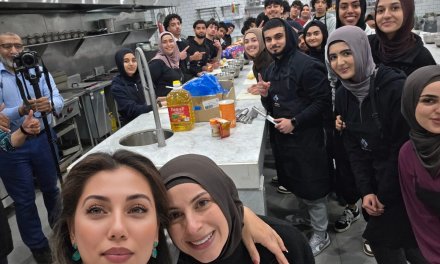
While keynote presentations inspired delegates, many participants agreed the summit’s greatest strength lay in its informal conversations.
Coffee breaks, networking lunches, exhibition halls and workshops became places where collaborations were born.
Creators who had only known each other through YouTube channels finally met face-to-face.
Journalists exchanged ideas with filmmakers.
Charities connected with influencers.
Young Muslims launching their first projects sat beside veterans who had spent decades building audiences.
The atmosphere reflected one recurring message heard throughout the weekend:
The Ummah possesses extraordinary talent.
What has often been missing is connection.

A movement gaining momentum
The Global Muslim Content Summit 2026 reflected the remarkable growth of Muslim-led digital media.
Rather than focusing solely on algorithms, monetisation or platform growth, organisers consistently returned to deeper questions of ethics, sincerity, justice and service.
The event demonstrated that Muslim creators increasingly see themselves not merely as influencers but as custodians of truth, educators and storytellers carrying a collective responsibility.

For AMUST, participating as a media partner reaffirmed journalism’s enduring role within this broader ecosystem of ethical Muslim media.
As delegates departed Istanbul carrying new friendships, collaborations and renewed purpose, one message echoed throughout the conference:
The future of Muslim media will not simply be measured by views or followers.
It will be measured by the stories that restore dignity, preserve truth and inspire positive change for generations to come.






Comments