

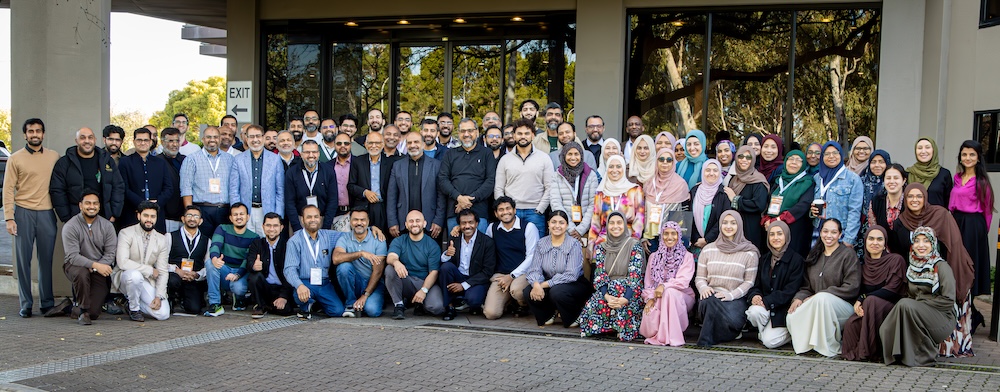
Over 80 Muslim healthcare professionals and medical students gathered in Adelaide for the Australian Islamic Medical Association’s National Leadership Camp 2026, a biennial gathering dedicated to strengthening the current and next generation of AIMA leaders.
Held at Rydges Hotel on South Terrace from 5–7 June, the camp brought together doctors, allied health professionals, JMOs, students and other healthcare professionals from across the country for three days of workshops, reflection, and community-building. Previous camps were held in Canberra (2022) and Brisbane (2024), with Adelaide marking the third instalment.
Themed around Dar al-Arqam, the house where the Prophet Muhammad (s) quietly cultivated the first generation of Muslim leaders under adversity, the camp drew a direct line between prophetic leadership models and the realities facing Muslim health professionals in contemporary Australia.
The camp opened with a recitation from the Quran, after which Dr Mohamed Elwakil , AIMA SA President, welcomed attendees and highlighted the camp’s aims and goals with a personal story about the importance of having a seat at the table.
Sheikh Mohamed Fawzy then delivered a session on the Dar al-Arqam model of prophetic leadership, followed by Imam Abdul Salam Alim, who led a workshop on professional identity.
Dr Hani Abul Khair, Principal of Iqra College joined Dr Fahad Ashraf, Stroke and Internal Medicine Consultant and President of AIMA WA, and brand strategist Muhammad Hassan to explore the ethics of collective action.
Dr Muhammad Afzal Kahloon, AIMA Board member, Sr Nur Jannah Kuning, and Dr Elizabeth Elder brought diverse perspectives to a session on dawah in healthcare.
Mr Yassir Morsi, psychologist, challenged attendees to shift from a minority mindset toward confident advocacy. Dr Bushra Othman, first female surgeon to volunteer on PANZMA’s Gaza medical missions shared her experience of advocacy under extraordinary pressure.
Sheikh Hassan Elsetohy closed the program with a call to action grounded in the camp’s overarching theme, before AIMA National President and Neuropsychiatrist Dr Omer Shareef delivered the closing address.
The Seeds of Change project stream ran across all three days, with participants working in teams to identify community health challenges and develop pitches for real, actionable initiatives, grounded in both Islamic principles and practical strategy.
For many attendees, the camp’s impact was deeply personal. Medical student Omar Al Dabel reflected: “Ultimately, this camp helped reset my intentions and make them crystal clear.
It helped remind me that I am here first and foremost as a Muslim to serve Allah through my community. It helped me make the resolution to approach every task with ihsan – from a cannulation to a discharge summary.”
The atmosphere inside the room left a lasting impression on others.
Medical student Aleena Ali described what she observed during the sessions: “These healthcare professionals included those who are industry leaders in their fields, internationally acclaimed, and highly regarded by their colleagues. Yet, they all sat in a state of deep, pensive listening. They listened like students themselves, eager to squeeze the juices of wisdom of the speakers.”
She continued: “In those moments, all semblance of hierarchy dissipated from the room, and we all sat as equal, avid learners in the pursuit of Islamic knowledge. For me, this was a beautiful reminder of how Islam equalises all men, and in the house of wisdom, or Dar-ul-Arqam, every man leaves his prestige, material wealth at the door before he enters.”
The camp concluded with a closing ceremony, du’a and Dhuhr prayer before some participants joined an optional Adelaide Hills tour, a moment of rest and beauty after three full days of immersion.
As AIMA looks toward its National Conference at the Gold Coast in June 2027, the leadership camp continues to serve its quiet but essential purpose: building the people who will carry the work forward.




Comments