

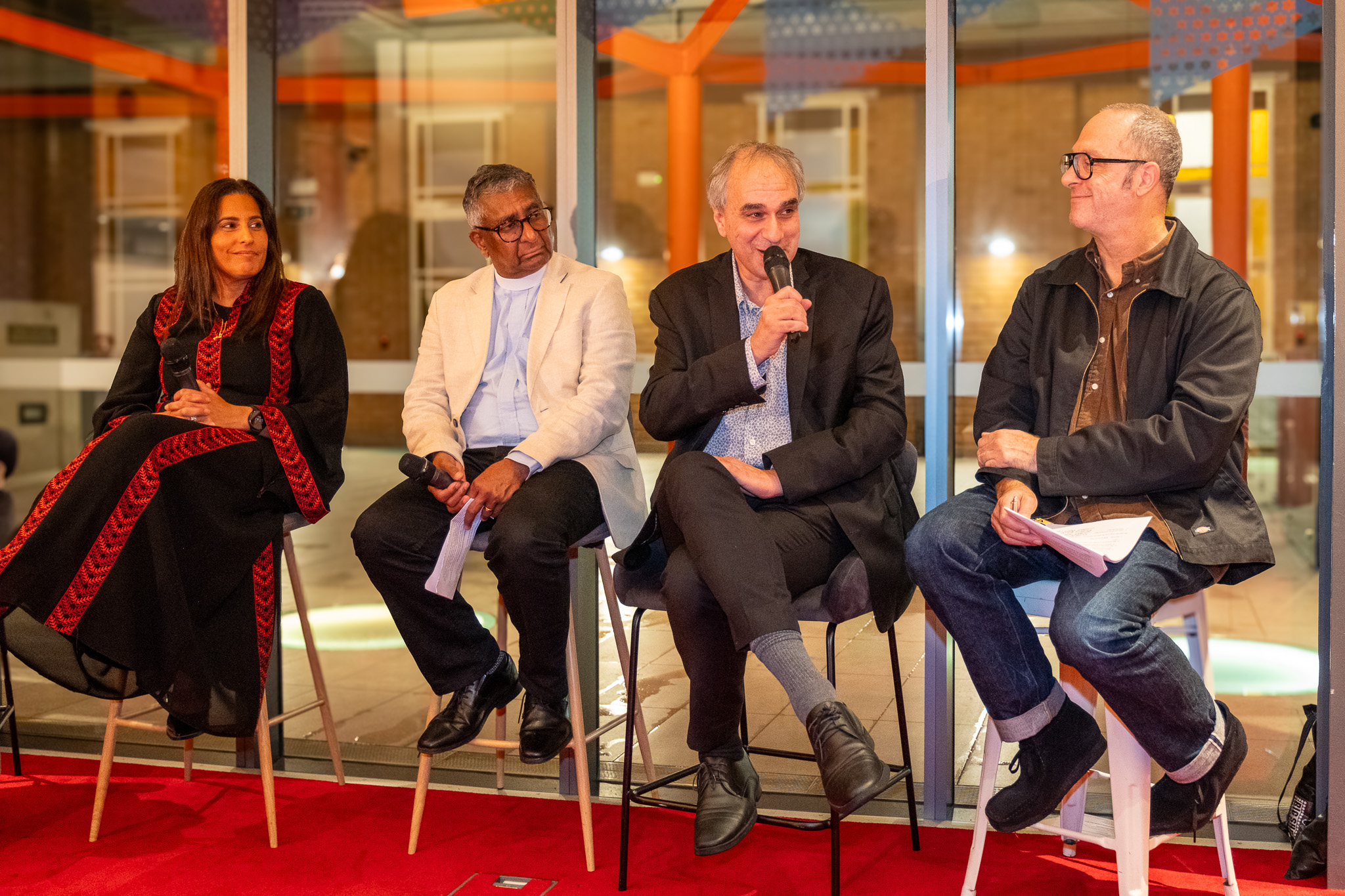
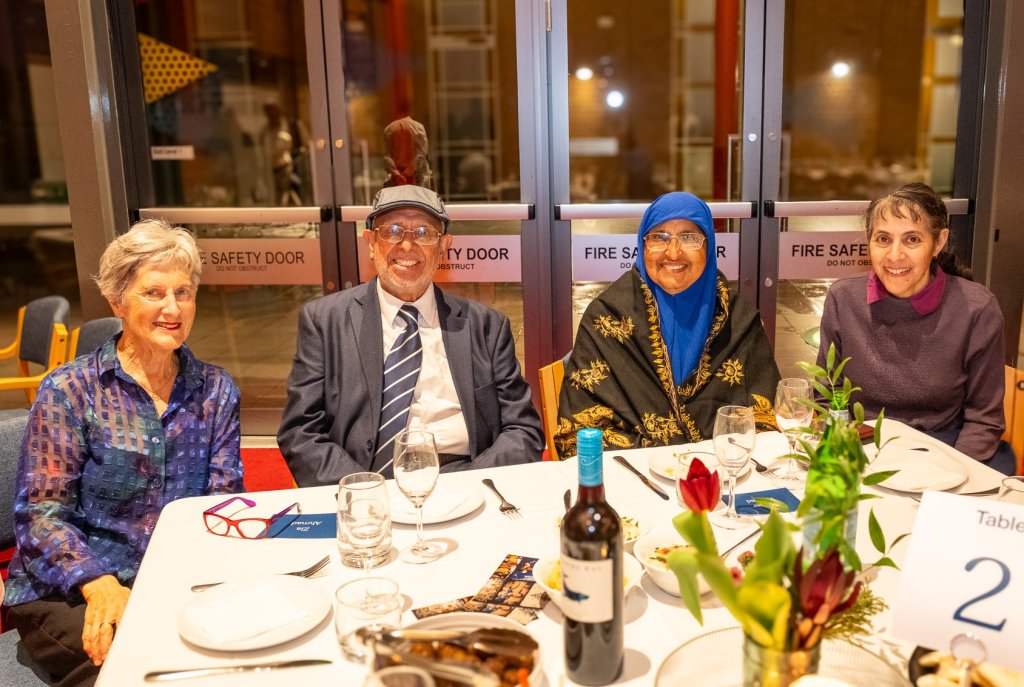
In an era marked by growing social polarisation and heightened tensions over global conflicts, more than 200 people from Jewish, Muslim and Christian communities gathered for a sold-out interfaith dinner in Sydney to explore one simple but challenging question: How can we genuinely listen to people with whom we disagree?
Hosted jointly by Emanuel Synagogue, The Jewish Independent and Stand Up, with the support of Multicultural NSW, the “Embracing Our Diversity” dinner was held at Emanuel Synagogue in Woollahra on Thursday, 28 May.

The evening sought to create a safe space for respectful dialogue, encouraging participants to approach difficult conversations with openness, curiosity and compassion rather than division.
Welcoming guests, Rabbi Jeffrey Kamins OAM highlighted the importance of maintaining relationships across differences and reaffirmed Emanuel Synagogue’s commitment to fostering understanding between Australia’s diverse faith communities.
The evening featured an engaging panel discussion moderated by acclaimed Australian writer and film director Tony Krawitz, whose award-winning work has often explored questions of identity, belonging and justice.
Rabbi George Mordecai spoke from his experience as an educator, cantor and community builder and drawing upon Jewish tradition, spirituality and history, he reflected on the importance of maintaining human connection even when disagreements appear profound.
Representing a Christian Palestinian perspective, community advocate Sally Asfour shared insights drawn from her Palestinian heritage and extensive involvement in community and humanitarian initiatives. She emphasised the importance of recognising shared humanity while creating space for difficult but respectful conversations.
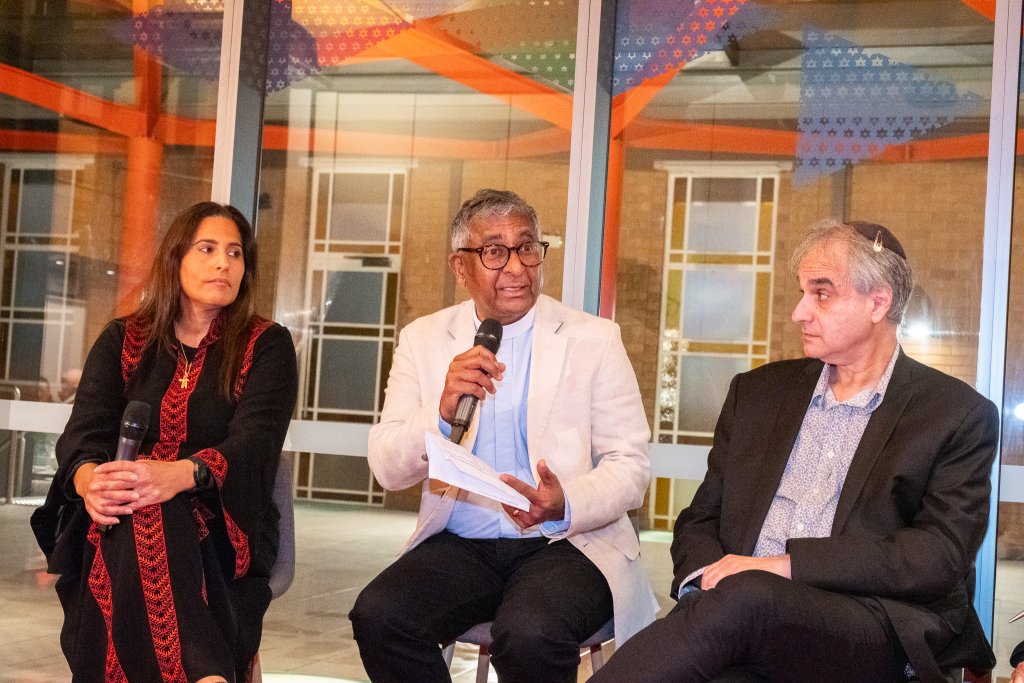
The Reverend Professor Sathianathan “Sathi” Clarke, internationally respected theologian, author and ordained minister in the Church of South India, offered theological reflections shaped by decades of scholarship and ministry across several continents.
His work on contextual theology, social justice and interreligious dialogue provided a broader framework for understanding how faith traditions can contribute positively to peace-building and reconciliation.
The Muslim perspective was presented by Calisha Bennett, Education Program Coordinator with Together for Humanity and an Islamic educator with more than two decades of experience working with Muslim women, youth and community organisations.
She spoke about identity, resilience and the importance of remaining grounded in faith while engaging constructively with wider Australian society.
The panel acknowledged that recent international events, particularly the conflict in Gaza, have placed enormous strain on relationships between many communities within Australia. Yet speakers agreed that disengagement and isolation only deepen misunderstanding.
Throughout the evening, participants were encouraged to practise active listening, recognise the dignity of those holding different views, and resist reducing people to political positions or religious labels.
The event concluded with closing reflections from Uri Windt, Publisher of The Jewish Independent, and Gabe Freund, CEO of Stand Up. Both emphasised the continuing importance of building partnerships across communities and investing in relationships that strengthen Australia’s multicultural society.
For Australia’s multicultural and multifaith society, initiatives such as this demonstrate that meaningful dialogue remains possible even during periods of heightened tension.
While difficult conversations may not resolve every disagreement, they can help preserve something equally valuable: the willingness to continue listening, learning and living together with mutual respect.





Comments