

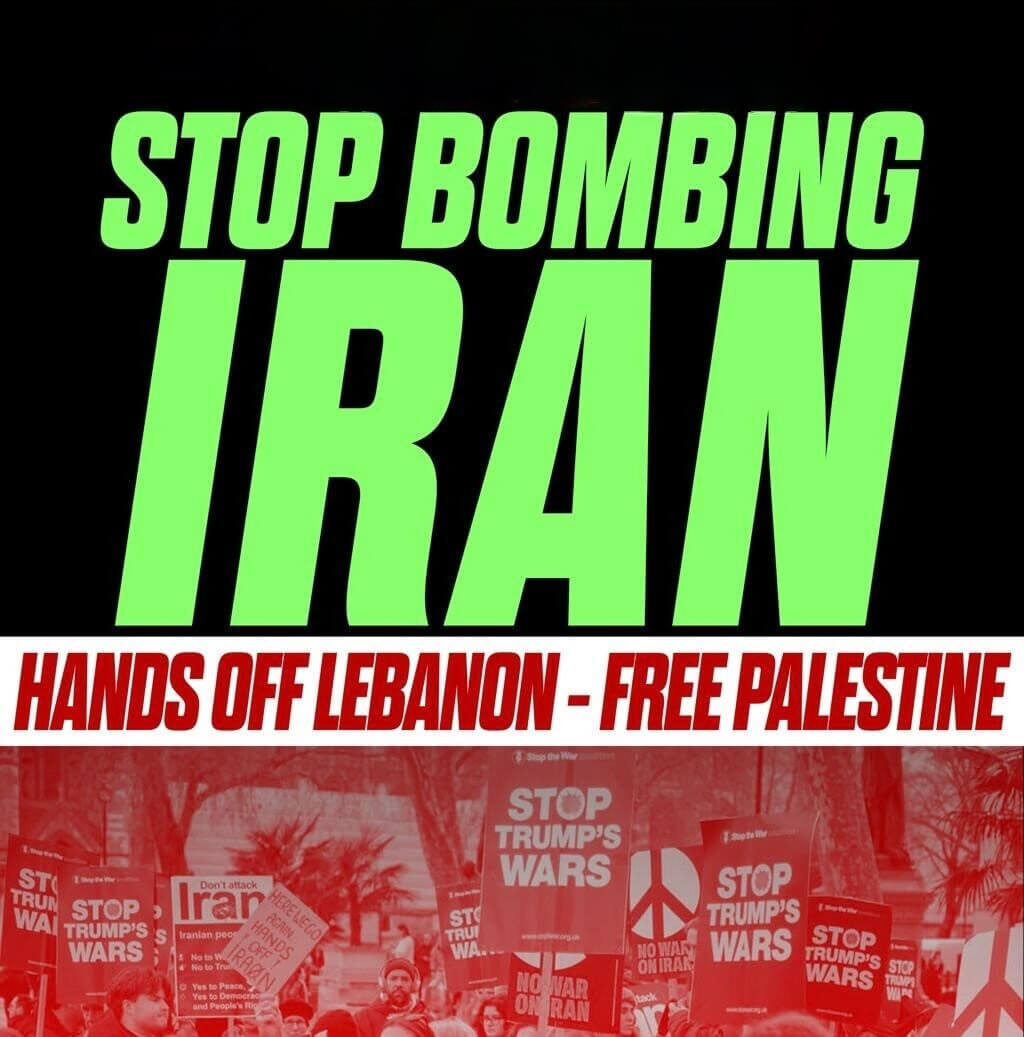
Fifteenth March is a day of reflection and resistance, anniversary of the Christchurch mosque attacks, which the United Nations now commemorates as an International Day to Combat Islamophobia.
Here in Australia, Muslims face increasing prejudice. We are demonised by the media, criticised by politicians, and restricted in our right to protest.
Abroad, communities endure war, occupation, and oppression. Today, our voices must rise for all who are silenced.
The current attacks on Iran are presented as matters of “security” or “stability.” These words echo familiar justifications for the invasions of Iraq, Afghanistan, Libya, and Syria that have left enormous devastation in their wake.
The roots of these crises, however, stretch back more than a century. After the collapse of the Ottoman Empire, Western powers divided up the Middle East without the consent of the indigenous inhabitants.
The Sykes–Picot Agreement of 1916 carved up borders, and the Balfour Declaration of 1917 promised a homeland in Palestine without the consent of those who lived there. These were acts of empire with consequences that continue to shape the region to this very day.
In 1953, Iran’s democratically elected Prime Minister Mohammad Mossadegh sought to nationalise the country’s oil for the benefit of the Iranian people. He was overthrown in a coup orchestrated by the United States and Britain.
Decades later, Saddam Hussein invaded Iran with Western support, resulting in nearly a million deaths. Western attacks and destabilisation in Iraq, Afghanistan, Libya, Syria, and Sudan brought further devastation and displacement.
The peoples of West Asia have suffered not from too little democracy, but from too many foreign interventions.
The future of any nation belongs to its people — not to Washington, London, or any other foreign power.
-
Iraq’s future belongs to Iraqis.
-
Libya’s future belongs to Libyans.
-
Syria’s future belongs to Syrians.
-
Iran’s future belongs to Iranians.

Here in Australia, our government has aligned with the US and Israel, offering political backing and intelligence cooperation. By doing so, we risk complicity in genocide and ethnic cleansing in Gaza and the war crimes involved in this new illegal attack on Iran and Lebanon.
On Al-Quds Day, marked every year on the last Friday of the month of Ramadan, Friday 13 March this year reminds us of solidarity with Palestinians.
After the 1967 Six-Day War, 24 Muslim-majority countries met in Rabat, Morocco, to establish the Organisation of Islamic Cooperation (OIC) that aimed to be a collective voice for the Muslim world.
Its permanent secretariat was set up in Jeddah, with the understanding that it would remain until Jerusalem, home to Masjid al-Aqsa, was liberated. Unfortunately the OIC has been ineffective and Masjid al-Aqsa remains under threat, closed to worshippers at the end of Ramadan.
When powerful leaders act without transparency or accountability and ignore international law and norms, millions of lives are at risk. Networks of power and influence such as have between revealed in the paedophile scandals of Jeffrey Epstein, used for blackmail by security services show how wealth and politics can put ordinary people in danger.
The Palestinian scholar Edward Said warned that empires dominate not just with armies, but with narratives portraying domination as benevolence. Frantz Fanon reminded us that colonialism strips people of dignity. Howard Zinn taught that true patriotism is loyalty to humanity. And the great Iranian scholar Ali Shariati said neutrality in the face of injustice is complicity.
More than thirteen centuries ago, on the plain of Karbala, Husayn ibn Ali (r) and a small group stood against tyranny. They knew the odds, yet they refused to submit. Karbala shows us that justice is decided not by armies, but by conscience.
Bombs may destroy cities, empires may redraw borders, but they cannot extinguish the human desire for dignity and freedom.
The peoples of Iran, Iraq, Libya, Syria, Sudan, Afghanistan, and Palestine have the right to determine their own futures. Australia must not be complicit. We must stand for law, dignity, and justice.
Peace will not come through domination. It comes through justice, dignity, moral courage and the bravery to act even when the odds seem to be insurmountable. True bravery is working for a better future for those who come after us.
As Imam Husayn (r) taught at Karbala:
“Death with dignity is better than life with humiliation.”

These words are a reminder that standing for justice is always more honourable than bowing to oppression or remaining silent in the face of tyranny. His sacrifice shows that the courage of conscience, the willingness to resist injustice, is stronger than any army or empire.




The United States and Israel conduct “defensive” or “pre-emptive” wars while labelling Iran as the aggressor. This situation raises a fundamental question: Are international standards applied consistently or selectively?
Sanctions add to this contradiction. Western governments express concern for ordinary Iranians but impose measures that significantly impact civilian life. The gap between their rhetoric and the reality on the ground is hard to ignore.
Israel assassinated Ayatollah Khamenei, who opposed the development of nuclear weapons, as Islam forbids genocide. This inconvenient truth about him is deliberately suppressed.
The double-tap bombing of an Iranian girls’ school, which resulted in the deaths of young schoolchildren by an American Tomahawk missile, was met with deliberate denial, and there was no apology or repentance.
The claim of concern for ordinary Iranians is being undermined by the ongoing genocidal bombing of Iran’s civilian infrastructure.
The media also plays a significant role in this dynamic. Mainstream coverage often reflects official narratives while sidelining uncomfortable facts. As a result, public trust erodes, allowing social media to gain ground by challenging the status quo.
The USA-Israeli war on Iran is based on complete lies, is totally illegal and a very serious breach of international law. Trump’s threat to bomb Iran “back to the stone age”and civilian infrastructoure such as bridges and electricity power plants constitutes serious war crimes and justifiably labels Trump as a War Criminal. Iran is only acting in self-defence against USA-Israeli aggression and far from affecting regime change is uniting the 90 million Iranian people who do not want anything to do with the USA-Israel. The USA particularly under Trump has a long history
of trying to overthrow the Iranian Government and his unilateral termination of the JCPOA in his first term, which effectively addressed the concerns of Iran not acquiring a nuclear weapon with effective IAEA inspections, and the impositions of secondary sanctions on Iran
was a stage in this quest by the USA-Israel and completely negates them as a trusted negotiating partner to end the current war.