

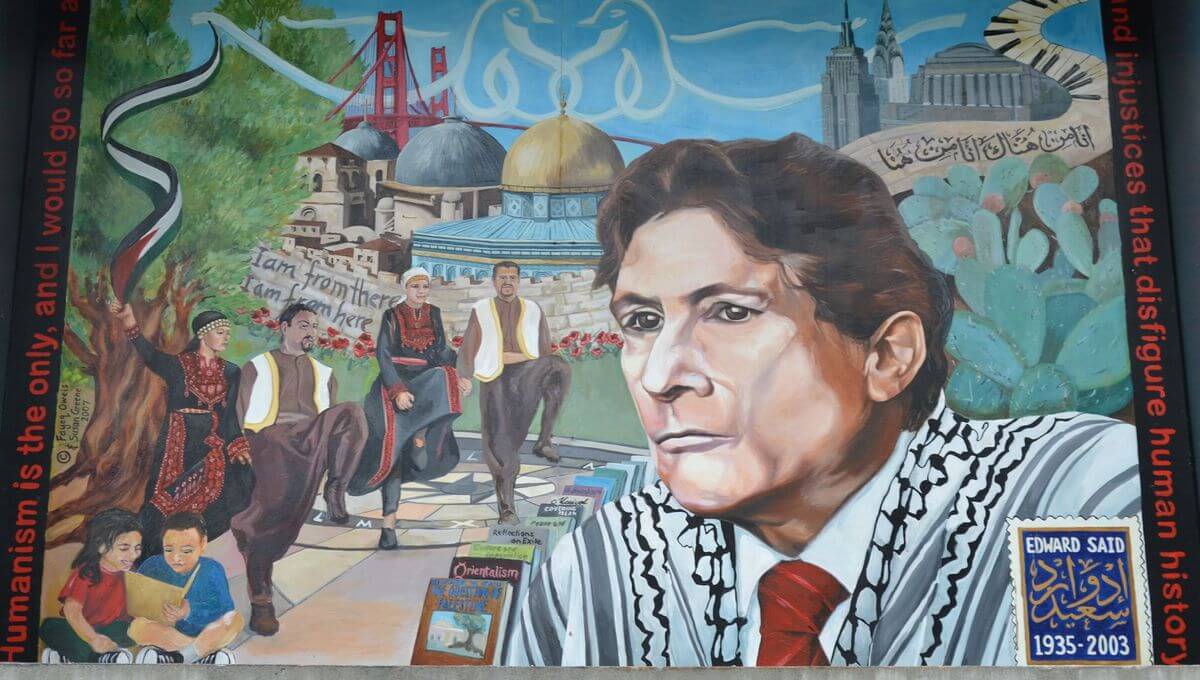
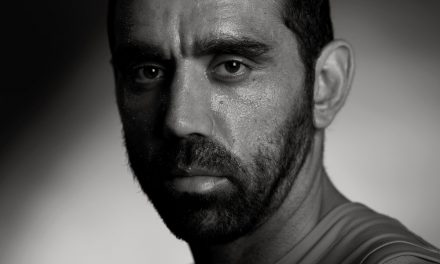
Photo: Edward Said: Celebrated Palestinian academic, author and activist.
In his 1978 critical study: Orientalism, Edward Said, Palestinian-American academic, professor of literature at Columbia University, argued that the Western view or representation of the East, particularly the Arab world, was shaped by stereotypical Western constructions evolving from their colonial interests in the Orient.
Knowledge of the Orient was packaged by the West in simplistic constructs such as inferior, uncivilised, irrational, backward, savages. Such frameworks allow the West to control and dominate.
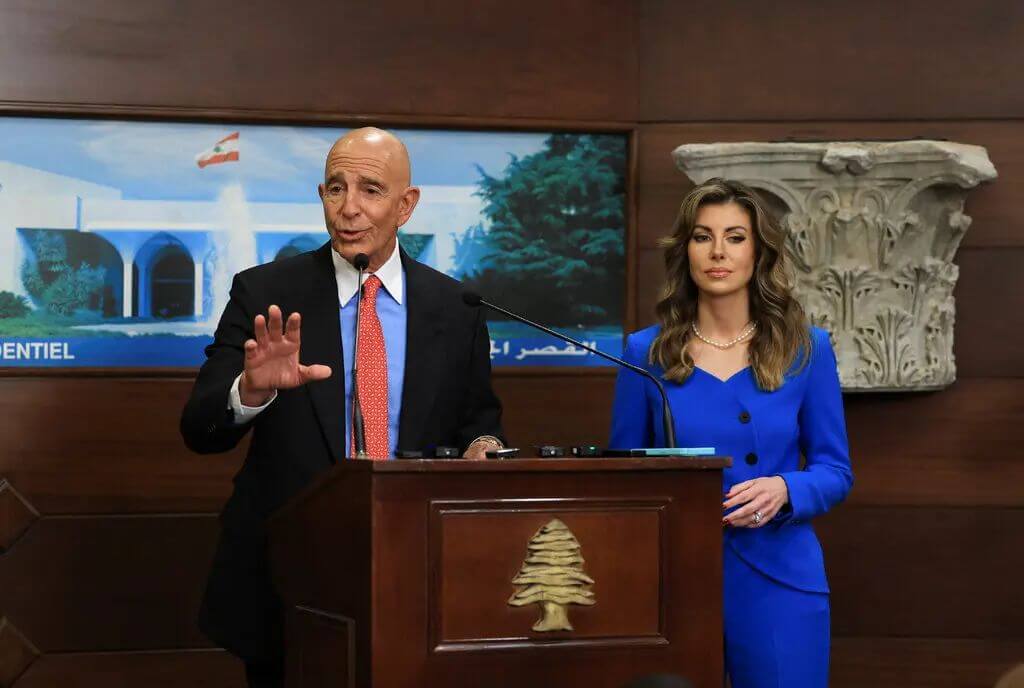
Thomas J Barrack Jr US Envoy to Turkey speaking in Lebanon on Tuesday 26 August 2025.
In one breath, Tom Barrack proves Edward Said’s theory of Orientalism not only as accurate but that Orientalism in the West is alive and kicking. Barrack’s extraordinary outburst, demeaning and chastising Lebanese Presidential Palace Journalists shocked the nation.
He encapsulated in a single comment that which proves what for decades Edward Said had written about Western constructs of knowledge and portrayals of Eastern societies.
The Lebanese-American, private equity real estate investor, an appointee of President Trump as US Ambassador to the Republic of Türkiye and special envoy to Syria, Tom Barrack stepped up to the podium at a press conference in the Lebanese presidential palace and said:
“We are going to have a different set of rules”. And then, in Trump style, asked the room packed with journalists to be quiet. “The moment that this starts becoming chaotic, like animalistic, we are gone”. he said. “Act civilised, act kind, act tolerant, because this is what is happening in the region,” Barrack added to the obvious amusement of Morgan Ortagus the Deputy United States Special Envoy to the Middle East.
Smirking and laughing he was adding injury to insult. Morgan Ortagus was on a visit with a senior US Republican senator, Lindsay Graham, who in 2024 appeared to suggest that Israel should consider using nuclear weapons to defeat Hamas in Gaza as the US did in Hiroshima and Nagasaki claiming they stopped the war with Japan.
Barrack’s comments stunned the journalists and enraged the country. It triggered swift condemnation from Lebanese officials and media organisations. The Lebanese presidency said “it regrets the statement made from its platform by one of its guests today,” while social media ran hot, enraged at what they saw as an insult to the Lebanese and more broadly to the Arab world by an American envoy.
One Facebook post read: “Enough is enough. Tom Barrack must be stripped of his duties! There is no place for fascism, particularly while on Lebanese Grounds.” Another wrote: “Freedom of the press is a cornerstone of democracy. Disrespecting journalists – especially in the region where press freedoms are already under pressure – undermines dialogue, accountability and trust.”
Prof Ahamd Hadi-Shboul in his post noted in part: “…Barrack is speaking and behaving and flouting his weight as an American imperialist High Commissioner, with typical colonialist, quasi-Zionist, true orientalist attitudes.”
The Lebanese union of journalists said Barrack’s comments were a “reflection of an unacceptable arrogance in dealing with the media” and called for an apology – as had many others across Lebanese and Arab society as they clearly understood the Barrack insult had covered the whole of the Arab world.
Unpacking it through the lens of Orientalism, particularly as defined by Edward Said, at the heart of that view is a set of binary opposites: civilized vs. barbaric, rational vs emotional, modern vs primitive – with the West cast as the superior and the East as inferior.
Tom Barrack’s words reflect and reinforce these binaries. For instance, the use of such language as chaotic and animalistic plays into the Orientalist trope that associates Middle Eastern societies with disorder and irrationality.
The use of the term animalistic to describe the journalists at a press conference on a matter significant to the welfare of the nation, dehumanises not only the journalists but more so the people they represent as being inherently chaotic, backward and irrational.
It implies the Lebanese, the Arabs, have a natural tendency toward savagery and that they must be treated as animals. It gives credence to the comments of the Israeli Defense Minister Yoav Gallant, following the October 7 attack, where he described the Palestinians as “human animals”.
That they must “act civilised, act kind, act tolerant,” is language and tone that is not merely patronising but suggesting that the Lebanese, journalists and all, including his listeners and viewers, need to learn the values and behaviour of a civilized people, presumably that of his superior Western, US society. This is in line with historical Western colonialist justification of their “civilizing missions” role.
The final link in the chain, the final sentence in his statement to the journalists – “this is the problem with what is happening in the region” — encapsulates the global view of a problematic people of the East. That what is innate to the Arabs, Asians, Africans and others in the Orient, is the lacking of civility.
It is this very lack of civility that has left Arab societies in perpetual instability. Deep within this statement is the belief in the cultural inferiority of the people of the region and by implication, the superiority of the humanity and authority of the Western values he represents.
Late Professor Edward Said speaking at Berkeley.
Tom Barrack’s comment sit firmly within Edward Said’s theory of Orientalism and the orientalist worldview. His view of the region does not operate in a vacuum. It emanates from a knowledge base, a frame of mind that narrates the superiority of the west and the inferiority of the east.
To justify their presence, the West, perpetuates this image of Arabs as inherently chaotic, in need of the oversight, the rules, the laws, the discipline and the civility of a civilising force. Without Western intervention recreating a new Middle East, the region will dive straight back into chaos.



Comments