

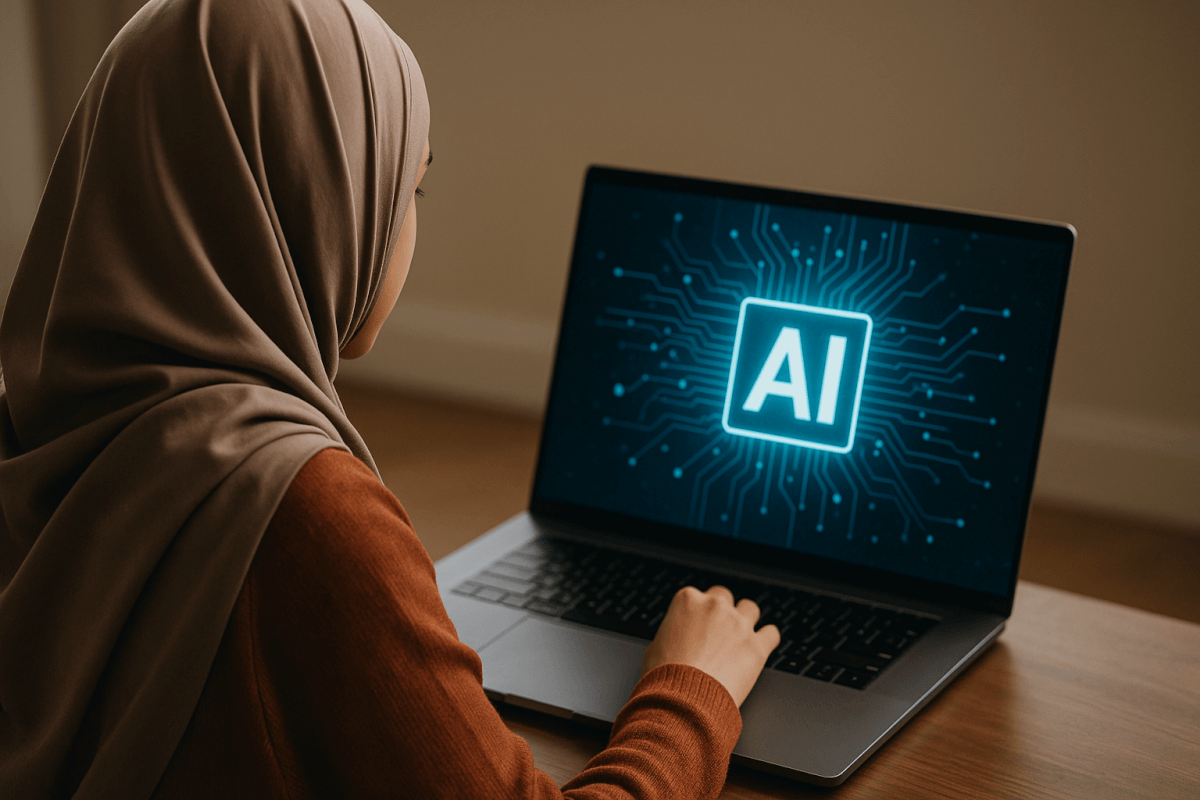
AI is here. Whether we like it, use it, fear it, or ignore it, artificial intelligence is already changing how we live, work, and think.
But this is not just about automation or job disruption. AI is beginning to influence how we make decisions, how we understand the world, and even what we believe to be true.
This raises urgent questions for Muslims, especially those living and working in the West. According to Professor G Hussein Rassool, a leading scholar in Islamic psychology, one of the biggest challenges facing Muslims in the modern world is cognitive dissonance. AI is now set to make that worse.
This dissonance comes from living in two worlds. On one side is a professional system built largely on secular foundations, where knowledge is detached from the Divine, and where success is often measured in speed, profit, or personal gain. On the other side is a faith that teaches submission, intention, ethics, and accountability to God.
Muslims are expected to function in the first while staying true to the second. That tension leads to constant code-switching. We think in one language during the workday, and another during prayer. We act by one set of rules at work, and another at home. Over time, this rattles confidence. It creates hesitation, fragmentation, and self-doubt.
This is not new. History gives us multiple examples.
When the printing press revolutionised Europe, the Muslim world resisted it for centuries. During the industrial revolution, we were mostly consumers, not creators.
When personal computing and the internet transformed how the world learned and communicated, we caught up late and on someone else’s terms.
In each case, we reacted. We did not lead. And because we were not there when these systems were designed, we were forced to reconcile with frameworks that did not reflect our worldview. That made leadership harder to access, and even harder to sustain.
Now AI is doing something even more disruptive. It is shaping not just what we do, but how we think, and even what we believe. It is starting to guide our choices, filter our knowledge, and predict our behaviours.
It can even go to what we perceive as true and hence our world views. If we stay passive again, we risk more than falling behind. We risk being reshaped in ways that weaken our ability to emerge as leaders at all.
Because leadership does not emerge from the outside in. It grows when people are aligned spiritually, mentally, and socially.
But when there is deep internal dissonance, that emergence becomes stifled. It is hard to lead when you are not fully sure where you stand.
We cannot afford to stay silent or sit on the sidelines. Muslims need to be at the forefront of shaping this moment, not just with technical skills, but with rooted values and integrated vision.
AI is not something to run from. But it is something we must rise to meet.
This is not the time to stay passive. This is the time to lead.




Comments