

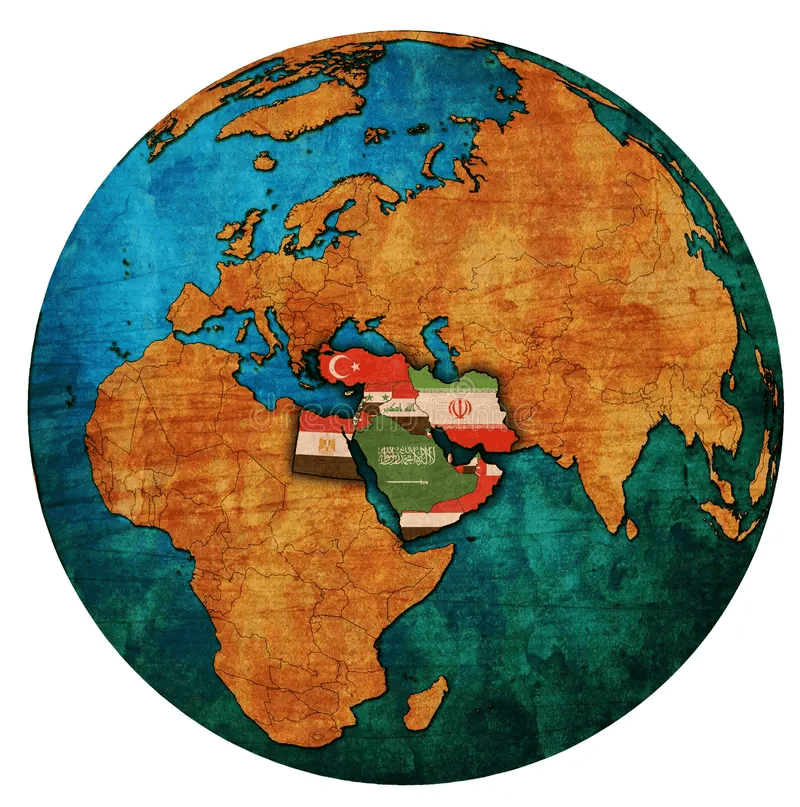
In the name of security, Israel’s actions over the past decades have followed a troublingly consistent logic—preemptive destabilisation of its regional neighbours.
But is this truly self-defense, or part of a larger, orchestrated strategy to fragment the Middle East, sow endless civil conflict, and prevent the rise of any strong, unified opposition?
Let’s examine how imperial strategies—often cloaked in the language of democracy, counterterrorism, or sectarian purity—have resulted in widespread suffering across the Muslim world.
We will also examine the roles played by both external forces and internal collaborators, perpetuating their oppressive rule in self interest.
The belief that Israel’s security requires the systemic weakening or disintegration of neighboring states isn’t new. It’s rooted in documents such as the Yinon Plan, an Israeli strategic proposal published in 1982 by Oded Yinon in Kivunim, a Hebrew journal.
“The dissolution of Syria and Iraq into ethnically or religiously unique areas… is Israel’s primary target on the Eastern front in the long run.”
— Oded Yinon, “A Strategy for Israel in the 1980s”
This plan outlines how dividing neighbouring states into smaller sectarian and ethnic enclaves would ensure Israel’s long-term dominance.
Today, this strategy seems chillingly relevant as Iraq, Syria, Libya, Lebanon, and Yemen continue to burn in the fires of civil strife and proxy wars.
We see this in action in case of Iraq and Libya.
Saddam Hussein resisted Western demands and was labeled a threat. The 2003 invasion was justified on the pretext of weapons of mass destruction—an allegation later proven false.
Muammar Gaddafi in Libya similarly refused to “bend the knee.” NATO’s intervention, under the guise of humanitarianism, left the country a failed state with open slave markets.
The Syrian Civil War, beginning in 2011, has become a case study in foreign manipulation. While the regime’s domestic repression is real, it is equally true that external interests have played a major role in prolonging the conflict.
Today, Israeli forces operate with impunity in southern Syria. The Israeli Defense Forces (IDF) have conducted dozens of airstrikes, and Syrian sovereignty exists in name only in regions under de facto foreign control.
Yet, instead of resisting collectively, many Muslim-majority states are normalising ties with Israel, believing economic growth will eventually lead to justice.
This raises a fundamental question: Can justice be postponed for stability?
The Sykes-Picot Agreement (1916) and the Balfour Declaration (1917) divided Ottoman lands and promised support for a Jewish homeland in Palestine.
The Ikhwan movement, backed by the House of Saud and ideologically inspired by Muhammad ibn Abd al-Wahhab, violently suppressed dissent within Arabia and dismantled Ottoman structures.
This alliance eventually helped establish the Saudi state—a kingdom now instrumental in shaping Muslim world politics through hundreds of billions in petro-dollar as well as income derived from Umrah and Hajj economy.
Muslim-majority nations must wake up to the geopolitical and ideological traps being laid for them. Normalising oppression for economic growth is a gamble history shows will fail.
We must ask: Who benefits when Muslims destroy each other? Who gains from the division of Iraq, Syria, Lebanon, and Yemen? And who finances the ideologies that preach disunity while claiming religious purity?
The answers aren’t hidden—they are in plain sight for those willing to see. The question is not whether Iran is perfect. The question is why are those who resist Zionist expansion always demonised, while those who collaborate are celebrated?
Why are Muslims being taught to hate those who stand with Palestine and love those who shake hands with its enemies?
Until we stop letting our political views be shaped by sectarianism and imperial propaganda, the Ummah will continue to bleed — not because of Iran, but because of our own blindness, betrayal, and bartering of faith for fleeting luxury.




Rashid Siddiqui has written a thought provoking piece with great historical context and analytical accuracy inviting the reader to consider very legitimate questions. Incredibly impressive 👍