


In an age when walls rose faster than bridges and fear was draped in the language of faith, Pope Francis stood as a rare and courageous voice, proclaiming a Gospel that welcomed the stranger.
His 2024 World Day of Migrants and Refugees message, “God walks with His people,” challenged a fractured world to see migration not as a threat, but as a sacred opportunity for encounter.
As a Muslim, I found his message profoundly moving. In Islam, helping the refugee is a sacred duty. Pope Francis’s stand resonated across religious boundaries, reminding us of the humanity we share at a time when so many preferred to forget it.
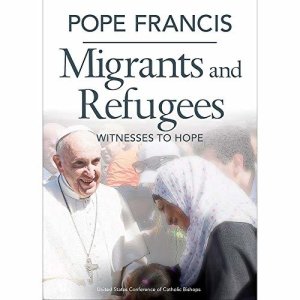
The Pope’s vision
Drawing from Scripture and Catholic social teaching, Pope Francis refused to bow to the forces of fear and exclusion. His call was clear: “No one should be left behind” (World Day of Migrants and Refugees Message, 2024).
In his writings, including Migrants and Refugees: Messages of Pope Francis (2022), he insisted that welcoming the stranger is not optional — it is central to Christian faith.
“At the heart of the Gospel is the unity of the human family.”
Francis reminded Christians that salvation itself is a story of migration: Abraham leaving his homeland, Mary and Joseph fleeing violence, Jesus living as a refugee without a place to lay his head. To welcome the displaced was, he taught, to walk the same road.
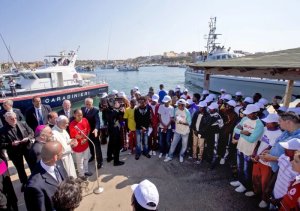
When ‘Christian’ leaders betrayed Christian values
Yet across the so-called “Christian” world, the betrayal of these truths was stark.
Australia: Politicians vilified asylum seekers as “invaders,” weaponising fear for electoral gain.
The United Kingdom: From the Conservative Party’s “hostile environment” to Labour’s retreat into anti-migrant rhetoric, political expediency trampled the Gospel’s radical call to hospitality. Meanwhile, the far-right Reform Party stoked fear and racial resentment, normalizing language that once belonged to the political fringe.
Germany: The rise of the far-right AfD, surging on an openly xenophobic platform, revealed how even in the heart of Europe, compassion was traded for nationalism. Mainstream parties, too, hardened their tone, pandering to fear rather than standing for justice.
The United States: Brutal ICE raids, the separation of families at the border, and the inhumane treatment of refugees — especially children — stood as a devastating mockery of the Good Samaritan’s compassion. While evangelical leaders often blessed or excused these injustices, the U.S. Catholic Bishops Conference consistently defended the dignity of migrants, standing closer to the Gospel call to welcome the stranger.
Europe at large: Viktor Orbán erected fences in Hungary under the banner of “Christian democracy.” Italy’s government criminalized the rescuing of drowning migrants. France’s leaders fanned the flames of xenophobia — all while Pope Francis pleaded, “Do not judge the marginalized; walk with them.”
This betrayal was not limited to the West. Around the world, nationalism masqueraded as piety, forgetting that Christianity itself began with a displaced, persecuted family on the run.
A fire for justice
Pope Francis did not content himself with polite appeals. He confronted the structures of exclusion head-on, warning: “A society that excludes migrants is a society that excludes Christ Himself.” (World Day of Migrants and Refugees Message, 2024)
His voice cut through the noise — not a whisper of conscience, but a roar of truth. In a world closing its doors, he dared to keep knocking, calling the powerful back to the heart of their professed faith.
Faith without hospitality, he reminded us, is a hollow shell.
Let not the tributes we offer for Pope Francis be in vain. Let them ignite action — to speak out, to reject the politics of fear, to demand policies that recognise every migrant, every refugee, as sacred.
This is not merely a Christian duty. In Islam, too, the Prophet Muhammad (s) said:
“Whoever helps a migrant in their time of need, Allah will help them in their time of need.” (Hadith: Abu Dawud 4893)
Across faiths and traditions, the call is clear.
Today, in solidarity that transcends borders and creeds, let us answer Pope Francis’s call: to see, to listen, and above all — to act.
For in the end, the measure of our faith will not be the walls we build, but the doors we open.
- And may our Christian leaders remember these ancient commands:
“Do not mistreat or oppress a foreigner, for you were foreigners in Egypt.” (Exodus 22:21) - “I was hungry and you gave me food, I was thirsty and you gave me drink, I was a stranger and you welcomed me.” (Matthew 25:35)




Comments