

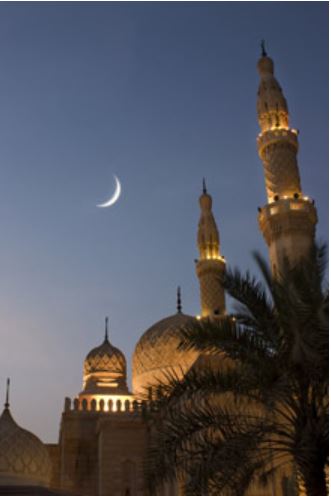
Ramadan and its Virtues
We all know that Ramadan is a blessed month. Fasting has been made mandatory in Ramadan which is a pillar of Islam (Hadith: Bukhari, 8 and Muslim, 16).
Fasting in Ramadan and spending nights in prayer out of faith and hope of reward would make us free from previous sins. (Hadith: Bukhari, 2014 and 2008; and Muslim, 760 and 174)
Allah revealed the Quran in this month which is a guidance for us [Quran 2:185]. Laylat al-Qadr is a special night and worshipping Allah in this night is better than a thousand months. [Quran 97:1-5]
Prophet Mohammad (s) mentioned us some virtues of Ramadan as given below:
“When Ramadan comes, the gates of Paradise are opened and the gates of Hell are closed, and the devils are chained up.” (Hadith: Bukhari, 1898 and Muslim, 1079)
“At every breaking of the fast, Allah has people whom He redeems.” (Hadith: Ahmad, 5/256 and Sahih al-Targhib, 987)
“The five daily prayers, from one Jumah to the next and from one Ramadan to the next are expiation for (sins committed) in between, so long as you avoid major sins.” (Hadith: Muslim, 233)
“When Ramadan comes, go for Umrah, for Umrah in Ramadan is equivalent to Hajj.” (Hadith: Bukhari, 1782 and Muslim, 1256)
“Whoever fasts Ramadan then follows it with six days of Shawal, it will be like fasting for a lifetime.” (Hadith: Muslim, 1164 and Ahmad, 21906)
“Whoever prays Qiyam with the imam until he finishes, it will be recorded for him that he spent the whole night in prayer.” (Hadith: Abu Dawud, 1370)
“Whoever gives iftar to one who is fasting will have a reward like his, without that detracting from the fasting person’s reward in the slightest.” (Hadith: Tirmidhi, 807; Ibn Majah, 1746 and Sahih al-Tirmidhi, 647)
Moreover, reading the Quran is mustahab in general, but more vital in Ramadan. Jibril used to meet the Prophet (s) every night in Ramadan and study the Quran with him (Hadith: Bukhari, 6 and Muslim, 2308)
Goals for this Ramadan
The above virtues indicate that Allah is very kind and forgives us a lot especially in this month through our increased good deeds. We must set targets to do more goods in this month and avoid sins as much as possible. For example, some of the good deeds are:
- Fasting and attending tarawih prayers;
- Worship during Laylat al-Qadr;
- Reading and contemplating the Quran;
- If possible to perform Umrah;
- Fasting the six days of shawal;
- Giving Iftar to others, especially poor which is sadakah;
- Giving more charity and Zakat in this month; and
- Any other good deeds, for example, learning Allah’s attributes.
We would do these with faith and hope of reward from Allah. If we could manage to increase one new good deed and avoid one sin after Ramadan and all through the year, that is a useful achievement. We need to try our best to attain Taqwah which is the ultimate goal.
We pray to Allah so that we see this blessed month and manage to please Him and get His forgiveness. Ameen.






Comments