

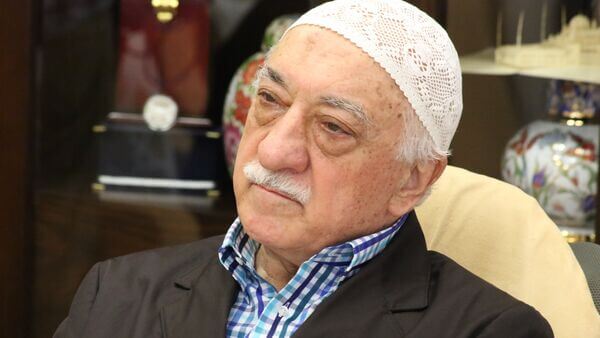
Fethullah Gülen, a globally respected scholar, thinker and imam, who had faced discrimination, hardships and persecution since the age of 18, passed away on Sunday 20 October 2024, at the age of 86 in the United States, leaving behind millions of admirers around the world.
He was the author of over 90 books and thousands of public and private sermons available on YouTube. He never married and did not leave any inheritance behind.
His followers will remember him as a dedicated scholar of education, ethics and religious knowledge, known for his tearful eyes and devotion during his sermons and talks.
His opponents, especially among staunch secularists and political opponents, continue to view him as a traitor to the nation and an enemy of the state.

A life of struggle and and service
Fethullah Gülen’s official date of birth is 27 April 1941, though he was actually born in 1938. According to Gülen’s brother, Sıbgatullah, their father wanted to name him Fethullah, but the registrar declined, objecting to the use of “Allah” within the name.
At that time, secularist policies strictly opposed religious symbols, even in names. Gülen recalls his childhood in the village: “Due to aggressive secularism, the gendarme raided our house twice because my mother was teaching the Qur’an.”
Gülen studied Arabic, the Islamic disciplines, theology, and major works of tafsir (Qur’anic exegesis) and hadith collections, fiqh, biography of the Prophet (sirah) in-depth from a young age, memorising the Qur’an and tens of thousands of hadiths, biographies of the Companions, and Said Nursi’s Risale-i Nur(Risale-i Nur collections) .
He later studied theories in modern social and physical sciences. With a strong grasp of Islamic history and Sufism, Gülen is often described as having Sufi tendencies. Although he does not belong to any order (tariqat), Zeki Sarıtoprak describes him as “Sufi in his own way,” similar to Imam al-Ghazali (1058–1111).
After completing his studies in Islamic disciplines, Gülen joined Muhammed Lütfi’s study circle in 1954. Lütfi, a descendant of the Prophet Muhammad (s), Naqshibandi sheikh, and poet, left a lasting influence on Gülen’s spiritual life.
Gülen recalls: “Muhammed Lütfi Efendi valued education so highly that he once said he would rather donate to scholarships than to the reconstruction of the Ka’ba if it were damaged.”
Following Lütfi’s death, Gülen continued his Islamic education under leading scholars in his town Erzurum.
Turkish sociologist Ali Bulaç noted that Gülen’s expertise in both traditional Islamic disciplines and his understanding of modernity make him a “Dhul Janahayn” (a scholar with two wings).
A turning point in Gülen’s life came in 1956 when he met Said Nursi’s student, Muzaffer Aslan, who introduced him to Nursi’s Risale-i Nur collections and non-political, non-violent religious activism.
Inspired by Nursi’s spiritual principles, Gülen sought to educate the younger generation in both secular and religious sciences to combat ignorance and protect them from spiritual ills.
At 18, while serving as an imam in Edirne, Gülen was sometimes interrogated by police for conducting study circles with youth in the evenings. Despite these obstacles, he persisted.
Gülen has noted that he has been under police and Turkish National Intelligence Service surveillance since then.

The seeds of the Hizmet movement
In 1966, Gülen was assigned to Izmir as a preacher and Qur’an teacher at Kestanepazarı Qur’anic Boarding School by the Directorate of Religious Affairs. Gülen taught during the day and volunteered overtime on weekends, refusing extra payment.
According to Abdullah Aymaz, a former student, “Gülen taught more through his actions than words. He would spend half of his salary on poor students.”
Following the semi-military 1971 coup, Gülen and more than fifty of his students were arrested for allegedly attempting to alter the secular regime and bring Sharia law to Turkey. He was released after six months in prison.
Life as a fugitive in the 1980’s
After the 1980 military coup, Gülen became a wanted figure, his picture displayed nationwide beside those of left and right wing terrorists. Though officially in hiding for six years, Gülen remained active, holding private study circles.
Following the 1996 Turkish elections, Necmettin Erbakan’s Welfare Party (Refah) formed a coalition government. However, the military and staunch secularist factions viewed the Hizmet movement’s growth as a threat.
Initially, these factions targeted Erbakan’s government, which ultimately fell, and then focused on religious groups, especially the Hizmet movement.
Gülen’s health deteriorated, and on a doctor’s recommendation, he went to the United States in 1999 for a medical examination. After he left, a secularist-led campaign accused him of plotting to overthrow the Turkish government and bring Sharia Law.
Gülen was prosecuted for allegedly infiltrating the secular state, and the state prosecutor sought the death penalty. Due to political and religious tensions that continued until 2010, Gülen decided to stay in the United States, calling himself “self-exiled” in a retreat centre.
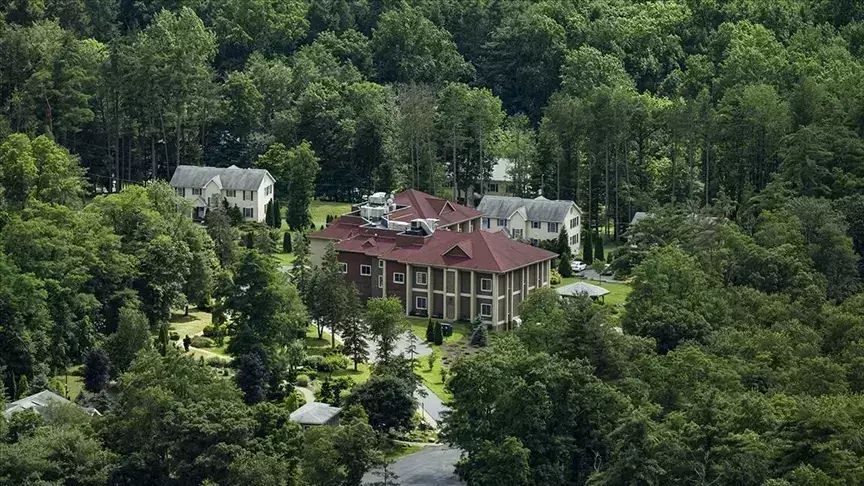
He never left the retreat centre except for health reason, and for a funeral during almost 24 years. The Hizmet movement continued to expand, establishing educational institutions in over 160 countries with dedicated teachers and generous entrepreneurs affiliated with Hizmet.
Before founding the Justice and Development Party (JDP) in 2001, Recep Tayyip Erdoğan and Abdullah Gül visited Gülen in Pennsylvania.
The JDP achieved a significant electoral victory in 2002. Initially, the JDP enacted democratic reforms with the support of the European Union and the Hizmet movement, which led to economic growth.
The JDP government was successful in democratisation, social justice and economic development, inspiring the Arab Spring.
In 2006, however, the Turkish National Security Council designated Gülen and the Hizmet Movement as enemies of the state. Although Prime Minister Erdoğan and Foreign Minister Gül signed the resolution, Gülen assumed they could not oppose the council’s military members.
Tensions and the coup attempt
In December 2013, corruption charges involving ministers’ sons and a Turkish-Iranian businessman led Erdoğan to accuse Gülen of orchestrating the investigation, declaring war on the Hizmet movement.
Gülen and his followers were labelled assassins and traitors. Erdoğan threatened anyone affiliated with the group during the election campaign in 2014.
Six weeks before the attempted coup on 15 July 2016, the Turkish National Security Council officially declared Hizmet Movement a terrorist organisation. After the coup attempt, Erdoğan blamed Gülen and launched a massive campaign against him and the Hizmet movement.
All secular parties, ultra-nationalists, right-wing politicians and their media joined JDP in crushing the Hizmet movement. Thousands of Hizmet-affiliated schools, hospitals, and charities were confiscated or shut down, and Gülen was accused of conspiracy and treason.
In response, Gülen strongly denied any involvement with the attempted military coup and stated his willingness to face an international court where if the court finds him guilty, he can be executed.
The post-coup crackdown has been extensive. According to Justice Minister Yilmaz Tunc, “between 15 July 2016, and July 2023, 705,172 people were investigated for alleged ties to the so-called Fethullah Terrorist Organization (FETÖ), with 125,456 receiving convictions (including tens of thousands of women and over 4000 members of the judiciary, eight thousand academics), 357,000 cases dropped,” and various other rulings issued under the state emergency law decree.
Over 100,000 Hizmet affiliates, mainly university graduates, fled the country.
Who was behind the attempted military coup? Time will be the best answer, and the truth will come to the surface sooner or later.




Thanks for an opportunity to know about this valuable scholar.