

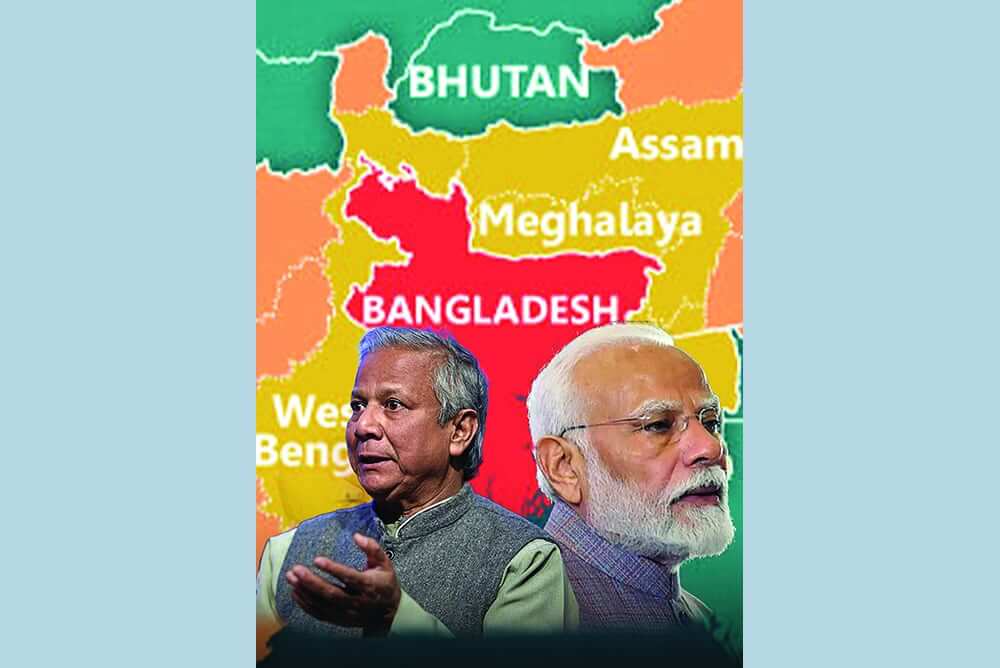
Following the fall of Bangladesh’s “Iron Lady,” Sheikh Hasina, on 5 August 2024, India started blaming Bangladesh, suggesting involvement with external actors in destabilising Sheikh Hasina’s government. As a result of India’s flawed diplomacy, the public in many neighbouring countries seems increasingly discontent with India, compelled to align more closely with either the United States or China.
Despite this growing wrath, India and its media continue to place the blame on these neighbouring countries for exacerbating India’s tensions. In fact, India applies subterfuge and lies in their diplomatic approach towards its neighbours—an issue that India denies.
Some media outlets have even suggested that India should intervene in Bangladesh’s affairs. It is so sarcastic that the extent of Indian media’s involvement dictates whether Chief Advisor of Interim Government, Dr Yunus should address the United Nations General Assembly (UNGA), the 79th session in New York.
Even Indian Prime Minister Narendra Modi has not yet responded to a request to meet Dr Yunus on the sidelines of UNGA. This might indicate that Modi is hesitant to meet with Yunus, possibly because he wants to avoid discussing sensitive topics, such as the extradition of Bangladesh’s ousted leader, Sheikh Hasina. India’s shock over the potential fall of ex-PM Sheikh Hasina’s government is visible, as they appear unable to contain their frustration.
The frustration is evident as India’s trade relationship with Bangladesh has been substantial, with Bangladesh consistently ranking as one of India’s top export destinations. In recent years, India has exported a wide range of goods to Bangladesh, including cotton, machinery, food products, and pharmaceuticals. The robust trade ties have made Bangladesh a key market for Indian products, contributing significantly to India’s foreign exchange earnings.
On 6 August 2024, India’s Foreign Minister expressed condolences for some individuals who were killed or harassed after Hasina fled to India. However, India has shown no concern for over 1000 people who were killed or murdered by the past regime during the student movement. While India may not acknowledge these unlawful killings, the UN has voiced concern and a fact finding team to visit Bangladesh in September/October 2024 to investigate 15 types of human rights violations including incidents of crime against humanity and extrajudicial killings.
After Sheikh Hasina’s fall, some violence and revenge killings erupted due to the absence of police forces, who fled their posts. The police were afraid of student retaliation for their involvement in killing civilians during the protests. However, the situation, particularly concerning the safety of minorities, was brought under control within days, and Dr. Yunus assured PM Modi of their safety on August 16, 2024.
Despite this, PM Modi raised concerns about the safety of Hindus in Bangladesh during a phone call with President Joe Biden. Ironically, Modi himself was sanctioned by the US for his role in the 2002 Gujarat riots, where over 1,000 Muslims were killed under his watch as Chief Minister. History often reminds us of past events in unexpected ways.
India’s most controversial role has been its support for Sheikh Hasina in advancing her authoritarian agenda. The last three consecutive general elections in Bangladesh have been widely criticized for not being free and fair, with allegations of voter suppression and manipulation.
These elections were not recognized as legitimate by much of the Western world, with the United States stating that Bangladesh elections are neither free or fair; the UN also voiced concerns. However, India endorsed these elections as being free and fair. In return for this support, Hasina has granted India numerous strategic benefits, leading her to declare that “India will remember forever what we have done for them.”
Yes, she is right. While India may never fully repay Bangladesh for what Hasina did for the country, it is undoubtedly showing its gratitude to Shaikh Hasina by providing her with shelter. Meanwhile, Hasina has been unable to secure a visa to go to any other country.
India has concentrated its efforts on backing Sheikh Hasina’s agenda rather than earning the goodwill of the Bangladeshi people. She allowed the construction of a rail route through Bangladesh to facilitate the movement of goods to India’s northeastern states, which many argue offers little or no benefit to Bangladesh. Hasina permitted India to erect a fence along the no-man’s land at the border, a move accompanied by numerous reports of indiscriminate killings by the Indian Border Security Force (BSF) in these areas.
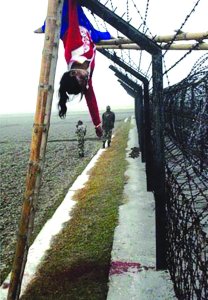
The dead body of Felani hanging on the fence in no-man’s land killed by BSF. Courtesy: bdnews24.com
India has similarly used diplomatic manoeuvres with other neighbouring countries. In 2015, India imposed an unofficial blockade on Nepal, severely affecting the country’s supply of essential goods and creating widespread hardship. In the Maldives, New Delhi has been accused of interfering in domestic politics, especially during periods of political crisis.
Additionally, from 1983 to 1987, India involved itself in Sri Lanka’s internal affairs, with the Indian intelligence agency Research and Analysis Wing (RAW) reportedly training Tamil militant groups during the Sri Lankan Civil War.
These are just a few examples of how India has used its ‘big brother’ attitude to exert influence over its neighbours, leading to the alienation of the general population in these countries. Despite this, India refuses to acknowledge the shortcomings in its diplomatic approach towards Bangladesh and other neighbouring nations. It is needless to say that China and Pakistan remain India’s archrival enemies.
India views all its neighbouring countries as hostile. Whenever issues arise in these countries, Indian media and some strategists frequently attribute them to either the United States or Chinese involvement, at times Pakistan connection. It’s as if India sees dragons lurking at every border, absolving itself of any responsibility for regional tensions.





Well-articulated and true picture of India’s hegemony.