

Food must be one of the easiest, most enjoyable and most enriching ways to get to know new people and to learn about places and histories that we haven’t otherwise had the chance to encounter.
In the run up to Ramadan, I’ve been lucky to have a few of those encounters which will be shared via AMUST and via Recipes for Ramadan’s website and social media.
Renowned photographer Zahrah Habillulah and her mother Ayesha invited us into Zahrah’s home for a morning preparing samosa and Burmese bagiya from scratch to make a Burmese Samosa Salad for lunch; to hear the story of their family’s journey from Moulmein in Burma close to the border with Thailand to New Zealand, finally settling in Australia; and to talk about the experiences of Burmese Muslims over the last 50 years or so.
Although Ayesha has been back many times, and Zahrah also speaks fluent Burmese, the current situation makes it dangerous for Muslims of Indian descent as well as the Rohingya people.
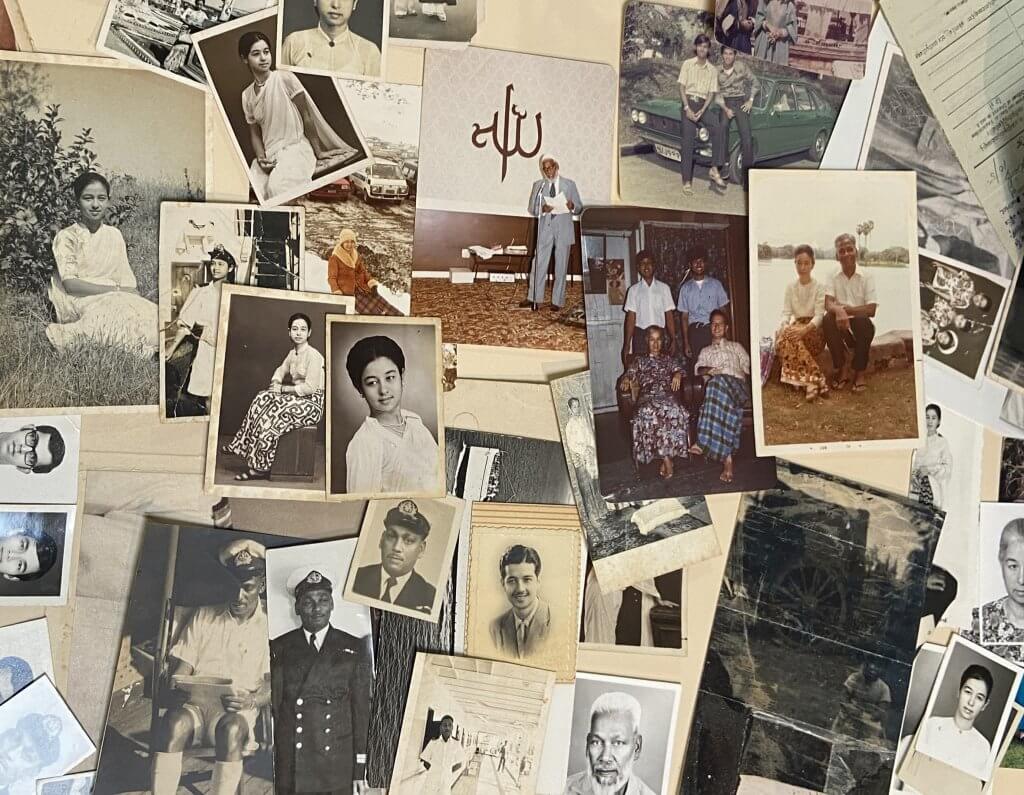
Zahrah Habibullah’s family photos from Burma.
I also had the opportunity to get to know Sivine Tabbouch and her daughter Karima Hazim better, booking myself and my mother into one of their Sunday Kitchen sessions. I’d been meaning to go ever since Karima contributed her family recipe for Warak Enab back in 2021 but finally jumped at it when I learnt that they were donating the ticket price for all February and March classes to Aus Relief’s Appeal for victims of the Turkiye and Syria earthquake.
In a class which is part cooking and part storytelling, I discovered that the port of Tripoli in the north of Lebanon is almost as famous for its fish dishes as its sweets.
In drafting Sivine’s story, I was awed to hear about her mother, not simply as a woman who loved to cook and bring her family together around food but as an incredibly strong brave woman who sacrificed everything she had to organise emergency exit visas to take her sons and daughters out of Lebanon when the civil war broke out. She wanted to prevent her sons from becoming involved in the conflict.

Sivine Tabbouch and her daughter Karima Hazim preparing Kibbeh Nayeh in their Sunday Morning cooking session.
I am now booking my mother and me into Sunday Kitchen’s Breakfast class on 22 April. A lovely way to celebrate Eid and a real treat after all the busy-ness of Ramadan.
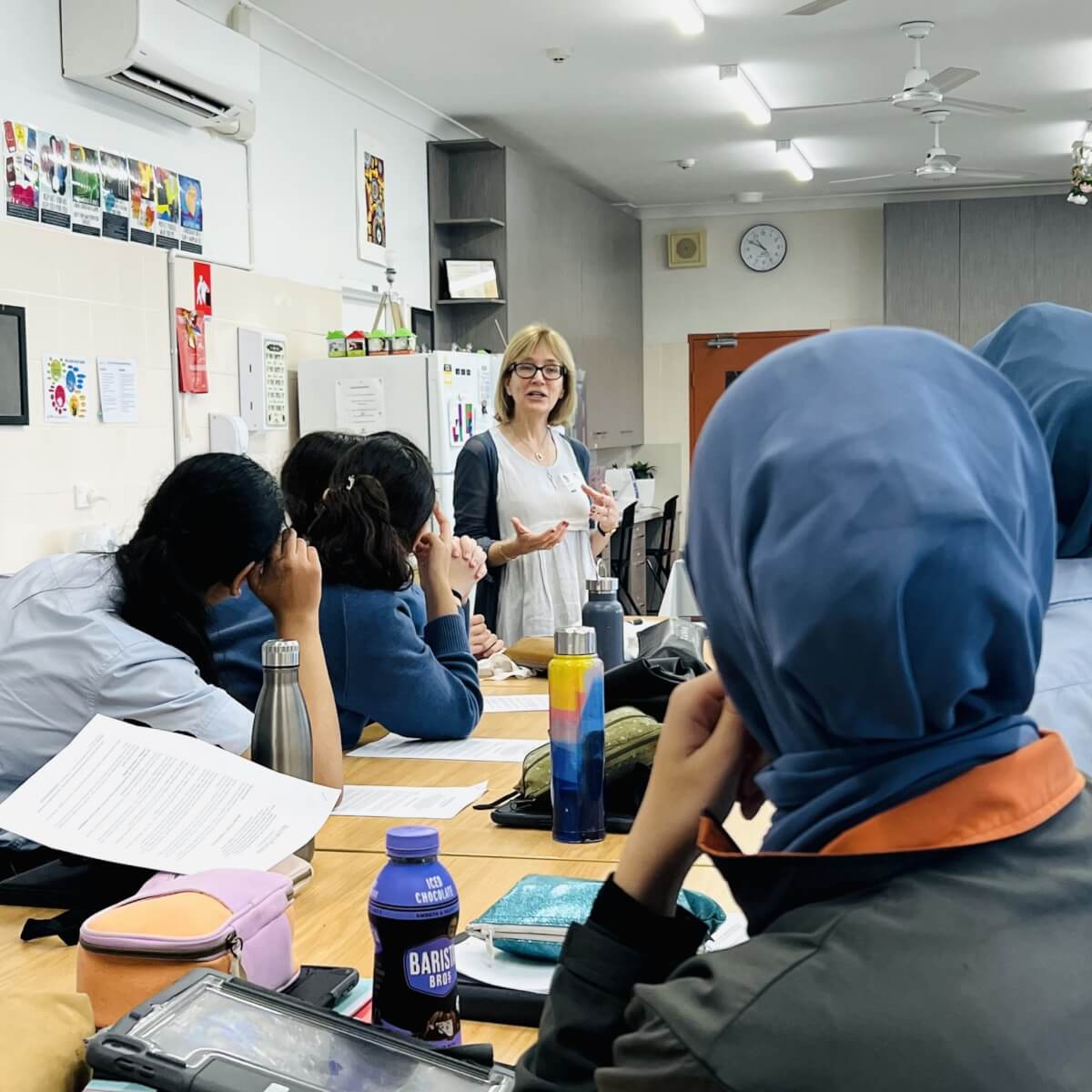
Another very real highlight of the last few weeks was the morning I spent with Yasmeen Afzal’s Year 10 Food Tech class at Amity College in Prestons in Sydney’s west. My mother came to this too.
We talked about the genesis of Recipes for Ramadan and the importance of sharing our family history not just in terms of getting to know each other but in terms of our backstories and the stories of the countries we each come from becoming part of the modern Australian story.
We talked about Australia’s three eras: the 60,000 years of the Aboriginal era; the colonial period; and the modern period of migration and immigration that makes Australia the most multicultural country on earth. With nearly 50% of Australians having one or more parents born overseas and nearly 30% of us born overseas ourselves, Australia and being Australian is very different from what it was in the 1950s.

Yasmeen Afzal’s Amity College Year 10 Food Tech class discuss sharing family histories.
I talked of how my husband, two daughters and I arrived in Australia, thinking we’d be here for 2-3 years – and how in May we will have been here for 23 years! And I talked of the importance for me over those 23 years of helping to tell Australian Muslim stories that counter the narrative of demonisation, ‘otherness’ and Islamophobia.
The girls shared what they knew of their family history and the country they had originally come from: Afghanistan, Iraq, Kurdistan, Lebanon, Pakistan, Palestine, Sudan, Syria… Shi’a, Sunni, Christian, secular… Some families had arrived fleeing conflict and persecution, others poverty and lack of opportunity, others coming for marriage. In almost every case the girls and their teacher were surprised by how little they knew about each other.
I was honoured to be asked to award a prize to Sara Safi for the cookbook she had produced last year as a class task. Her photography was unbelievably impressive – so much so that I’ve asked her if she would like to work with me, producing new photographs for some of the recipes we have on Recipes for Ramadan, and Guardian Australia is happy to give her a photo credit too.
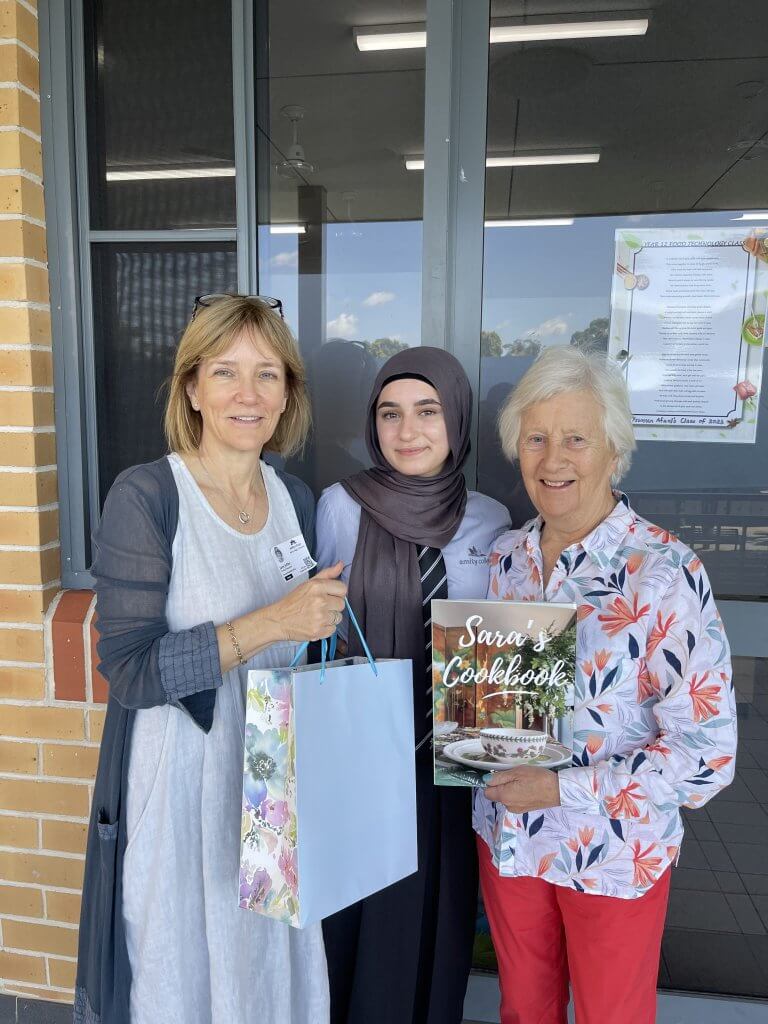
Jane Jeffes and her mother visiting form England present Year Amity College’s Sara Safi with a prize for the outstanding cookery book she produced.
After the lunch we were treated to in the staff room, my mother, who is staying with me from England and came to the school too, remarked on how much she had loved being there. It gave her a better understanding of Recipes for Ramadan as a project, what I do, why I do it, and more importantly she met people she’ll remember forever.
Since Ramadan 2020, we’ve built up a collection of 64 recipes with more to come: snacks to break your fast: soups; mains (fish, chicken, lamb, beef and vegetarian); desserts, sweets and cakes for treats and for Eid; and suggestions for healthy and filling breakfasts.
The recipes and family stories behind them come from 22 countries, from Afghanistan to Turkiye. This year we’ll be adding Fiji, Burma, Russia and Albania. All of these stories have taught me so much about the history of different countries and the different ways many of us came to be here. They have also gifted me some very special relationships.
Find Recipes for Ramadan at www.recipesforramadan.com and follow us on Instagram @recipesforramadan, Facebook and (new this year!) TikTok.
Guardian Australia is running another series of recipes and stories from Recipes for Ramadan, every Saturday from 18 March 18 – 15 April 15.
AMUST is a founding partner in Recipes for Ramadan




Comments