


Kiran Afzal is a contributor to Recipes for Ramadan, the online and social media project we started in response to covid. A passionate food blogger, these are her tips to minimize food stress during Ramadan and create more time to focus on prayer and introspection instead of spending hours in the kitchen.
- Strategize your meal planning
Start by planning your menus. It doesn’t have to be detailed – just a rough guide to what the family will be eating each day for Suhoor, Iftar and dinner. If there are people in your household who aren’t fasting, keep a note of their meals too. And keep your work schedule in mind.
The first iftar on the East Coast of Australia will be just after 7 pm so Iftar at home may or may not be possible and on normal weekdays, the meal may need to be something that can be eaten quickly.
Check out my Ramadan meal planning guide for inspiration.
- Make your Ramadan grocery list
Once your menu plan is made, the shopping list is easy. Depending where you come from, Muslims around the world have special recipes made only for Ramadan so your grocery list will most likely be different to your regular pantry staples.
Dates of course are a must, and Australian supermarkets and greengrocers usually have special offers. In Pakistan where I’m from originally, other Ramadan staples include Rooh Afza (a red coloured cordial), chickpea flour (for pakoras), samosa wrappers (to make samosas) and mash daal/white lentils (for dahi baray).
Follow these hyperlinks or go to www.RecipesForRamadan.com and scroll through Recipes & Stories to find my recipes and family story under Pakistan.
- The freezer is your best friend
Bulk prep and freeze items that can be turned into quick and easy meals. And think about freezer friendly options from the supermarket or from caterers and restaurants who have Ramadan specific menus.
In Pakistani households, the freezer will be stocked with shami kebab (Pakistani style beef and lentil patties) that can be eaten with paratha for Suhoor. Plus samosas, spring rolls and chicken puff patties for Iftar. Check out my guide on how to bulk prep for Suhoor and Iftar in Ramadan.
- Get the family involved
Divide responsibilities. One person sets the table, another preps the fruit chaat, another prepares other Iftar items. Many hands make light work and involving all family members can be great fun when preparing items like samosas or spring rolls in bulk.
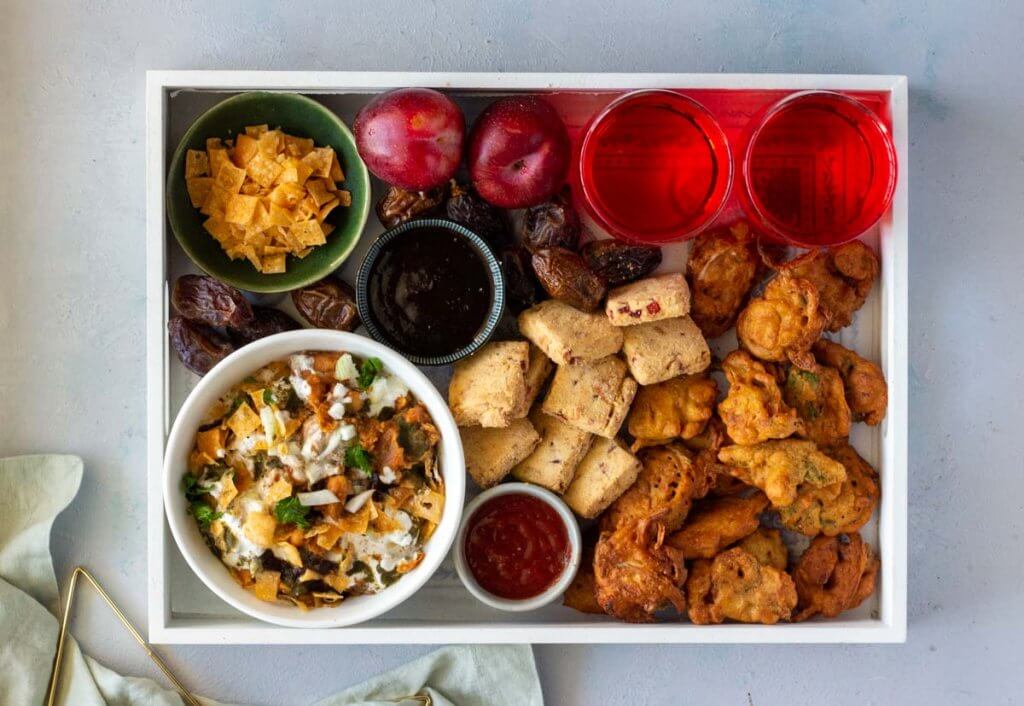
Iftar nibbles – a little planning reduces the stress. (Photo courtesy of Kiran Afzal)
- Eat a balanced diet
Fasting from sunrise to sunset is hard on your body so to avoid weakness, dizziness and headaches, when you can eat, eat nutritiously balanced meals and plenty of water for hydration.
Fibre-rich food and complex carbohydrates, especially for Suhoor, are digested slowly and provide energy during the day.
Indulge in those delicious Ramadan specialities once in a while, just don’t have too much fried food or food with a high sugar content too often as both lead to dehydration.
Moodi Dennaoui’s guide to staying fit and healthy in Ramadan is really helpful and his deliciously nutritious breakfast smoothie and Taysir Ghazi’s fibre-rich Ful Medames are both super easy Suhoor options to throw together if you plan and prepare ahead.
With less than 2 weeks to go, enjoy the countdown.
Recipes for Ramadan aims to share recipes and family stories reaching back into the history of Australian Muslim families and, to quote the song, ‘the lands from which we come’; to replicate the kind of conversations we might have getting to know each other at iftar. Join us at www.recipesforramadan.com; on Instagram @recipesforramadan and Facebook @recipesforramadanau
You can find some of Kiran’s recipes at https://recipesforramadan.com/recipes/ – just scroll down to find Pakistan. You can also find Kiran on Instagram @mirchitales
AMUST is the community media partner and Guardian Australia will run a series of our recipes and stories starting on Saturday March 18.





Comments