

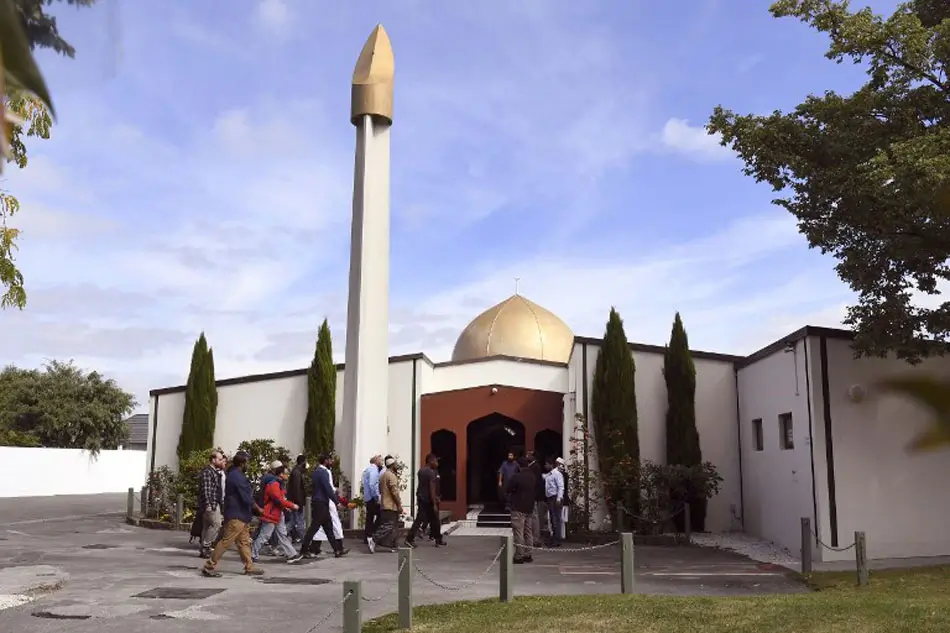
The need for deepened Islamic consciousness is brought into perspective when we look at the example of the Prophetic Period and the Righteously Guided Caliphs.
Total focus on such matters as beard length, trouser length, hijab style while social justice, effective and responsible governance and respect for the rights endowed by the Creator on all human beings, get but cursory attention, is a problem.
The theme of social justice in the Gospels, such as the sheep and the goats in Matthew 25, was carried from the earlier prophets and culminated in the teachings of the last Prophet Mohammad (s).
Islam demands Social Justice
Wealth must be fairly distributed and not hoarded by the rich.
“And what Allah restored to His Messenger from the people of the towns – it is for Allah and for the Messenger and for [his] near relatives and orphans and the [stranded] traveller – so that it will not be a perpetual distribution among the rich from among you. And whatever the Messenger has given you – take; and what he has forbidden you – refrain from. And fear Allah ; indeed, Allah is severe in penalty.” (Quran 59:7)
Prophet Muhammad (s) said: “Everyone is a keeper unto every other and responsible for the welfare of all.” [Bukhari Hadith number 893, and Muslim Hadith number 1829]
Upon this foundation the social justice which accompanied the spread of Islam was established.
Umar ibn Al-Khattab (r) the second Caliph, continued the work of Muhammad (s) and the first caliph Abu Bakr (r). Social justice encompassed all people in the society independent of creed or ethnicity.
He proclaimed: “The weak among you shall be strong with me until their rights have been vindicated, and the strong among you shall be weak with me until, if the Lord wills, I have taken what is due from them…”
He also made it clear the role of the Quran:
“Imbibe the teachings of the Qur’an, then practice what the Qur’an teaches. The Qur’an is not a theory; it is a practical code of life. The Qur’an does not only bring you the message of the hereafter, it also primarily intends to guide you in this life.”
One of the major factors in the rapid spread of Islam was its implementation of social equality and justice.
“Those who merely describe `Umar ibn Al-Khattab (r) as a great conqueror whose conquests exceeded those of Charlemagne and Julius Caesar do not appreciate that Umar (r) tried to spread Islam by captivating human minds through his doctrine of social equality and social justice.” [Khalid B Sayed, Islamonline]
The picture oday from the Islamicity Index
No longer do we find such examples in Muslim majority countries.
The Islamicity Index theorised by Hossein Askari of George Washington University ranking countries on features emphasised in Islamic teaching is based on indicators of Islam according to the Quran and the Life of Muhammad (s).
Countries were ranked on 4 main factors, economy, legal and governance, human and political rights and international relations.
The details of each of the factor can be found at http://islamicity-index.org/wp/links-downloads/index-elements/
Rankings have been published each year till 2021.
The latest detailed index is at: https://islamicity-index.org/wp/latest-indices-2021/
New Zealand was at number 1 overall ranking in 2019 and was still number 1 in 2021. It is followed by Denmark, Ireland, Iceland and Sweden.
Australia is ranked in 2021 at 11, a drop from 10 in 2019.
The highest overall ranking of a Muslim majority country in 2019 was UAE at rank 44, improved to 43 by 2021. Malaysia took the leading position in 2021 with a rank of 39. It had been 33 in 2014.
Qatar at 111 in 2014 had improved markedly. It was ranked at 51 in 2019 then 50 by 2022.
India, home to many millions of Muslims under the BJP, in 2019 ranked 88. This had dropped to 98 by 2021.
The median ranking of Muslim countries was 109 in 2019 and 108 in 2021. Barely noticeable.
Economy
Economy includes many major social justice factors such as equal access to education and health care, economic opportunity and economic freedom, and provision of aid to meet basic human need.
The top ten ranking countries also ranked in the top ten on this, excluding expensive Iceland which was 15. Australia at an overall ranking of 11 ranked 14 on this factor, a bit better than Canada on 19.
UAE came in at 17 but Malaysia was at 35. Indonesia at 54 was not as bad as might be expected nor was wealthy Saudi Arabia at 51 but Iran was at 134, worse than Afghanistan at 132.
The median ranking for Muslim majority countries was 96. A small improvement from 102 in 2019.
Post-colonial Muslim Countries
As we can see from this study, the Muslim world faces great problems.
Much wealth has been looted over the past couple of centuries from the Muslim world, especially Africa, which is majority Muslim, as well as the Middle East.
Post-colonial regimes were often installed to look after the interests of the imperial powers, not the inhabitants of the lands.
There is much to be done.





Comments