

Every atom in your body was once something else. The iron in your blood was forged in a dying star; the carbon in your cells drifted across the cosmos for billions of years before settling into the shape that is you.
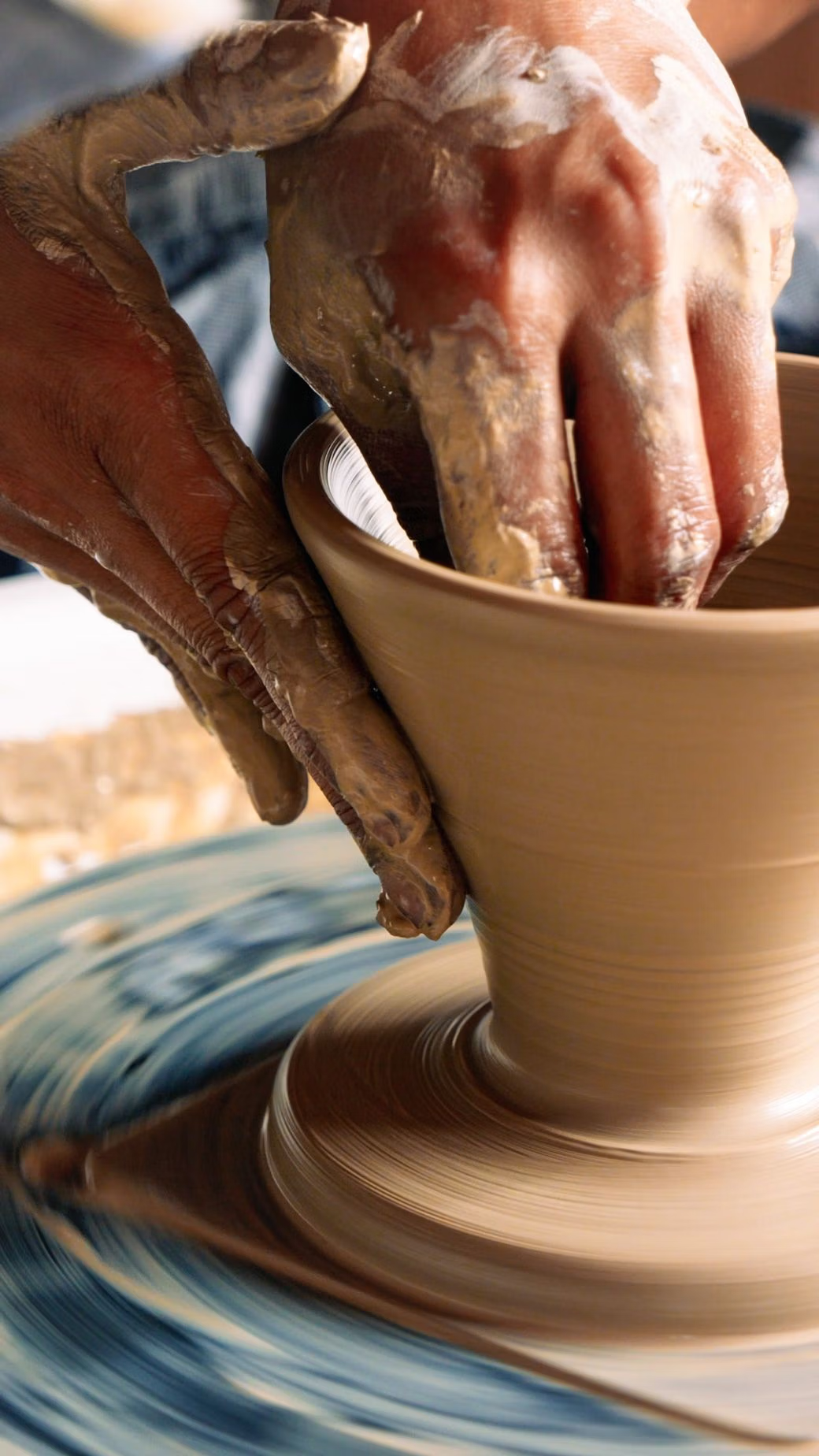
The Qur’an names our beginning with startling humility — we were fashioned from “sounding clay, from mud moulded into shape.” (Quran 15:26)
Science, in its own language, tells a strikingly parallel story: of dust becoming chemistry, chemistry becoming life, and life becoming aware.
What no microscope can explain is the moment the dust began to wonder about itself.
Somewhere along this long journey, matter crossed a threshold. A creature appeared that could not only live, but ask why it lives.
Of all the species that have ever walked, swum, or flown across this earth, only one pauses to consider its own origin — and in considering it, reaches for its Creator. That capacity is not a footnote to our biology. It is the whole point.
The Qur’an captures the turning point in a single luminous verse: “And He taught Adam the names — all of them” (Quran2:31). Adam’s distinction was not strength, nor speed, nor instinct.
It was the power to name — to grasp the reality of things, to hold concepts, to reason, to build meaning. The angels, who had no such gift, fell silent before it.
This naming capacity is the human signature. It is why a child learns a language no animal will ever speak, why we write poetry, prove theorems, and map galaxies we will never visit.
But the gift came wrapped in responsibility. The Qur’an speaks of the Amanah — the Trust — offered to the heavens, the earth, and the mountains, all of which declined to bear it, until the human being took it up (Quran 33:72).
To be given knowledge is to become accountable for it. Our intelligence was never granted for its own sake; it was granted as a test of what we would do with it.
That test has rarely felt more urgent. For the first time, we are building machines that name, reason, and respond — artificial intelligences that imitate the very faculty that once set us apart.
It is a profound moment to ask: if naming is what makes us human, what exactly are we creating, and what does the Trust now require of us?
The conscious journey did not end with Adam. It runs through every prophet, every seeker, every quiet act of reflection — and it is not finished.
The Qur’an points beyond our present, toward signs not yet seen and a destiny still unfolding.
So the next time you catch yourself wondering — about the stars, the soul, or why there is something rather than nothing — pause.
That wonder is the universe, made of clay, turning to face the One who shaped it. You are the sign. The journey continues.




Comments