

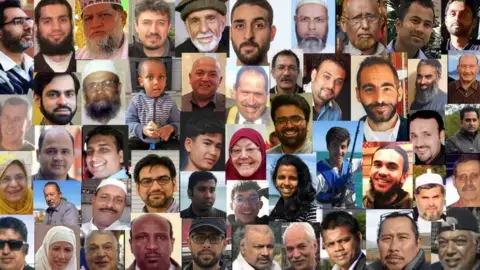
On this Sunday 15 March 2026, we pause to remember the victims of the Christchurch massacre, one of the darkest days in the recent history of our region and of the global Muslim community. On that day in 2019, 51 Muslim worshippers were murdered and many more were injured while gathered for Jumu’ah prayer at Al Noor Mosque and Linwood Islamic Centre in Christchurch.
The attacker was an Australian, and that fact remains a source of deep sorrow and reflection for us here at home. The United Nations now marks 15 March each year as the International Day to Combat Islamophobia, a recognition that the hatred which drove Christchurch was not an isolated act, but part of a wider and continuing reality.
We remember Christchurch not only because the loss was so immense, but because remembrance must be an active moral responsibility.
To remember properly is to refuse indifference. It is to honour those who were taken by confronting the hatred that took them. It is to ask, with honesty and seriousness, whether enough has changed in the years since, and whether Muslim communities today are safer, more respected, and more fully protected than they were then.
The painful truth is that, for many Muslims in Australia and around the world, Islamophobia has not receded. In too many places, it has intensified. Research released by the Islamophobia Register Australia has reported online incidents up 250 per cent and in person incidents up 150 per cent in the last 12 months.
In the three weeks after 7 October 2023 alone, incidents surged by 1300 per cent compared with the same period the year before. Muslim women continue to bear the brunt of this hostility, accounting for 75 per cent of victims in the report.
These are not just numbers. They represent Australians abused in public, threatened in their workplaces and schools, targeted on public transport, intimidated online, and made to feel unsafe in the very places where they should feel most secure.
They represent the slow normalisation of suspicion, contempt and dehumanisation directed at Muslims, a climate in which hatred is too often minimised until it turns into something more dangerous.
That is why Christchurch must never be treated as a tragedy of the past, safely sealed off from the present. The warning signs remain with us.
In Australia, we have seen recent threats directed at mosques explicitly invoking Christchurch, including the “Christchurch 2.0” threat made against a Sydney mosque recently.
At the same time, Australia’s security agencies have warned that the domestic environment remains volatile, with politically motivated violence continuing to be a principal security concern and the national terrorism threat level remaining at “Probable.”
For AFIC, this day is therefore not just about remembrance but also about responsibility.
We call on governments, institutions, media organisations and community leaders to treat Islamophobia with the seriousness it demands, not as an occasional matter of rhetoric, but as a real and growing threat to safety, social cohesion and equal citizenship.
Combating Islamophobia requires more than symbolic statements. It requires consistent public leadership, accurate and responsible media coverage, proper protections for places of worship and Muslim community infrastructure, stronger reporting and response mechanisms, and an unwavering commitment to reject all forms of hate before they escalate.
We also call on the broader Australian community to reflect on what Christchurch revealed.
Hatred does not emerge from nowhere. It is cultivated through narratives that portray Muslims as suspect, foreign, threatening, or less deserving of dignity and belonging. When such narratives are tolerated in public debate, amplified online, or excused in political discourse, they create the conditions in which violence becomes thinkable.
As we commemorate the martyrs of Christchurch, we renew our prayers for those who were killed, for those who survived, and for the families and communities who continue to carry that pain. We pray that their memory remains a source of conscience and courage.
And we reaffirm this simple but urgent truth:
No family should fear sending their loved ones to prayer, no community should fear gathering in worship, and no Australian should be made to feel unsafe because of their faith.
Six years on, the question is not whether Christchurch should still matter. It must. The real question is whether we have the courage to learn from it fully, and to act with enough resolve that such hatred is neither normalised nor repeated.


Comments