

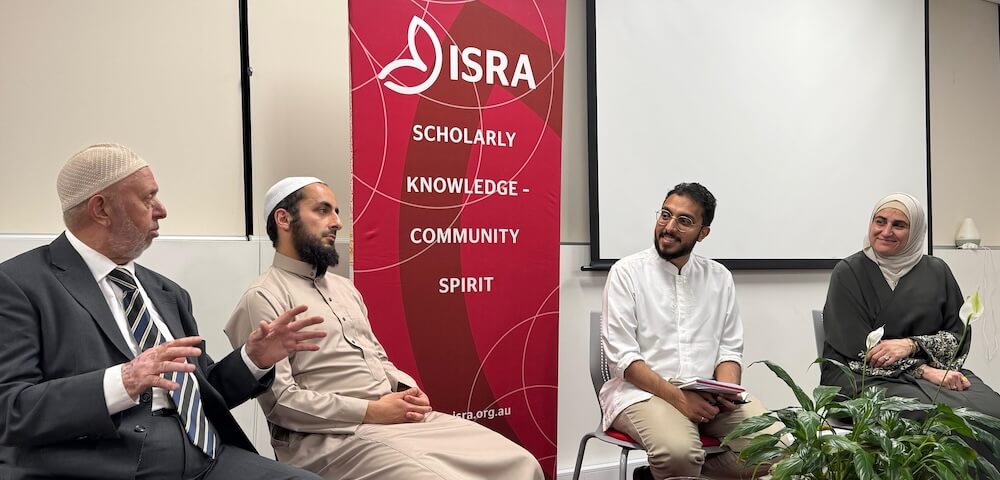
At the latest UNPACK forum held on Saturday 18 October 2025 at the ISRA Centre in Auburn, community members gathered to explore one of the most sensitive challenges facing Muslim families today: caring for ageing parents while balancing work, family, and faith.
Facilitated by Ibrahim Khalil, the discussion brought together Sheikh Jamal-Ud-Din El-Kiki, Ramia Abdo Sultan, and Zia Ahmad to explore how Islamic principles, legal realities, and lived experiences can help families navigate the growing pressures of elder care with compassion and balance.
The Qur’anic standard of excellence
Sheikh Jamal-Ud-Din El-Kiki, resident Imam of Lakemba Mosque, opened with verses from Surah Al-Isra (17:23-24), reminding attendees that reverence for parents is placed immediately after worship of Allah.
He said that ihsan (excellence) requires believers to go beyond duty: treating parents with patience and dignity even when the task becomes emotionally exhausting.
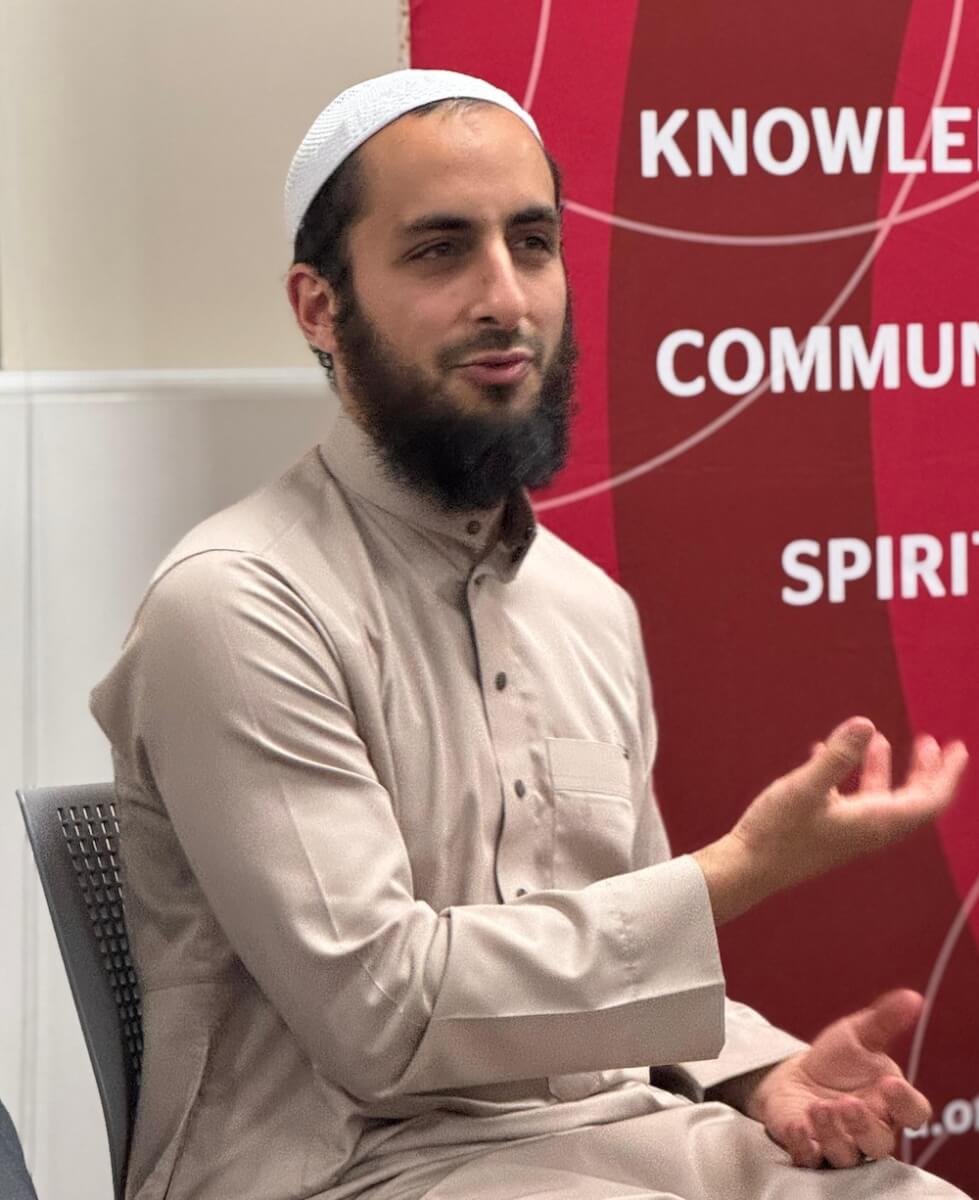
Quoting a hadith, he recalled the Prophet (s)’s words to a man who carried his mother around the Kaaba who asked if he has repaid his mother: “Not even a single contraction she had while giving birth to you can be repaid.”
At the same time, he acknowledged that serving elderly parents is not easy. It can test faith and endurance.
“It takes a lot of striving against one’s ego,” he said, “but the Qur’an asks us to honour them even when it’s hard.”
Legal and emotional preparedness
Ramia Abdo Sultan, lawyer and community advocate, highlighted the importance of early planning. “In our community, even mentioning a will is seen as jinxing death,” she noted, calling this fear a major barrier to fulfilling both legal and Islamic obligations.
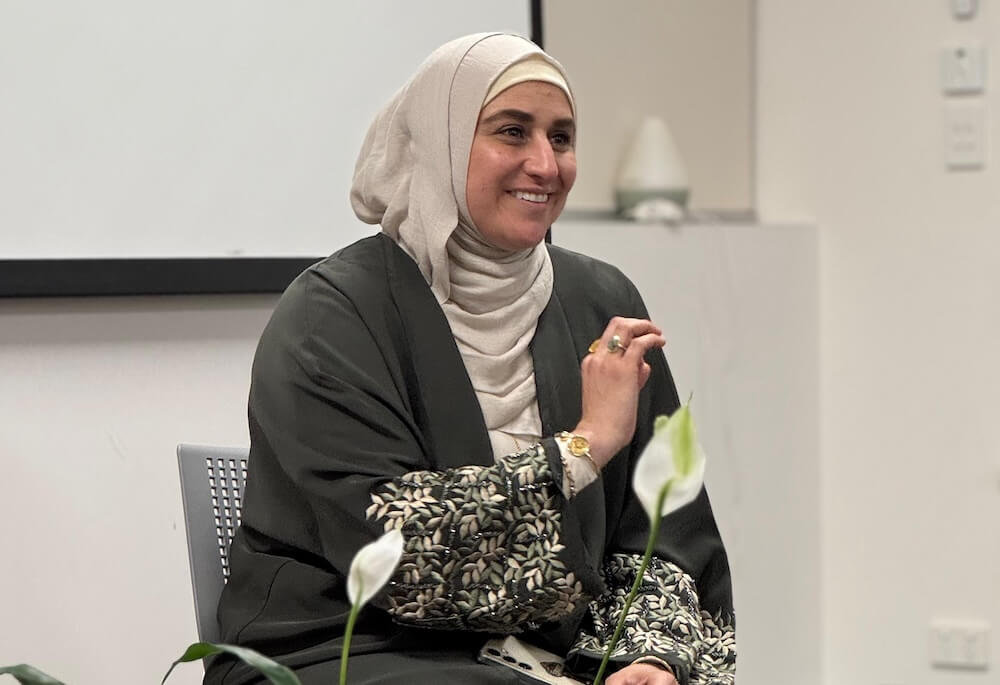
She encouraged families to normalise open conversations about ageing and decision-making – not only wills but also enduring guardianships, powers of attorney, and advanced-care directives. These steps, she explained, prevent confusion and conflict once parents lose capacity.
Ramia also spoke about sibling fairness. “If there are five siblings, there are five parts to the responsibility,” she said. “Even if one lives overseas, they can still contribute financially. Care must be shared to preserve harmony.”
Faith, guilt, and gratitude
Zia Ahmad, Editor-in-Chief of AMUST, offered moving reflections from his own life. “I’m 72 years old,” he said, “and I lived with my parents for almost seventy years until they passed away.”
He acknowledged the guilt many feel when they cannot meet every need, explaining that longer lifespans and modern work demands make full-time care difficult. Yet, he spoke warmly of the blessings that come from service:
“I used to give my father a shower every Sunday. He’d tell me, ‘You’re going through too much trouble,’ and I’d say, ‘For me, Sunday is like a day of Eid for me.’”
Zia described how consistent family routines sustained them: “In 1983 we started a weekly study circle and it still continues. It kept the elderly mentally engaged and removed the generation gap.”
He reminded the audience that caregiving is not only an act of love but a lifelong education. “If our reference point is Islam,” he said, “we can stay connected through every hardship.”

All three speakers agreed that caring for the elderly is not only a personal responsibility but a communal one. Sheikh Jamal urged mosques and community organisations to invest in trained carers, counsellors, and chaplains rather than just infrastructure.
Zia emphasised the need for awareness of existing support: “Our community isn’t using the government services available – home care packages, financial support, and respite options. These are there to uphold dignity, not replace family.”
Ramia suggested creating a trusted Muslim “executorship body”, professionals who could act as legal guardians or advocates for elderly individuals without close family.
Q&A highlights
During the open floor discussion, participants raised practical and emotional questions:
1. What if my parents were abusive or emotionally harmful?
Sheikh Jamal acknowledged the difficulty, saying believers should act with kindness but protect themselves from harm: “Do the best you genuinely can, even a message or small act of respect counts. But don’t put yourself in danger.”
2. Is it wrong to place parents in aged care?
He clarified that intention matters more than appearance: “It’s not abandonment if you stay involved and ensure their dignity. What matters is that you continue to care within your capacity.”
3. How can families prevent conflict?
Ramia advised that families should speak early, plan clearly, and share duties fairly. She also suggested documenting key decisions to avoid disputes later on.
4. What can the wider community do?
Zia encouraged more education and discussion: “Conversations like this should happen often; in mosques, families, schools so that we don’t repeat the same mistakes when our turn comes.”
Though the evening dealt with guilt, fatigue, and difficult truths, it ended on gratitude. Caring for parents, the panelists reminded the audience, is not about perfection but sincerity and presence.
For Zia Ahmad, the lesson was deeply personal:
“Those were my best days, looking after my parents in their old age of around 90.”





Comments