

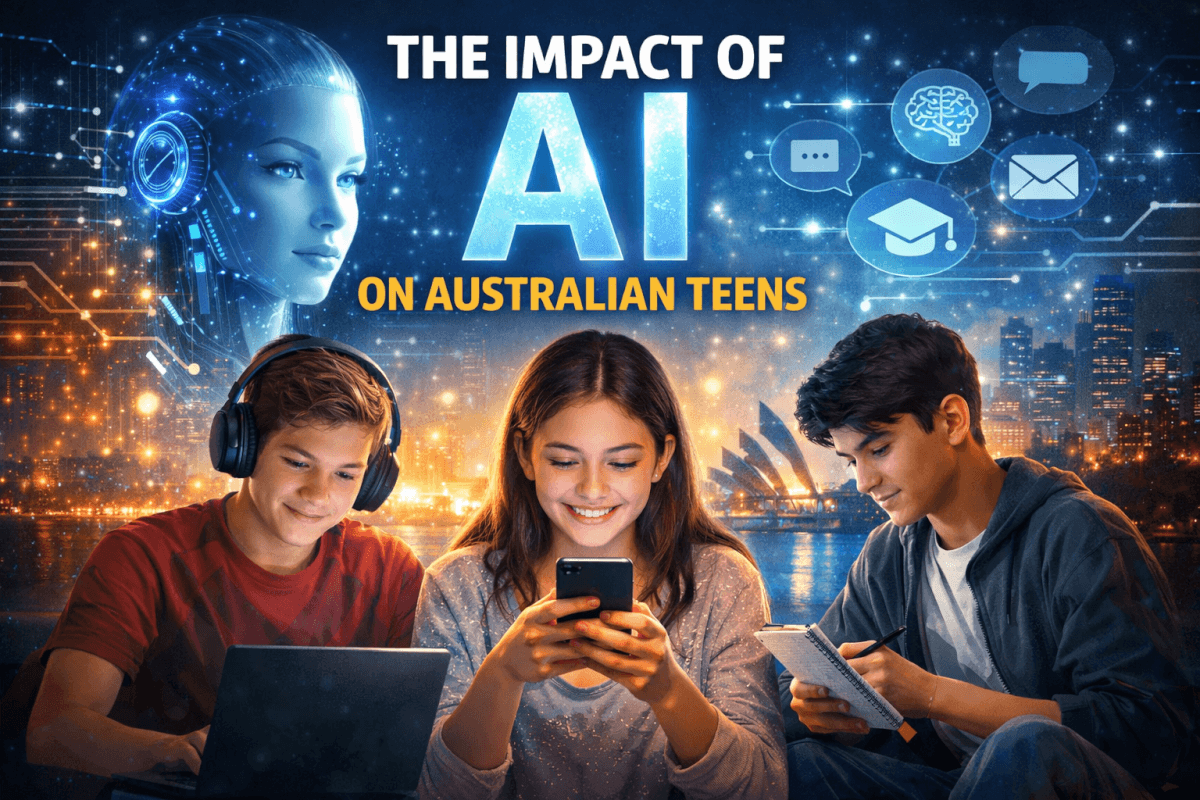
AI is already part of teenage life.
Artificial intelligence is no longer something for the future. For many teenagers in Australia, it is already part of everyday life.
Teens are using AI to help with homework, understand difficult topics, write assignments, and even prepare for job applications. Some are also using it to ask questions they may not feel comfortable asking others.
The scale is striking. Australia’s eSafety Commissioner says 79 per cent of children aged 10 to 17 have used an AI assistant or AI companion, while 66 per cent had done so in the previous four weeks.
The same findings show that 8 per cent had used an AI companion specifically, and a significant share were using these tools for “companion-type” purposes, including advice about feelings, life challenges and mental wellbeing.
This means the conversation is no longer about whether teens will use AI. The real question is: how is it shaping their thinking, learning, and behaviour?
How teens are using AI.
That matters because the conversation about AI is often too narrow. Much of the public debate still treats AI as a study tool, a smarter search engine or a productivity shortcut.
But that is only part of the story. For many teens, AI is moving into areas that used to belong to teachers, friends, parents, counsellors and mentors.
There are clear benefits. The Australian Youth Digital Index found that four in five young people aged 8 to 25 are now using AI, including 90 per cent of those aged 14 and over.
More than half say AI is easy to integrate into everyday tasks. Young people are using it to summarise textbook chapters, explain maths steps, improve CVs and practise for interviews. For many students, AI feels like a second teacher that is available on demand.
That upside is real, especially for students who need quick explanations, extra practice or help getting started. Used well, AI can reduce friction, build confidence and save time. It can also widen access to support for students who may not always get one-to-one help elsewhere.
But the risks are also becoming harder to ignore.
The learning impact: help or shortcut?
One concern is learning itself. If a teenager uses AI to brainstorm, clarify and improve their work, the tool may strengthen learning. If they use it to replace thinking, writing and problem-solving, the result may look polished while the learning underneath becomes weaker.
The same Youth Digital Index found that one in five young people rarely or never checks whether AI-generated information is accurate. That is a serious warning sign in an era of confident-sounding mistakes and hallucinations.
Another concern is wellbeing. Black Dog Institute research on Australian adolescents found that passive social media use, especially endless scrolling and consuming other people’s content, was associated with higher symptoms of depression, anxiety, insomnia and disordered eating.
By contrast, using digital platforms to connect with people they actually know was linked with lower depression and anxiety. That distinction is important. The issue is not simply how much technology teens use, but how they use it and what kind of relationship they develop with it.
This is where AI companions deserve particular scrutiny. eSafety’s latest findings show serious gaps in the safeguards used by some popular AI companion services.
The regulator found weak age assurance, poor responses to self-harm content and failures to direct vulnerable users to proper support. In plain language, some systems designed to feel emotionally responsive were being used by children without the level of protection such interactions clearly demand.
Mental health and emotional use
That raises a deeper social question. When a teenager turns to AI for comfort, advice or validation, what habits are being formed? Convenience may slowly reshape trust.
A generation that becomes used to instant, personalised, non-judgmental machine responses may also become more vulnerable to manipulation, dependency or emotional isolation, especially when the tool is designed to feel intimate.
There is also an inequality problem. Access to AI is not evenly distributed. The Australian Youth Digital Index points to a growing divide between young people with strong device access, connectivity and digital confidence, and those without.
If AI becomes a quiet advantage in schoolwork, job preparation and digital skills, then existing educational gaps may widen further.
So where does that leave Australia?
The answer is not panic, and it is not blind celebration either. Schools need to teach AI literacy, not just tolerate AI use. Parents need honest conversations with teens about what tools they are using and why.
Policymakers need stronger child-safety and privacy standards. And tech companies need to stop pretending that products aimed at emotional engagement can be treated like harmless novelty tools.
AI is already shaping Australian adolescence. The real challenge now is whether adults can respond with enough wisdom and urgency to make sure it supports young people rather than quietly reshaping them in harmful ways.
Source references
- eSafety Commissioner — Findings from transparency notices on AI companion apps: October 2025
Best source for Australian data on how children and teens are using AI assistants and AI companions, including use rates, wellbeing-related use, and safety gaps. It reports that 79% of children aged 10–17 had ever used an AI assistant or AI companion, 66% had used one in the past four weeks, and 54% of users had used them for “companion-type purposes.” - eSafety Commissioner — Media release: AI companions are putting children at risk
Useful for a news-style angle and direct regulatory framing. It highlights weak age checks, risks around explicit content, and inadequate responses to self-harm content by some AI companion services. - Black Dog Institute — Teens, Screens and Wellbeing Report 2024
Strong supporting source for the mental health section. It is not about AI specifically, but it is highly relevant for explaining how digital use patterns affect adolescent wellbeing, especially the difference between passive consumption and meaningful social connection.






Comments