

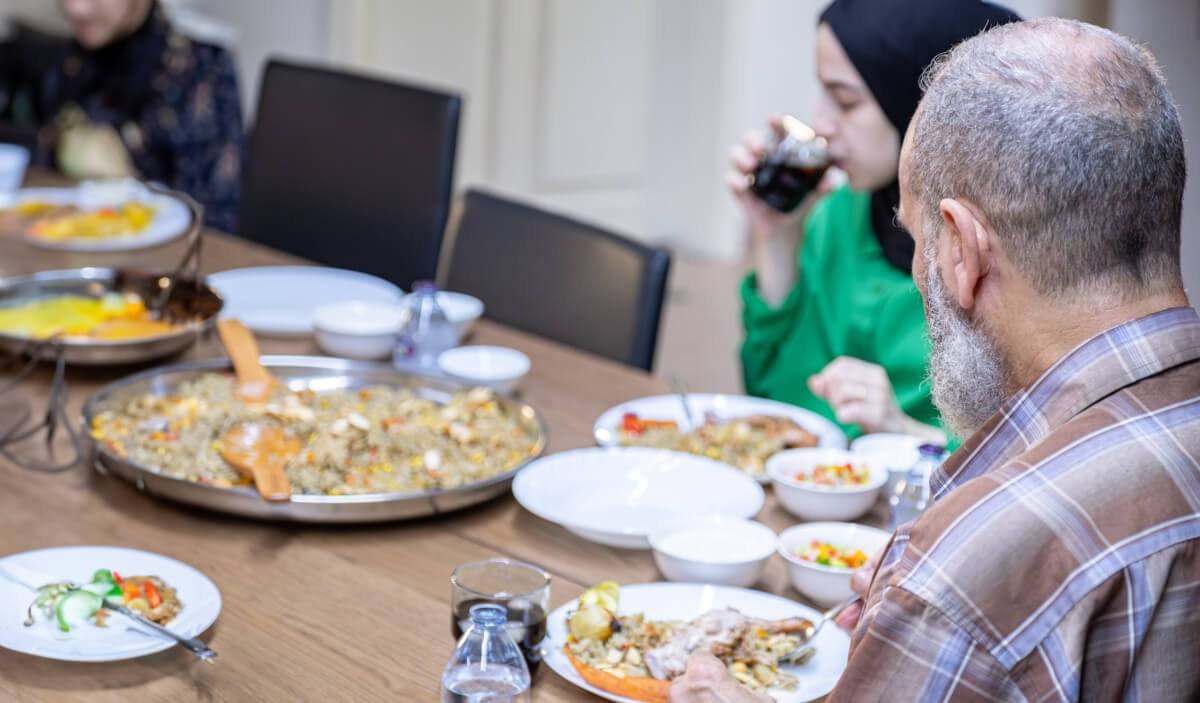
Caring for a parent with dementia on a normal day is demanding, but in Ramadan, it can become overwhelming. Disrupted routines, crowded iftar gatherings, and taraweeh prayers can intensify stress for carers.
There can be a struggle between fulfilling caregiving responsibilities and fully engaging in worship. Here are some things you can do to make this Ramadan dementia friendly.
What is dementia?
Dementia is a brain disease where cells begin to die and the brain shrinks. It isn’t a ‘normal’ part of ageing and shouldn’t be ignored.
There are more than 100 types of dementia, each having different causes, affecting different parts of the brain and with different symptoms. Alzheimer’s disease is the most common type of dementia.
The Facing Dementia Together Campaign has prepared a comprehensive checklist of dementia signs available in Arabic and English.
If you are concerned for yourself or a loved one, refer to this checklist and take it with you to your family doctor.
There are treatments and supports for dementia, so the earlier a person is diagnosed, the earlier the person and family can get help.
- Fasting and dementia
People are generally exempt from fasting if it causes their physical and cognitive health to decline due to a medical condition.
Our loved one may sometimes still insist on fasting despite having dementia. Gently explain to them why they shouldn’t fast and how nutrition and hydration help their brain function better. Encourage them to instead engage in other forms of worship this Ramadan.
Dementia expert and Professor in Ageing and Health at the University of Sydney, Lee-Fay Low, says “People with dementia are more likely to become dehydrated when fasting. If we are dehydrated, our brains don’t work as well. Fasting which leads to dehydration might mean that person with dementia might become more confused, have trouble concentrating and behave in a restless or lethargic way.”
- Attending social and religious events
While most of us welcome Ramadan with family iftars and taraweeh prayers at the local Masjid, it is quite common for the family of a person living with dementia to feel the need to keep their loved one home, either to protect them or because leaving the house is difficult.
However, maintaining social activities can help reduces loneliness and keep the brain working. Giving your loved one opportunities to spend time socially with others can help their brain health.
Going to family iftars and attending taraweeh prayers is one way to do that, but when leaving the house isn’t feasible, inviting relatives or friends to your home for iftar or taraweeh can be a good alternative.
It can also help to gently educate family and friends about dementia, so they understand how to engage with your loved one in a respectful, patient and considerate way.
- Balancing care and worship
Most importantly, if you feel that you haven’t been able to properly engage in your usual worship this Ramadan, remember that caring for our elders is one of the greatest acts of worship we can do.
Ramadan Mubarak!







Comments