


In a heartwarming twist during ACT Muslims Australia’s (ACTMA) 4th Annual Arabic Studies and Umrah Trip, during December 2025-January 2026, Youth Portfolio Director Amadu Barrie experienced an unexpected cultural reunion that underscores the deep interconnectedness of Muslim communities worldwide.
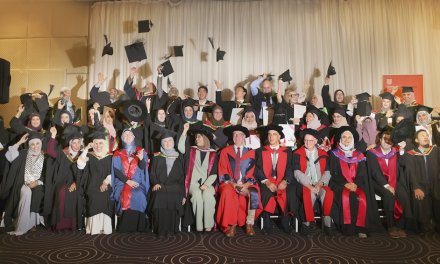
Amadu is currently leading a delegation of Australian Muslim students at the prestigious Islamic University of Madinah, a program designed to strengthen Arabic proficiency and spiritual growth. But beyond the academic rigour and sacred rituals, this year’s trip brought a story that will be remembered for years.


Amadu inside Rawdah of masjid Nabawe | Amadu with Talha at masjid courtyard | Male student delegation with team leader (from right): Kuat, Amadu, Mohamed and Sarjoh.
It all began at Al-Mizany Masjid in the Albadrani suburb during the early morning Fajr prayer on Sunday 28 December 2025, where Amadu and his colleague Sarjoh Bah met Talha Omar Fallata, a dignified man from the Fallata tribe, a term used to refer to the indigenous Fulani people in Saudi Arabia, parts of Chad and the Sudan.
Talha, a retired engineer who served 26 years with Saudi Arabian Airlines, said he noticed something striking about Amadu and Sarjoh. “From your nose, I suspected you both must be from my tribe,” Talha remarked, initiating a conversation that bridged continents and generations.
Sarjoh’s fluent Arabic and Talha’s command of English made the exchange seamless. Amadu added a heartfelt observation, “Whenever I shake hands with you, it feels like shaking hands with my brothers in the cattle villages of Sierra Leone.”


Amadu shaking hands with Bro Talha (left) and Abo Salah (centre) at Rowe 6 Masjid Nabawe | Young Abdullah | Uncle Baker, an elderly Fallata showing his kolanut (goro).
Amadu added that, “Since that moment, Talha has embraced us with generosity and warmth. He has hosted us for dinner twice, introduced us to his community’s gathering spot at Masjid Nabawi, specifically the 6th row from Door 37, where local tea flows from Maghrib to Isha”. There, Amadu and Sarjoh met Fallata elders, one of whom shared kolanut (goro), a cherished cultural symbol carried and chewed by many West Africans.
Talha’s kindness extended beyond hospitality; he assisted the delegation in finding hotel accommodation and imparted spiritual wisdom. When asked about his greatest spiritual lesson from decades of global travel, Talha’s response was profound: “I have never seen anything like Madinah’s influence in my life.”


Courtyard of Masjid Nabawe with Bro Talha | Dining out at our host expense | Amadu and Sarjoh (Aussie Fulani/Fallata).
The sentiment was echoed by Abdullah, a 15-year-old boy serving tea at Masjid Nabawi. When jokingly invited to join the delegation in Australia, Abdullah replied with unwavering conviction: “I am not leaving Madinah for any place. I love it here and will spend the rest of my life here, Insha’Allah.”


Students Sallymatu and husband, Mohamed | Students Sallymatu and Ummu | Amadu and Sarjoh | Sarjoh, Mohamed and Amadu.
Curious about his wealth of experience, I asked Talha, “With all your years of traveling across the world, have you ever considered writing something for the benefit of future generations?” He paused and admitted that he had never thought about it.
I encouraged him, explaining that such a work would be invaluable, not just as a record of his journeys, but as a source of wisdom and perspective for those who come after him. His story, shaped by decades of encounters and spiritual reflections, could offer a unique lens into the world, bridging cultures and inspiring others to appreciate the beauty of diversity and faith.


Saudi grown Kolanut (goro) | Ummu, Sarjoh, Mohamed, Sallymatu and Amadu | Kuat, Amadu, Sarjoh and Ummu
The Fallata people, originally of West African descent, have a storied history in the Arabian Peninsula. Many migrated centuries ago during the trans-Saharan pilgrimage routes and settled in the Hijaz region.
Today, Fallatas are woven into the kingdom’s rich social fabric, holding key positions in government, education, and commerce. Their resilience and cultural pride remain evident, making them an integral part of Saudi Arabia’s diverse heritage.





Comments