

The anti-Semitic attack at Bondi was a horrific crime that demands unequivocal condemnation. Jewish Australians were targeted. Australian Muslims and community organisations rightly expressed solidarity with the victims and their families.
It is therefore deeply disappointing that, rather than calling for national cohesion, sections of the Murdoch media and political figures moved quickly to sharpen attacks on political opponents, Muslim communities, migrants and pro-Palestinian activists.
Even as the country mourned, anti-migrant and anti-Muslim demonstrations were allowed to proceed.
Peaceful activity in defence of international law and human rights for the Palestinian people, didn’t in any way contribute to the tragedy. Australian can defend universal rights but not allow grief to be instrumentalised to expand state power, narrow dissent, and target already marginalised communities.
As political theorists from Hannah Arendt to Umberto Eco warned, fascism advances incrementally through emergency laws, moral panics, the designation of internal enemies, and the steady erosion of civil liberties in the name of security.
Since 9/11, Australia has normalised exceptional powers: expanded surveillance, preventive detention, and restrictions on speech and assembly. Initially justified as counter-terrorism measures, these powers are now increasingly applied to protest and political expression. The post-Bondi response risks accelerating this long-established trajectory.
At the federal level, the Prime Minister has signalled acceptance of the full recommendations of the national anti-Semitism review led by Julian Segal KC. Civil liberties groups and Palestinian advocacy organisations have raised concerns that elements of the report risk granting disproportionate influence over public institutions like education from preschool to university, the arts and civil society organisations and civic discourse in ways that may constrain legitimate criticism of a foreign state and risk embedding external political priorities into Australia’s domestic governance framework.
The IHRA definition can dangerously conflate antisemitism with criticism of Israeli state policy.
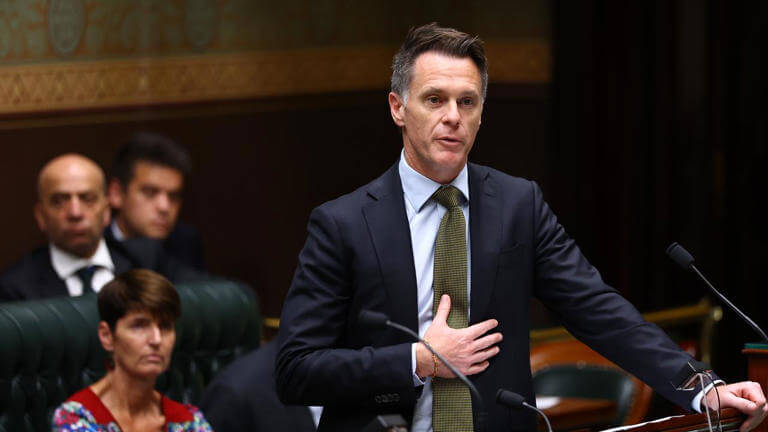
New South Wales, Premier Chris Minns has proposed rushed and extraordinary laws granting the police commissioner broad discretion to determine when and how the public may assemble following traumatic events.
The NSW Council for Civil Liberties warns that this undermines democratic accountability and deepens social division and collapses legitimate political dissent into a criminal threat, particularly when it concerns Israel and Gaza.

The rise in anti-Muslim hate far exceeds the rise in anti-Semitism post-Bondi. This includes threats against mosques, online abuse, attacks on Muslims and intimidation. Despite extensive documentation by Islamophobia Register Australia and mosque networks there has been little public or government reaction.
When one community’s trauma becomes the justification for policing another community’s speech and protest, the result is not safety but division. The right wing and Advance Australia stand ready to convert this climate into lasting political gains.
Pauline Hanson said “millions of Muslim citizens in Australia could lose their citizenship if I have my way. After the Bondi attack, we no longer trust any Muslim.”
Intense feeling at the murder of innocent people is understandable but former Treasurer Josh Friedenburg’s comments sordidly seized the moment for division and stigmatisation. His comments were reprehensible as was the booing of the Prime Minister when he attended a vigil for the victims. Authoritarian systems consolidate power by offering selective protection while normalising repression.
The genocide Gaza has exposed a profound democratic fault line. There has been intense pressure by Israel, Israeli influenced media, social media, politicians and Western governments to shield Israel from criticism by redefining antisemitism to include opposition to Zionism or Israeli state policy by policing protests, scrutiny of universities, and restrict language associated with Palestinian resistance.
This authoritarian drift does not occur in a vacuum. Decades of neoliberal policies of privatisation, austerity, weakened labour protections, housing speculation, and the effective giveaway of public resources to multinational corporation have left many Australians economically insecure and politically disillusioned.
The Labor Government bears some responsibility for the conditions in which this drift is occurring. Despite its working-class roots Labor has failed to confront the neoliberal order entrenched by decades of LNP policy. Housing insecurity, inequality and economic precarity remain unresolved.
When governments fail to address real material grievances, discontent will not disappear, it will be redirected. Right-wing actors exploit economic pain and channel it toward scapegoats: Muslims, migrants and refugees. Under Sussan Ley’s leadership, the LNP has amplified calls for deportations, protest bans and securitised speech. Worryingly One Nation in some polls has an 18% approval rating. Fascism thrives not because people are irrational, but because political and economic elites refuse to address the real sources of suffering.
The role of media cannot be ignored. Australia’s political discourse is heavily shaped by billionaire-owned outlets that support neoliberal economics and maintain consistently pro-Israel editorial lines. Coverage routinely frames Palestine solidarity negatively while downplaying or ignoring the genocide and ethnic cleansing in Gaza, Jerusalem and the West Bank.
Digital platforms mirror this imbalance. Pro-Palestine content is frequently suppressed or removed, while Islamophobic material circulates widely. The cancellation of journalist Chris Hedges’ National Press Club address following external pressure illustrates how debate is constrained not only by law, but by institutional fear and political influence. This right-wing pro-Israeli control of media with its concentrated ownership, lobbying power, and ideological alignment with Israeli foreign-policy priorities is contributing to the rise of a pro-fascist climate.
There is a final, uncomfortable truth: this trajectory will not make Jewish communities safer. Authoritarian systems always expand their list of enemies. Already, Jewish critics of Israel face censorship and professional retaliation. Binding Jewish safety to the policies of a foreign state engaged in mass violence risks associating Jews with repression they do not control, and many oppose.
Safety comes from universal rights, equal protection, and a democracy robust enough to tolerate dissent.
Australia can choose a different road: defend Jewish Australians against anti-Semitism without criminalising protest, silencing Muslims, or importing foreign-drafted speech codes. It can address hatred consistently, whether it is anti-Semitism, Islamophobia, anti-immigrant, anti-First Nations or anti-Palestinian racism and at the same time confront the economic injustices that fuel social fracture.


If we are to honour the victims of Bondi and all victims of hatred we need to come together and refuse a politics that trades freedom for fear and solidarity for repression.





“This right-wing pro-Israeli control of media with its concentrated ownership, lobbying power, and ideological alignment with Israeli foreign-policy priorities is contributing to the rise of a pro-fascist climate.”
If we continue to hear this blatant nonsense we will get nowhere.
On 7 April 2025 at EartH in Hackney, Aaron Bastani was joined by historian Ilan Pappé for a special live version of Downstream.How Israel Became A Fascist State | Aaron Bastani meets Ilan Pappé They discussed the origins of Britain’s Israel lobby, the indoctrination of Israelis and whether the recent atrocities committed in Gaza and the West Bank are signs of Israel’s imminent collapse.
https://youtu.be/K9rr3j7vZGo?si=NVDyP6PfUQaLivY7