


In a week when national headlines were saturated with reaction to the latest findings of the Prime Minister’s appointed anti-Semitism Envoy—a role established with speed and prominence by Anthony Albanese, despite heavy criticism from anti-racist Jews in Australia—there was strikingly little attention given to another report. One that didn’t come with a Prime Ministerial press conference. One that deserved one.
It came from the Northern Territory Coroner, and it spoke not just to one death, but to the long, brutal shadow cast by institutions that continue to fail First Nations people.
In November 2019, 19-year-old Warlpiri-Luritja man Kumanjayi Walker was shot three times at close range by NT police officer Zachary Rolfe in his home in Yuendumu. Rolfe would later be acquitted of criminal charges. But the legal process did not end there.
This week, after years of hearings and delays, the Coroner handed down her findings: Kumanjayi Walker’s death was, in her words, “entirely avoidable.”
More damning still was the conclusion that this was not the case of a “bad apple” officer, but rather evidence of entrenched systemic and structural racism within the NT Police.
It is a finding that confirms what Walker’s family and community have said all along: that racism killed him.
There was no media scrum. No national conversation. No prime ministerial press conference.
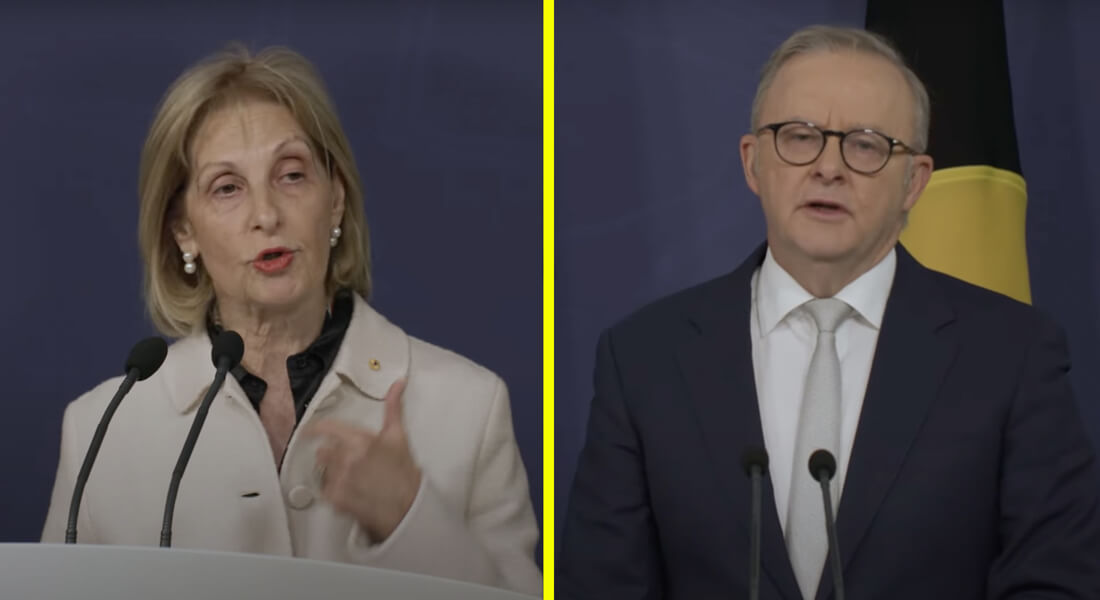
Press conference held by Prime Minister Albanese, Minister Tony Burke and Antisemitism Envoy Jilian Segal.
The family—stoic and steadfast over six long years—said the findings gave them a sense of validation. “Our community is now looking to the future,” they said, calling once again for self-determination under Warlpiri control, and for justice mechanisms that are not just symbolic, but effective.
The Coroner made a number of recommendations. But many observers say they don’t go far enough—failing to offer the structural reforms needed to ensure real police accountability or prevent further deaths in custody.
For decades, royal commissions, coronial inquiries and public outcries have identified the same patterns: systemic neglect, over-policing, under-resourcing, and racism—both overt and baked into institutional DNA. The response, more often than not, has been incremental change or silence.
And so Aboriginal and Torres Strait Islander people continue to die in custody. They continue to be over-policed and under-protected.
That the political class chose to look the other way this week is not incidental. It reflects deeper currents: who gets heard in public life, which deaths are deemed politically inconvenient, and how the machinery of state continues to brutalise First Nations people—even in the face of its own evidence.
The UN has said Australia needs “comprehensive reform” based on this evidence.
Until governments are prepared to truly listen—not just to their appointed experts, but to the families, communities and cultures who live this reality daily—there is little reason to believe that the outcome next time will be any different.
So we cannot leave it to governments to act. We have to compel governments to act through raising our voices, and voting differently if necessary to bring home the point.
And we must uplift and treat the true anti-racism advocates as true heroes.
Read and Share the family’s statement here: https://www.instagram.com/p/DL9PbvHzBZW/




Comments