

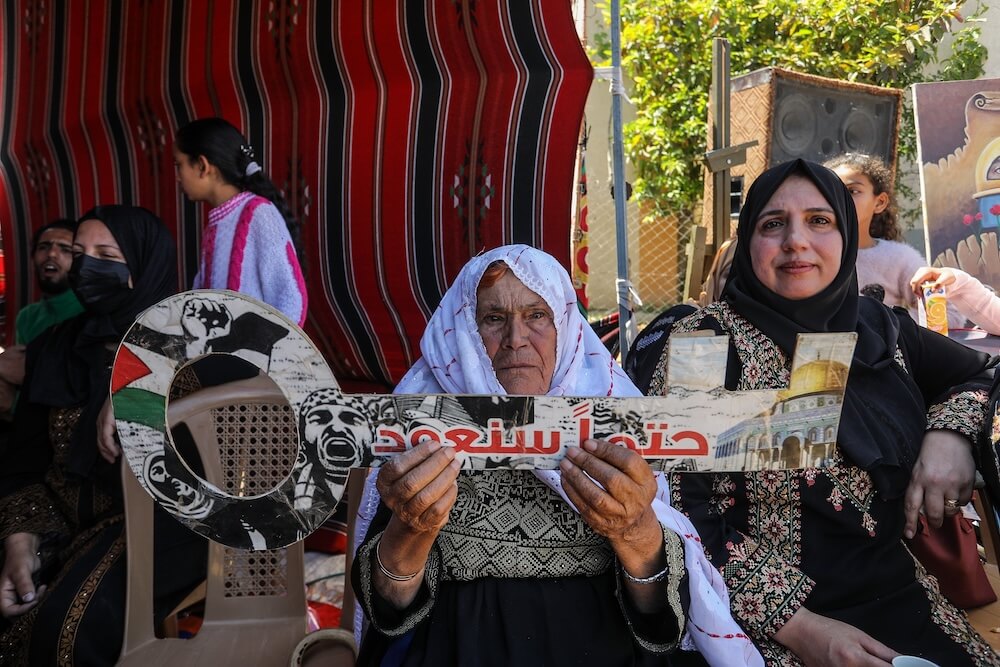
Photo: The key has come to symbolise Palestinian dispossession, as well as the right of return of Palestinian refugees to their ancestral homeland.
As the world marked the 77th anniversary of the Nakba (catastrophe) on Thursday 15 May 2025, Palestinians across the globe mourned not just a historical trauma, but a lived, ongoing nightmare. On the same day Israel killed at least 115 Palestinians, most of them women and children, in a wave of brutal attacks across the Gaza Strip.
A number of Australian organisations including AFIC, ANIC and APAN have issued statements of conscience calling on the Australian government to advocate for the rights of the Palestinians to self determination.
On 15 May 1948, over 750,000 Palestinians were violently expelled from their homes as the state of Israel was established.
More than 530 villages were erased, entire communities were shattered, and a people indigenous to the land were rendered stateless almost overnight. But for Palestinians, the Nakba never ended—it merely evolved.
Today, as bombs fall and hunger stalks Gaza’s children, the echoes of 1948 have grown louder, bloodier, and even more desperate.
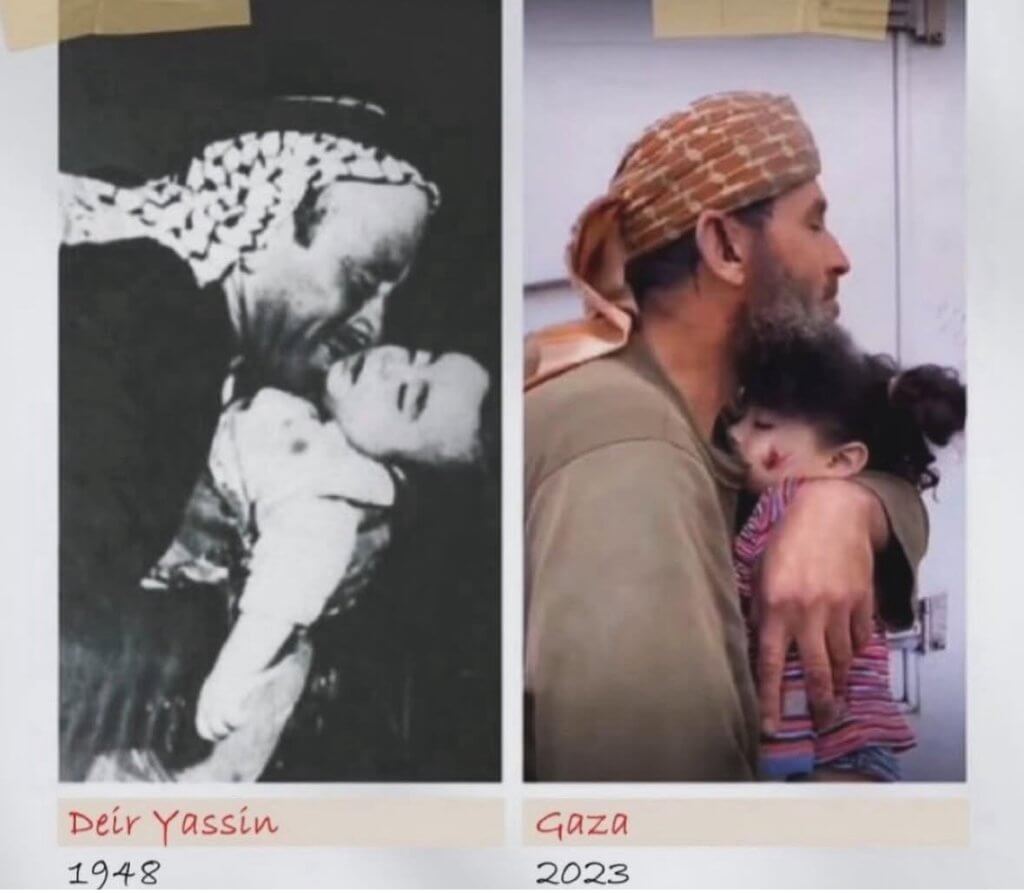
Gaza: From blockade to genocide
On 15 May 2025—Nakba Day—Israel killed at least 115 Palestinians, most of them women and children, in a wave of attacks across the Gaza Strip.
This came amid what experts, human rights organisations, and global voices have increasingly described as a genocide.
Since October 2023, over 61,700 Palestinians have been killed in Gaza, according to the Government Media Office. More than 119,000 have been injured.
The world has watched, largely in silence, as Israel intensified its blockade, sealing off the strip from food, fuel, water, and medical supplies.
The World Food Programme has confirmed that its warehouses are empty, bakeries have shut down, and 1.1 million children are at risk of starvation. Already, 57 Palestinians—mostly children—have died from hunger.
Statements of conscience from Australia
Australian National Imams Council (ANIC)
In a powerful statement, ANIC commemorated the Nakba and condemned the unrelenting assault on Gaza.
“The Nakba began in 1948, but it hasn’t ended yet,” it read.
“Palestinians have continued to live under a system of apartheid… and now a genocide that has taken over 60,000 lives.”
ANIC called on the Australian Government to:
-
Officially recognise 15 May as Al-Nakba Day.
-
Acknowledge the apartheid and genocide being committed.
-
End arms sales to Israel and impose a full embargo.
-
Uphold international law, including the right of return and ending settlement expansion.
They urged all people of conscience to “raise your voice against oppression, injustice, occupation and apartheid.”
Australian Federation of Islamic Councils (AFIC)
AFIC marked Nakba Day by drawing a direct line between the violent birth of Israel and today’s carnage.
“What we are witnessing in Gaza today is not a new crisis,” the statement read.
“It is the boiling point of a 77-year-long injustice.”
AFIC’s demands included:
-
Condemning the ongoing genocide and apartheid.
-
Sanctioning Israeli officials and halting military cooperation.
-
Supporting the recognition of Palestine at the UN.
-
Backing international legal mechanisms for accountability.
They closed with a stark warning: “If Australia fails to act now… history will remember that failure.”
Australian Palestine Advocacy Network (APAN)
APAN’s statement left no room for euphemism: “The Nakba never ended… today in Gaza we have witnessed over 2 million people displaced… the death toll may be at least 77,000.”
They highlighted the settler-colonial nature of Israel’s policies, comparing it to Australia’s own history of dispossession.
APAN issued a rallying cry for global action, calling for:
-
Immediate sanctions and cessation of all arms trade.
-
Legal support for ICC arrest warrants against Israeli leaders.
-
Deployment of an international protection force to Gaza.
-
Legislative action in Australia to ensure no complicity in war crimes.
“This is not diplomacy—it is survival,” they declared. “Palestinian liberation is closer than ever before.”
A catastrophe of silence
What makes this Nakba Day more devastating is not just the violence, but the world’s refusal to stop it.
Aid is blocked. Ceasefire demands are ignored. Accountability is delayed. And the Palestinian people continue to be treated as expendable.
Palestinians want their human rights to be restored. The right to return. The right to live in dignity. The right to not just survive, but thrive on their ancestral land.
Seventy-seven years since the Nakba began, its legacy persists in every demolished home, every starving child, every displaced family.
But so too does Palestinian resistance, culture, and unwavering hope.
To commemorate the Nakba is to demand its end. It is to say that genocide must never be accepted. It is to insist that justice must be served, and that silence is complicity.
From the river to the sea, Palestine will be free—not because it’s a slogan, but because justice demands nothing less.




Comments