

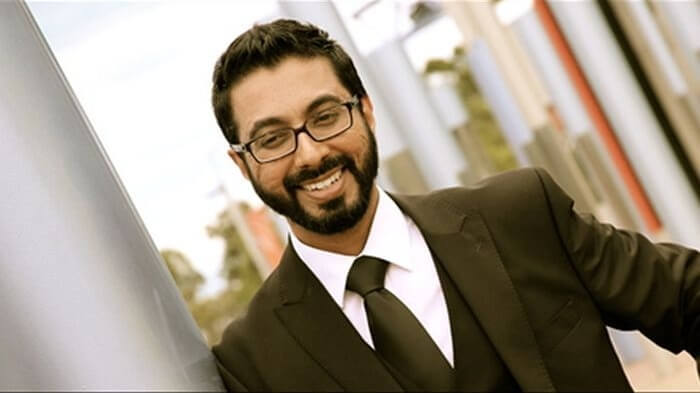
Aftab Malik’s tenure as the Special Envoy to Combat Islamophobia has been marked by growing frustration within the Australian Muslim community.
Instead of addressing community concerns with clarity and accountability, his recent writings only deepened the perception that his role is largely symbolic.
At a time when Islamophobia is on the rise and decisive action is needed, his approach remains mired in bureaucratic inertia, vague assurances, and a troubling tendency to deflect criticism rather than engage with it constructively.
Malik’s response to criticism of his recent article, “Combating Islamophobia: 89 Seconds to Midnight,” reveals more about his own shortcomings than it does about his supposed commitment to combating Islamophobia.
Rather than taking the opportunity to genuinely engage with Hanan Dover’s concerns, he devotes much time to discrediting and belittling her critiques. This response reinforces the very bureaucratic detachment that has made his role feel so ineffective in the first place.
From the outset, Malik’s attempt to portray himself as open to criticism rings hollow, particularly when his response is filled with defensiveness and condescension. He claims to welcome constructive feedback, yet rather than addressing the substance of Dover’s arguments he obsesses over the tone of her social media posts.
If Malik truly wanted to respond meaningfully, he would have focused on the points being made, and not on attacking the messenger. Instead, he paints himself as the aggrieved victim, deflecting from his inability to deliver palpable results.
One of the most striking aspects of this article is how Malik acknowledges the deeply entrenched frustrations within Muslim communities, yet simultaneously dismisses those who hold him accountable.
He staunchly agrees that Muslims feel dismissed, abandoned, and misrepresented by both politicians and the media. However, when called upon to act, he retreats into abstract rhetoric about policies and future plans rather than taking concrete steps to challenge the systemic biases that fuel Islamophobia.
His promises of accountability and transparency are undermined by his delayed responses to major Islamophobic incidents and the glaring absence of tangible impact from his work thus far.
Malik’s failure to swiftly condemn the violent attacks against Shaykh Wesam Cherkawi and Mariam (a Muslim woman who, along with her daughter, was allegedly assaulted in an Islamophobic incident at a Bankstown Kmart), as well as other incidents, further reinforce the perception that his position is nothing more than symbolic, devoid of any impactful authority.
For instance, in December 2024, anti-Islamic graffiti appeared in Western Sydney, prompting concerns about rising Islamophobia; Malik’s response was delayed and insufficient. Similarly, in February 2025, following the assault of two Muslim women in a Melbourne shopping centre, Malik’s condemnation came days after the incident.
Malik’s delayed responses suggest not just inefficiency, but a reluctance to engage in direct, forceful advocacy—further compounded by his inability to distance himself from frameworks that have long been viewed with suspicion by the Muslim community.
Although he insists the frameworks of CVE do not bind him, he fails to explain how his approach to tackling Islamophobia differs meaningfully from the government’s historical narratives, which have often criminalised and surveilled Muslim communities under the guise of preventing extremism.
Instead of addressing the profoundly problematic legacy of CVE policies, Malik leans in on vague assurances that he is capable of independent thought, as if that alone should quell criticism.
The Muslim community does not need representation by someone experienced in a failed policy framework that has disproportionately targeted them. It needs an advocate unafraid to challenge and dismantle those very structures.
Regrettably, Malik’s dismissive tone towards Dover’s concerns suggests he is unwilling to fully acknowledge the valid suspicions and criticisms surrounding his appointment.
His justification for lacking a social media presence and active communication channels is similarly unconvincing. Malik argues that he has been too busy with community engagements and formulating policies to establish proper outreach channels. This excuse is laughable.
For someone whose role is meant to centre around representing the concerns of Muslim Australians, the fact he has done such a poor job of making himself accessible is telling. He insists people can reach him via email, but this is a far cry from the public accessibility that such a position demands.
Further, his failure to establish a basic website or provide regular updates contradicts his claims of prioritising engagement. If Islamophobia is truly at a historic high, as Malik himself admits, then why is he still in the process of “building his team” rather than actively fighting for change?
A leader who genuinely seeks to engage with their community would have prioritised these mechanisms from the outset rather than treating them as an afterthought.
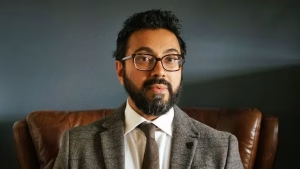
The most glaring issue with Malik’s response, however, is his repeated attempts to discredit Dover rather than substantively addressing her points. He complains that her critiques are too aggressive, that she is engaging in “conspiracy thinking” and that her words contribute to a toxic discourse.
This is a common tactic used by those in positions of power to silence their critics—dismissing legitimate concerns as hysteria or bad-faith attacks. Malik would do well to remember that frustration within the Muslim community is ongoing and justified.
Islamophobia is not an abstract issue to be debated in policy discussions; it is a lived reality for thousands of people, many vulnerable, who face violence, discrimination and systemic exclusion on a daily basis.
Instead of engaging meaningfully, he chooses to attack the very people he should be listening to, accusing them of “covert bullying” and taking a “moral vacation”. This attempt to shift focus away from his own failings is as obvious as it is counterproductive.
His centring of anti-Semitism in discussions on Islamophobia is particularly troubling. In “Islamophobia: What’s the Problem?”, Malik discusses anti-Semitic incidents, linking them to issues of social cohesion and organised crime, while providing far less direct engagement with the specific and urgent concerns facing Muslim communities.
While anti-Semitism is undoubtedly a serious issue that demands attention, Malik’s insistence on drawing equivalencies and diverting focus from Islamophobia dilutes the urgency of his role.
His function as the Special Envoy is to combat Islamophobia, yet he frequently seems more invested in reassuring external audiences of his balance than in addressing the actual discrimination and violence faced by Muslims.
This pattern aligns with broader governmental tendencies to equate Islamophobia with other forms of bigotry to avoid directly confronting its unique manifestations in Australia.
His closing remarks, in which he laments the supposed toxicity of social media discourse and the dangers of “self-imploding” as a community, are particularly disingenuous. Instead of recognising that the anger and criticism he faces is a direct result of his failure to act decisively, he shifts the blame onto the very people he is supposed to serve.
A leader genuinely committed to fighting Islamophobia does not behave this way—this is the behaviour of someone more concerned with preserving their own reputation than with delivering meaningful and lasting change.
Malik’s role has the potential to be impactful, but only if he makes significant changes to his approach. If Malik is genuinely committed to combating Islamophobia, he must prioritise immediate, decisive and visible action.
Establishing regular public communication channels, such as social media updates and an accessible website, would allow for greater transparency and accountability. Consistently and unequivocally condemning Islamophobic attacks without delay, rather than reacting after public outcry, would demonstrate genuine leadership.
Engaging directly with grassroots community organisations, rather than limiting his engagement to bureaucratic meetings, would help bridge the disconnect between his office and those most affected by Islamophobia.
Advocating for tangible policy changes that address structural discrimination, such as anti-discrimination protections and media accountability, would shift his role from symbolic to substantive. His success should not be measured in statements and reports, but in measurable progress that enhances the safety and dignity of Australian Muslims.
The government’s appointment of Malik appears to be a tokenistic gesture rather than a genuine effort to combat Islamophobia, and his reluctance to challenge state-sponsored Islamophobia only reinforces this perception.
And if he continues down this path, his tenure as Special Envoy will be remembered not for the progress he made, but for the opportunities he squandered. At the end of the day, Malik’s recent statements do nothing to reassure the Muslim community that he is fit for his role.
His words are heavy on self-justification and light on substance, and his inability to take criticism without resorting to condescension and deflection is deeply concerning.
The Muslim community does not need another bureaucratic figurehead; it requires a fearless advocate who will fight for immediate and meaningful change. Until then, Malik’s position will remain as ineffective as it is symbolic.


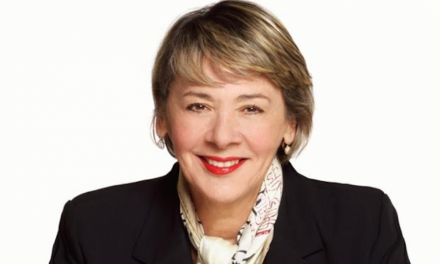


The contrast between Albo appointed envoys for Antisemitism and Islamophobia is stark. Political activist vs very quietest.
Fairly obvious what is going on