

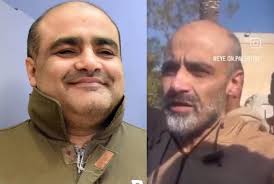
Mohammed al-Halabi before (left) and after his release (right).
Mohammed al-Halabi, a humanitarian aid worker, was released on Sunday 2 February 2025, as part of the ceasefire agreement between the Palestinian Resistance and Israel.
His release marks the end of nearly eight years of detention, during which he was subjected to torture, starvation, and psychological abuse. Mohammed’s case gained international attention due to the lack of evidence against him and the brutal conditions he endured while in Israeli custody.
Mohammed, who served as the Gaza Director for the World Vision organisation, was detained on 15 June 2016, at the Beit Hanoun (Eretz) Crossing, a border terminal between Gaza and Israel. Despite the absence of any credible proof linking him to criminal activities, Israeli authorities accused him of funnelling funds to Gaza-based resistance groups.
This accusation was widely criticised as baseless, particularly given that the amounts alleged to have been diverted were far beyond the annual budget of World Vision’s Gaza operations.
The real motives behind his detention remain unclear, though many believe that his arrest was part of an Israeli strategy to disrupt international aid to Gaza, which had suffered under a prolonged siege. Mohammed’s detention was seen by some as an attempt to stifle the last remaining line of international support for Gaza’s vulnerable population.
Throughout his imprisonment, Mohammed was subjected to extreme physical and psychological abuse. He was kept in inhumane conditions, tortured, and denied medical treatment despite his deteriorating health.
In an interview with The Palestine Chronicle in 2019, Mohammed’s father, Khalil al-Halabi, shared the harrowing details of his son’s ordeal. According to Khalil, Mohammed endured 52 days of gruelling interrogations, which included being hung from the ceiling, deprived of sleep, assaulted, and subjected to deafening music.
He was also denied basic rights such as medical care, even as his health worsened, and was transferred between prisons multiple times. These brutal tactics were employed by Israeli interrogators in an effort to force Mohammed to confess to crimes he had not committed.
Despite the relentless torture, Mohammed maintained his innocence, refusing to falsely admit to charges that he knew were fabricated. His father described his son as a “humanitarian hero” who had been dedicated to helping Gaza’s most vulnerable populations, particularly children and cancer patients, despite the challenges posed by the Israeli siege.
Mohammed was even recognised by the United Nations in 2014 for his outstanding humanitarian work and was awarded “Humanitarian of the Year” by World Vision.
Throughout the years of his detention, international investigations, including those conducted by World Vision and the Australian government, cleared Mohammed of any wrongdoing.
However, Israel continued to imprison him, with the real aim being to undermine international humanitarian efforts in Gaza.
Mohammed’s release, though a victory for his family and supporters, also sheds light on the ongoing struggles faced by aid workers in the region and the systemic efforts to block assistance to Gaza.
His release was part of a broader ceasefire deal, which many hope could signal a shift in the treatment of Palestinians under Israeli occupation.


Comments