


Leadership is often associated with power, authority and dominance. However, there is also a timeless concept of leadership rooted in humility, compassion and service that holds immense significance for Muslims. This concept is known as servant leadership.
At its core, servant leadership revolves around putting the needs of others before our own and working towards the well-being of those people.
Servant leadership emphasises humility, empathy and a genuine desire to serve and uplift others.
The Prophet Muhammad (s) is the ultimate example of a great servant leader.
He led by example and would never ask anyone to do anything that he wouldn’t do himself.
The Prophet’s life provides us with countless instances of servant leadership that inspire and guide Muslims to this day.
One obvious example of Muhammad’s (s)servant leadership was his treatment of his companions, caring deeply for their well-being, both spiritually and emotionally.
He actively listened to their concerns, offered guidance and support and never hesitated to lend a helping hand, also instilling in his followers the importance of humility and service, creating a sense of unity and camaraderie among them.
This servant leadership approach created a strong foundation for the growth and development of the early Muslim community.
Another example of the Prophet’s servant leadership can be seen from his interactions with the broader society of the day.
Despite facing opposition and persecution, he approached his adversaries with kindness and forgiveness, stressing the importance of maintaining good relations with one’s neighbours, regardless of their faith or background.
His actions demonstrated that true leadership lies in building bridges, fostering understanding and serving the community at large.
As we know as Muslims, Muhammad’s (s) leadership extends way beyond his immediate time and place.
His teachings and actions continue to inspire over two billion Muslims throughout the world today and his emphasis on justice, compassion and the pursuit of knowledge forms the basis of Islamic leadership principles.
Throughout history, there have been other notable Muslim leaders who have followed in the footsteps of Muhammad (s), embracing the concept of servant leadership.
Obvious examples of this are the caliphs of Islam after the death of the Prophet (s), namely Abu Bakr (r), Umar ibn al-Khattab (r), Uthman ibn Affan (r) and Ali ibn Abi Talib (r), who were all known for their compassion and fairness.
Fast forward to modern times, and former world heavyweight boxing champion Muhammad Ali exemplified servant leadership by using his fame for social justice, advocating for civil rights, refusing the Vietnam draft on moral grounds and promoting humanitarian causes globally, displaying inspirational courage, compassion and commitment to equality.
But servant leadership isn’t limited to an Islamic context and there are other renowned figures in history who embodied this principle.

Nelson Mandela after his release from Victor Verster Prison on 11 February, 1990.
Nelson Mandela, known for his fight against apartheid in South Africa, displayed unwavering humility and compassion.
Despite enduring years of imprisonment, he forgave his oppressors and worked towards reconciliation and social justice until he died a little over a decade ago.
Mother Teresa’s tireless and selfless devotion to the poor and marginalised exemplified the essence of servant leadership.
Her efforts over many years to alleviate suffering and bring hope to the destitute continue to inspire people worldwide, almost 27 years after her passing.

Mother Teresa devoted her life to the poor and marginalised, exemplifying the essence of servant leadership.
While Dr Martin Luther King Jr, a prominent civil rights activist, led with humility and non-violence, striving for equality and justice for African Americans, before his assassination in 1968.
Sydney-based company for good Invictus Solutions has a dedicated team of experienced Muslim counsellors, mentors and workshop facilitators who exemplify servant leadership in all interactions – prioritising the well-being and growth of their clients through an approach rooted in empathy, compassion and respect – integral to Islamic teachings.
Through one-on-one sessions and group workshops for the Muslim community, they foster a nurturing, non-judgmental space for self-exploration and mutual learning.
Invictus Solutions runs educational workshops all over Australia, with the aim of teaching students and older individuals methods to overcome challenges, find inner peace and lead fulfilling lives aligned with their values.
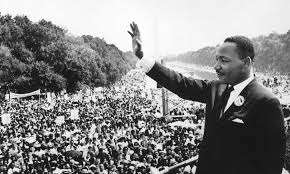
Martin Luther King Jr delivered his famous Normalcy – Never Again speech (which commenced with the words “I Have a Dream”) in August 1963, at the Lincoln Memorial in Washington, DC.





Comments