


As the Australian government gears up for a historic referendum in the near future to embed an Indigenous Voice to Parliament in the Constitution, Australian Muslims have a unique opportunity to show their support for this significant reform by voting “YES”.
The referendum proposal seeks to formally recognise the First Peoples of Australia, who have lived on this continent for more than 65,000 years and who have endured countless injustices since the arrival of British colonists in 1788.
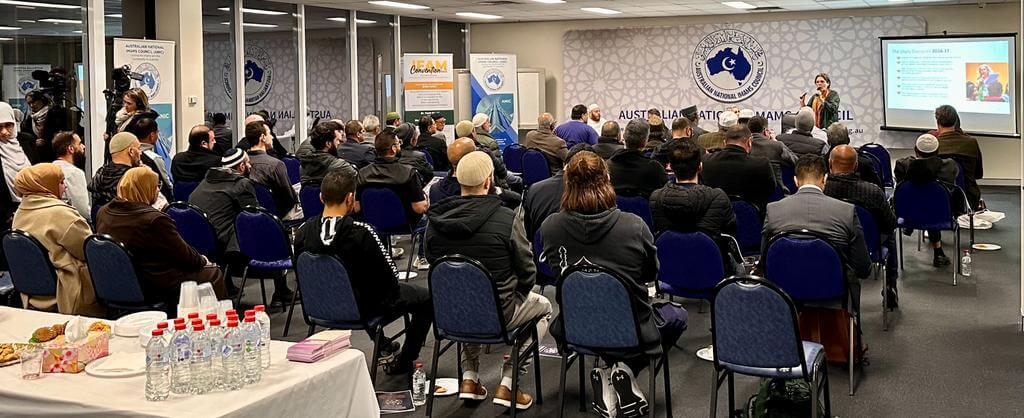
On Friday 18 August at its Chullora headquarters, the Australian National Imams Council (ANIC) in collaboration with the Alliance of Australian Muslims (AAM) hosted a pivotal workshop, the very aptly named Walking Together project.
Around 80 imams and other community leaders convened to gain valuable insights into the significance of the Voice to Parliament and the vital role individuals and organisations can play in its establishment.
In his welcoming remarks, ANIC president Sheikh Shadi Alsuleiman, the driving force behind the forum, highlighted the enduring connection between the Muslim and indigenous communities.
“The Muslim community is a vibrant, organised and networked community with a long history of strong connection with the First Nations people,” Sheikh Shadi said.
He emphasised the unwavering support of ANIC, AAM, and the broader Muslim community for the Voice to Parliament, as well as their commitment to stand as allies alongside the Federal Government.
Sheikh Shadi added, “Muslims are champions of justice and indeed Allah commands us to stand for justice….we will be voting “YES”.
Brad Chilcott AM, founder of Welcoming Australia, a non-partisan movement and organisation established in 2011, was introduced to the gathering by Sheikh Shadi.
Welcoming Australia is dedicated to fostering a culture of inclusivity and advancing a vision where those from diverse backgrounds have equal opportunities and over the years, Mr Chilcott and his organisation have collaborated closely with Sheikh Shadi and ANIC to break down barriers affecting the Muslim community.
Brad Chilcott introduced the workshop facilitators Jacqui Parker and proud Gomeroi woman Nicole Laupepa, close friends and work colleagues who first developed the Walking Together initiative five years ago as a means to help Australians understand the Uluru Statement from the Heart framework and inspire the broader community to take positive steps towards a fairer and more just Australia.
The pair eloquently advocated for the “YES” vote, drawing upon touching personal experiences and impactful statements that underscore the urgent case for change.
Of course in truth, there should be no need for a “case” to be made for change as the overwhelming majority of indigenous Australians – and surely all fairminded Australians – are simply seeking a constitutional amendment which will at long last provide – as Nicole Laupepa put it so succinctly – “constitutional protection for one of the world’s oldest enduring cultures.”
“Indigenous Australians currently make up less than three percent of Australia’s population and without reforms, there may be no indigenous Australians left in a hundred years,” Jacqui Parker warned.
“For Nicole and myself, educating people on these issues is key, that truth-telling is more about active listening and that the responsibility (for change) rests largely with non-indigenous Australia.”
“As the daughter of Jewish refugees from the Holocaust,” she reflected, “I can personally discern the disparities in how reconciliation efforts have unfolded in my parents’ home town of Berlin, compared to Australia.”
“It’s essential that we confront our past and prevent history from repeating itself. Australia still has a long way to go.”

The workshop included excerpts from Dean Parkin’s 2018 TEDxCanberra presentation, where the From The Heart director gave a deeply personal and meaningful address on the Uluru Statement, describing it as, “a compelling mandate for Australia and an idea whose time has come”.
As the ANIC gathering came to an end after two insightful hours, the mood of the room was such that not even one attendee remained unconvinced that it IS time for change – a time where we have the opportunity to right at least some of the wrongs of the past 235 years – time to act before it’s too late….and time to vote a resounding “YES”!
Ruby Langton-Batty, First Nations ProBono Lawyer with Ashworth Lawyers, recently revealed to AMUST the flaws in the Australian Constitution since its implementation in 1901 and revealed that despite subsequent changes, our fundamental laws governing Australia’s framework and governance still fail to do justice to First Nations people.
She also explained why it is of such vital importance that “YES” succeeds in the referendum, which will be held in either October or November of this year.
“Australia became a Federation on 1 January 1901, when the British Parliament passed legislation enabling the six Australian colonies to collectively govern in their own right as the Commonwealth of Australia,” Ruby Langton-Batty said.

Ruby Langton-Batty is a proud descendant of the Bidjara and Iman peoples of Central Queensland. (Image courtesy of the Australian Pro Bono Centre).
“The Australian Constitution has been flawed since the beginning as it was a document written with the prime purpose to federate Australia’s British colonies – effectively benefitting wealthy white men and excluding the indigenous.”
There have been notable calls for many decades for the Constitution to be changed – as far back as the 1930s in fact – but in this country at least, the wheels of change turn slowly.
In 1967, over 90 per cent of Australians voted for positive change which saw Section 51(xxvi) eliminated from the Constitution, allowing the government the authority to create laws benefitting indigenous Australians, while Section 127 was also removed, meaning that Aboriginal and Torres Strait Islanders were finally recognised as part of the Australian population.
“But the referendum of 1967 didn’t address broader issues such as land rights, self-determination or equality in many other areas of life like education, health, employment and representation,” Ms Langton-Batty pointed out.
“In 2011 during the prime ministership of Julia Gillard, an Expert Panel on Constitutional Recognition of Indigenous Australians was formed, and they recommended several key points including: Recognising Aboriginal and Torres Strait Islander peoples as the First Australians in the Constitution; Removing racially discriminatory provisions from the Constitution and Constitutional Prohibition against Racial Discrimination.”
“Noel Pearson (an Indigenous lawyer, land rights activist, and founder of the Cape York Institute for Policy and Leadership) and Megan Davis (an Indigenous human rights lawyer and Professor of Law at the University of New South Wales) were members of this panel and both continue to do outstanding work advocating for the rights and recognition of indigenous Australians.”
Enshrining an Indigenous Voice to Parliament in the Australian Constitution is about acknowledging and recognising the historical injustices and ongoing challenges faced by Aboriginal and Torres Strait Islanders.
As AMUST reported in June, more than 110 ethnic and cultural community organisations had already committed their “steadfast support” for the “Yes” vote but despite this, the odds appear stacked against “YES” being successful….at the time of writing, at least.
As Ruby Langton-Batty points out: “There is a lot of misinformation out there, a lot of misconceptions and a lot of biased reporting in the media.”
“Politically, the “YES” vote’s chief detractors are those from the Far Right, who believe the proposed reforms are too extreme, while those on the Far Left believe the reforms don’t go far enough.”
“Federal Opposition Leader Peter Dutton is one outspoken critic.”
“In order to be successful, a ‘double majority’ is required meaning that 51 per cent of voters will need to vote “YES”, while “YES” must win in at least four of Australia’s six states.”
Another statistic showing the battle the “YES” vote is facing is that of the 44 constitutional referendums held in Australia since 1901, the vote for change has only been successful on eight occasions.

Working the land … Joseph Lycett’s c.1817 watercolour, Aborigines Using Fire to Hunt Kangaroos, depicts the innovative use of fire burning. CREDIT:NATIONAL LIBRARY
Distinguished Indigenous Australian academic Professor Marcia Langton has been another key figure in the development of the Indigenous Voice to Parliament.
As the Referendum draws closer, Professor Langton’s perspective is much needed to provide clarity and dispel misinformation.
Commenting in support of the “YES” vote, she said, “It would be tragic if the referendum was voted down because of the relentless scare campaign from people who clearly do not understand the scale of the tragedy we are addressing, and many of whom care nothing for the lives of indigenous Australians,” she said.
As fellow Australians, it is essential for Australian Muslims to support this constitutional amendment and vote “YES” in the Referendum – and here are some compelling reasons why we should back this proposal – and ways we can show our support in the lead-up to the vote:
Justice and Reconciliation: As Sheikh Shadi Alsuleiman said earlier, for Australian Muslims who understand the importance of justice and compassion, supporting the Indigenous Voice to Parliament is an opportunity to contribute to national reconciliation and unity.
Empowerment of Indigenous Voices: The establishment of the Aboriginal and Torres Strait Islander Voice will provide a platform for Indigenous communities to have their voices heard on matters that directly impact them. As a minority group in Australia, Australian Muslims can empathise with the need for representation and an input.
Strengthening Social Cohesion: Supporting the constitutional recognition of the First Peoples can foster a sense of belonging and unity among all Australians.
Tangible ways for Australian Muslims to show their support for the “YES” vote include initiating conversations about the importance of the referendum with family, friends, colleagues and community members.
Sharing information and raising awareness about the proposed amendment will also encourage others to understand its significance and vote “YES”.
What’s happened already: The referendum bill has passed, triggering the official campaign on what the government says is a simple referendum question for us all to vote on and the final wording of the constitutional amendment has been decided.
The question: A Proposed Law: to alter the Constitution to recognise the First Peoples of Australia by establishing an Aboriginal and Torres Strait Islander Voice. (Yes or No?)
Let’s do our bit and vote “YES”.




Comments