

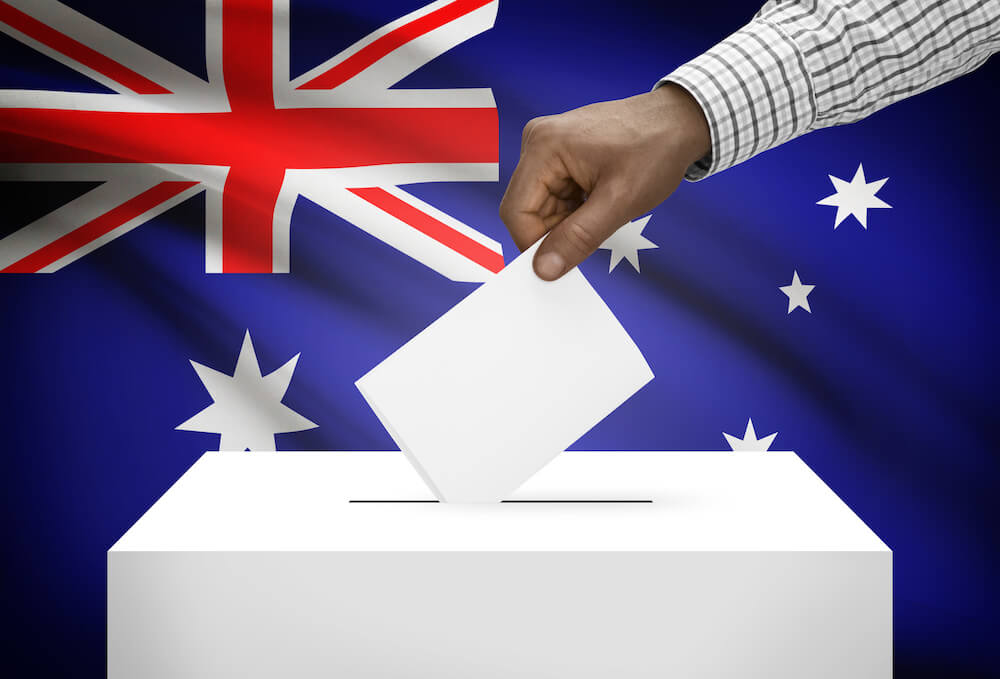
Allocation of our calculated choice in the upcoming federal election is crucial in our standing up for our equal rights as citizens of the country.
We have seen on multiple occasions, the reactions of our political leaders and the attracted attention of the mainstream media to atrocities against Muslims, in particular, the recent attack on two Muslim females in Victoria on 13 February 2025 is very minimal.
We must not gamble with our votes in the upcoming election, nor make the same mistakes as done by some of the American Muslims in the recent American election by awarding their votes for Donald Trump in the hope he will uphold justice in his decision-making in running the country’s affairs. Rather, careful and smart calculation should be exercised to achieve the aspired result in the election to come. We need a true leader.
Is the lesser of two evils our only choice? The lesser of two evils principle is the principle that when faced with selecting from two evil options, the one which is the least evil should be chosen.
With the world becoming increasingly unpredictable and potentially dangerous, and with the election looming, many of us will have to choose between what we deem the lesser of two evils. When you have a difficult decision to make, choose the lesser of two evils.
AFIC and ANIC are looked up to as spiritual and community leaders of the Muslims in this country who always provide guidance and information to the Muslim Ummah with regard to their religious and social lives.
I, therefore, would like to appeal to both AFIC and ANIC to take a united front to make an appeal to Australian Muslims to award their votes in this upcoming election to one of the two major political parties that is more willing to listen to our grievances and reasonable requests and demands.
The ummah requires a united direction and guidance from both AFIC and ANIC after their careful consideration as to which political party the Ummah should award their votes. Hence, those sitting at high positions of both AFIC and ANIC should be intellectually capable of calculating delicate steps taken in promoting and protecting the interest of the ummah. “United we stand, divided we fall”.
Simple words yet, powerful. It is a phrase that encourages unity and collaboration. This principle was followed through by the early Muslims which made them an unbeatable might in the face of any challenging might that would stand on their way to progress and success.
AFIC and ANIC have the obligation to better the image of the Ummah and make it dignified. Unhealthy competitions between these two major organisations only drain our resources and tarnish our image.
Competition between AFIC and ANIC for influence and support is in the knowledge of our politicians. Hence, they know our weakness, thus, any grievances and demands we make to the Government could be taken lightly because of our disunity that continues to weaken our position in the sight of the Government.
Once during a phone call with a government official from the immigration department of SA, she asked me to tell her about the differences between AFIC and ANIC. This stunned me a great deal.
Once our unity is demonstrated, and our image is boosted and made dignified, God-willing, the Government will recognise our strength and value, and pay required attention to our wishes and demands.
It’s about time for both the leadership of ANIC and AFIC to maturely discard their respective personal ambitions and dedicate their time to working sincerely for the betterment of the ummah and its image. The interests and image of the community must be placed above that of the individual.
Hence, let us all be united and agree on awarding our votes to one political party only as hopefully appealed by both AFIC and ANIC.
Both the leadership of AFIC and ANIC should not at will overlook this humble suggestion based on their personal disliking, rather they should take this to the Ummah whom they claimed their leadership over.
All matters concerning the Ummah must not be decided by a single individual in the top position of the leading and non-leading Muslim organisations alike. They are bearing and using the power and strength of the Ummah, therefore, the Ummah must be consulted in making decisions affecting the Ummah’s fate.





Comments