


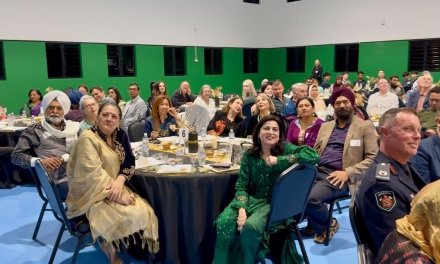
PHOTO: IsDB Conference Team in Fiji.
Building Legal and Institutional Capacity Across Oceania: The Muslim Legal Network at the IsDB Consultation in Fiji
What happens when a development bank, a century-old Pacific Muslim institution and a group of Australian lawyers sit down at the same table? In Fiji this August, at the Islamic Development Bank’s inaugural Oceania consultation, the Muslim Legal Network (MLN) set out to find the answer.
On 25 and 26 August, the Islamic Development Bank (IsDB) convened its inaugural Oceania Regional Partnership Consultation with Muslim Communities in Fiji.

The Muslim Legal Network (MLN) was represented by its President, Jazeer Nijamudeen, and its Treasurer, Sam Bektas, alongside community leaders, development partners and IsDB regional executives from across the Pacific.
Muslims first reached Fiji in 1879 as indentured labourers. This year, the Fiji Muslim League turns 100. They are a minority in almost every part of Oceania. Some Pacific communities number only in the hundreds.
The IsDB has supported such communities since 1981. In Fiji it has worked with the Fiji Muslim League, which turns 100 this year, on projects including a vocational training centre for women and a digital halal certification system launched in 2024.
The consultation had four intended outcomes: a clearer understanding of community strengths, needs and priorities; identification of priority sectors for cooperation; a pipeline of practical regional initiatives; and stronger partnerships among institutions, communities, development actors and diaspora networks.
Many Muslim organisations in the region are volunteer run and stretched thin, and several confront the same problems separately. Participants discussed how a connected network could reduce that duplication and contribute to an Oceania regional road-map supporting long-term development and resilience.

PHOTO: MLN Team, Mr Sam Bektas and Mr Jazeer Nijamudeen (Left to Right).
Rising Islamophobia was named as a principal obstacle to economic and social advancement. Incidents reported to Islamophobia Register Australia rose by 619 per cent between October 2023 and February 2026, with women who wear the hijab particularly targeted.
In July, the Federal Government agreed to adopt 35 of the Special Envoy’s 54 recommendations, including $41.9 million for security at Muslim religious sites.
Proposed discrimination law changes appear to have been omitted, and the Australian National Imams Council noted that little attention was given to enforcement. Helping people know their rights and report with confidence is work a legal network is well placed to do.
Economic participation raisesfurther questions. Islamic finance is growing in Australia, yet tax and legal settings have been identified as a significant barrier.
The Fijian halal certification project shows how stronger institutions help local producers meet the standards overseas buyers expect.

PHOTO: IsDB Consultation Infographic.
The IsDB selects many projects through applications from community organisations, so groups with sound governance and well-prepared proposals are better placed to secure support.
The partnership draws on complementary strengths: IsDB funding, community knowledge and trust, and MLN’s legal and governance expertise.
Mr Nijamudeen and Mr Bektas set out MLN’s priorities, learned from other participating organisations and explored ways to combine legal and economic initiatives for the benefit of communities. They also built relationships with neighbouring organisations, a key aim of the visit.
MLN intends to share its community legal education resources with partner organisations, offer legal and governance support to community institutions, and take part in future consultations while keeping the Australian community informed.
The value of the Fiji consultation will be judged by the roadmap it produces and the durability of the relationships formed.

PHOTO: Mr Sam Bektas and Mr Jazeer Nijamudeen.




Comments