

Australia China trade relation is thriving; however, its strategic agenda runs counter to its economic and trade needs. Australia and China trade relations remain strong as businesspeople in both countries continue to grow their business base. Both nations have become heavily dependent on the resources and the opportunities they provide for one another. This desire for trade, however, is perpetually constrained by political mistrust, driven in part, by right wing hawks and the politics behind the US Australia military alliance.
Political leaders regularly warn of strategic risks to Australia they believe is posed by “communist” China. In his 10 Sept address to the National Press club of Australia, titled “navigating Australia’s future in an uncertain world”, former PM Kevin Rudd, for instance, urges Australia to spend more on defence and reaffirms the essentiality of AUKUS.
Underlying this view of course is that China is a threat and Australia needs the AUKUS submarines and the protections provided by the US alliance. This is view a supported by many in the right-wing legacy media, certain hawkish think tanks and policy circles but equally opposed by many others including the likes of former PM Paul Keating.

Mr. Keating makes it clear that he does not see China as an existential threat and is “scathing about what he sees as exaggerated rhetoric about the danger Beijing presents.” See Prof Wanning Sun P&I article: What Paul Keating wants for a country ‘swimming between sharks.’ 8 Sept 2026.
In fact, Mr. Keating sees that the threat to Australia lies in Australia’s growing defence policy reliance on the US and the danger it represents to peace in the region and to Australia’s future security.
In his article ‘Disturbing admissions from US Republican Congressman’ Sept 19 P&I, Paul Keating warns that “…deepening military integration are tying Australia ever more closely to US strategic priorities – including the prospect of war with China over Taiwan.”
Geoff Raby, an Australian Economist and a former diplomat, concurs with Keating’s views on China and has repeatedly argued that China should not be regarded as a threat to Australia. In his Pearls and Irritations, Sept 19 article, ‘Australia’s China policy is trapped in the rear-view mirror’, Geoff Raby calls for a more constructive China policy agenda and for Australia “to think hard about what a forward-looking constructive agenda with China might look like.”
All these discussions about security, security concerns, strategic priorities, AUKUS and US Australia alliances, US bases etcetera have shaped a hard-line anti-China policy agenda in Australia. All this while the US and China have maintained their joint trade ‘arrangements’ after a new round of negotiations during this Xi’s September 2026 US visit. Why should we in Australia not work to benefit our business community, our manufacturers, our farmers, our educational institutions, our financial institutions, tourism, banking etcetera while the US works to benefit theirs in their China relations? We must do what is best for Australia and the Australian economy.
Australia’s business leaders want to see new rounds of joint arrangements for Australia rather than the ongoing suspicions that has damaged trade between our two countries. Australian businesses want cooperation and better economic relations with China not confrontation. They want more trade with China, the Middle East, Asia and Africa. It is their persistence, that has ensured that Australia China trade relations have remained extraordinarily strong.
Before COVID, and the continued deteriorating relations between Australia and China after COVID, China accounted for roughly 26-27% of Australia’s total two-way trade, and today it accounts for about 25%, see DFAT China Country Brief May 2026. While the two-way trade is strong, it could be even healthier if governments and think tanks and policy makers focused on trust and not on threats – as unfortunately they regularly do.
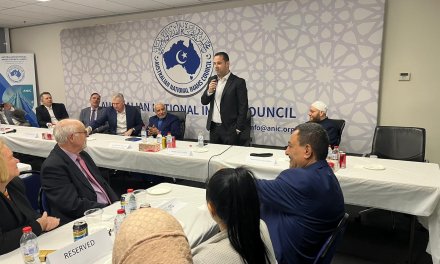
This paradox in the Australia China relations in trade vs. strategic interests is readily observable at Australian trade gatherings. For instance, this was evident in the two trade conferences and several Chinese business community gatherings I attended over the past few months. The Yunnan Specialty Products Promotion Sydney Conference is one such gathering where it was promoted as an opportunity to “write a new chapter in China-Australia Economic co-operation!”
Similarly, The Fourth China International Supply Chain Expo Roadshow, also sought greater cooperation between the two economies. Both conferences publicly and privately expressed the same message, as guests and organisers yearned for an open ‘trust-based relationship’ between Australia and China.
Businessmen and businesswomen, just want to do business without being tainted by the political rhetoric that perpetually damages their opportunities and the potential growth in the Australia China two-way trade relationship.
The China Council for the Promotion of International Trade, CCPIT, representative office in Australia, supported by the China Chamber of Commerce in Australia, organised the Fourth China International Supply Chain Expo Roadshow in Sydney. At this Expo, keynote speaker, Arnold Jorge, CEO Export Council of Australia, a peak body group for Australian businesses, reiterated the need for ‘trust’ between the two trading partners. “Everything comes back to trust and predictability,” …. “to sum up: in these turbulent times it is good to know that China is a trusted partner of Australia, and that Australia is a trusted partner of China.” He concluded.
Arnold Jorge told Economic Watch: Australia looks to tap new opportunities at China’s supply chain expo, Xinhua News, 01/05/2026 that “the relationship with China is something to be proud of because there’s so much benefit that has come out of the relationship. We are very much supportive of this kind of event that highlights the opportunity for strengthening the supply chain, especially now when things are very uncertain. So, what we need is a trusted partner, which we feel China is able to provide”.
China is a growing military and economic power; that’s an indisputable fact. One can understand the anxiety associated with the long-term geopolitical challenge China represents to the crumbling global power structure. But we must also look at the opportunities China will provide Australia as China leads into the 21st century.
Australia must find its place in the new power structure, and it must be sovereign and independent in its policy decisions. Making decisions that put Australia first.
In the interest of peace and cooperation in our region, and for good trade relations with China and all ASEAN nations, however, Australia must therefore look to opportunities to grow trust with China and neighboring states. Both objectives are achievable – they are not mutually exclusive.





Comments