

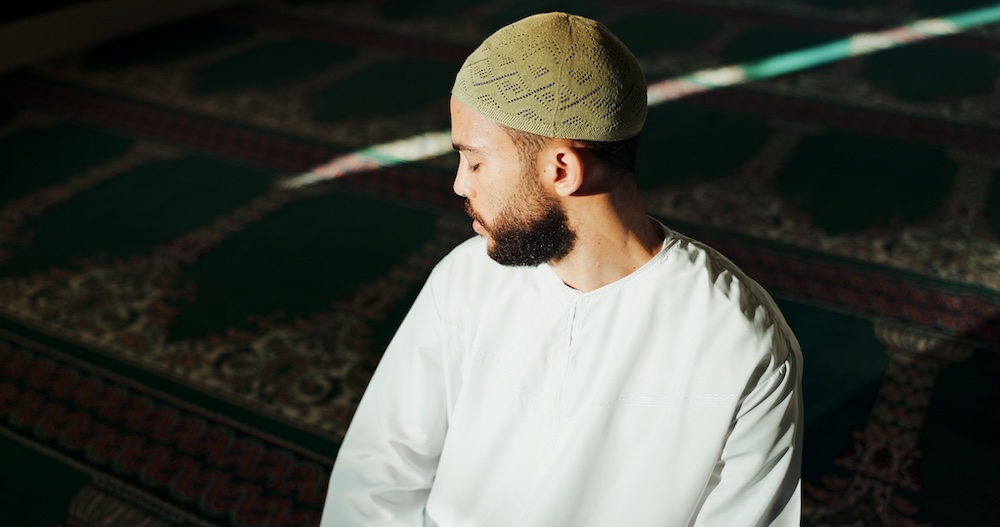
Human beings are not merely physical entities; they also possess a spiritual dimension. In many ways, the spiritual side of human nature is more complex than the physical.
Just as the body has needs that must be met, the soul also requires nourishment. Unless a balance is achieved between physical and spiritual needs, true happiness and inner peace remain elusive.
One of the greatest challenges of our age is what may be called metaphysical hunger a deep yearning of the human spirit for meaning, purpose, and transcendence.
The human soul and its emotions are, in a sense, infinite in their aspirations and therefore cannot be permanently satisfied by finite things. When the soul is confined solely to material concerns and disconnected from the Eternal (al-Baqi), it experiences restlessness and dissatisfaction.
Metaphysical hunger arises from fundamental existential questions: Why am I here? What gives life meaning? What happens after death? How should I live? Islam addresses these questions not only through theological teachings but also through practical spiritual guidance.
Many contemporary psychological approaches, particularly those detached from religion and spirituality, seek to explain human suffering primarily through biological, social, or psychological factors.
While these perspectives offer valuable insights, they often overlook the spiritual dimension of human existence. From an Islamic perspective, reducing the human being to a purely physical entity risks neglecting the needs of the soul.
Islam teaches that the soul is eternal, unlike the body. Lasting happiness cannot be found through wealth, status, pleasure, or material success alone. Rather, genuine fulfilment comes from connecting the soul to the Eternal One. Since the deepest human emotions stem from the soul, they ultimately seek a relationship with the Everlasting.
Islamic spirituality offers a path to satisfy this metaphysical hunger. It seeks to connect the human soul to God through Ma’rifatullah (deep knowledge of the Creator through His Divine Names), Muhabbatullah (love of God), prayer (salat), supplication (du’a), remembrance of God (dhikr), trust in God (tawakkul), gratitude (shukr), compassion, sincere love, and many other spiritual practices.
Through these acts, believers cultivate a meaningful relationship with their Creator and discover inner contentment.
Modern psychology generally recognises existential longing as a normal aspect of human experience, particularly during times of crisis, loss, major life transitions, or social upheaval. Islam likewise acknowledges this yearning but understands it as part of the fitrah, the innate human nature with which every person is created.
Similarly, Islam views trauma and hardship not merely as sources of suffering but also as opportunities for spiritual growth and resilience. Just as physical exercise strengthens muscles, life’s trials can strengthen character, patience, faith, and the ability to cope with stress, anxiety, and depression.
Human fitrah and the limitless nature of human aspirations suggest that we are created for something beyond this temporary world. If wealth, pleasure, and social status were sufficient to satisfy the soul, the most affluent societies would also be the happiest. Yet rising levels of loneliness, anxiety, and depression in many developed nations suggest that material prosperity alone cannot fulfil the deepest human needs.
Islamic spirituality offers a vast ocean of meaning and fulfilment for those seeking answers to life’s ultimate questions. Yet, in today’s increasingly secular world, religion is often excluded from public discussions about human well-being and the search for meaning. As a result, one of humanity’s most profound needs—the satisfaction of metaphysical hunger—frequently remains unaddressed.
In an age of unprecedented material progress, perhaps the greatest challenge is not just feeding the body but nourishing the soul.
Let me conclude with Said Nursi’s statement, which is important for metaphysical hunger: “Since man is most desirous of immortality, all his perfections and pleasures are dependent on immortality.
For sure, man is transitory, but he was created for immortality, and as the mirror to an Enduring One, and he was charged with duties which produce enduring fruits, and was given a form which is the means to manifesting the impresses of an Enduring One’s enduring Names.”






Comments