


After a pause of several years due to COVID-19 restrictions, SAMAA proudly resumed its long-standing tradition of the Annual Sydney Harbour Cruise where a large number of seniors, their carers, and community friends joined the event, which was warmly hosted by SAMAA team members and volunteers on Sunday19 October 2025.
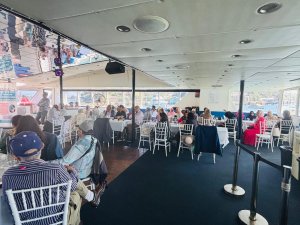

The three-and-a-half-hour cruise departed from Darling Harbour, sailing through the sparkling Sydney waters and passing by many of the Harbour’s most iconic landmarks.
The elderly participants thoroughly enjoyed the scenic views while mingling with colleagues and friends in a relaxed and joyful atmosphere where throughout the cruise, a well-organised stage program kept the audience entertained.
The afternoon began with the recitation of a Naat by Mr Adil Siddiqui. The live musical performances continued as Mr Shahid Malek and Ms Smitha joined Mr Siddiqui in singing popular hits from the 1970’s and 1980’s, filling the air with nostalgia and cheer.
Ms Shadrul also sang a an emotional popular number to conclude the programme.


MCs Ms Mecki Ansari and Mr Zaman Khan introduced the speakers, made important announcements and conducted the show professionally. Ms Sadia Niazi kept the audience engaged and contributed greatly to the smooth running of the event.
An important information session was held. Miss Minal Tanvir, a young researcher, gave an important talk titled “Nurturing the Ageing Mind -A Journey of Faith, Wisdom, and Health”.
Minal, with a background in psychology and ageing research, is currently a PhD candidate at the Centre for Healthy Brain Ageing in the School of Clinical Medicine at the University of New South Wales.
Her research investigates factors influencing daily functioning in older adults, both with and without dementia, using a novel computerised tool. Through this work, she aims to improve the understanding of cognitive and functional decline, enhancing the accuracy of the diagnostic process.
Minal’s presentation examined key determinants of cognitive ageing and dementia risk, drawing on evidence from the Lancet Commission and population-based research. It highlighted modifiable lifestyle factors, including cardiovascular health, physical activity, social engagement, and emotional wellbeing, that can prevent or delay up to 45% of dementia cases.
She discussed how culturally and spiritually grounded approaches can enhance the effectiveness of dementia prevention, particularly within Muslim and South Asian communities. The talk emphasised integrating scientific evidence with faith-based values to promote holistic models of healthy ageing that support cognitive resilience, dignity, and social connection across the lifespan.



Representatives of a couple of aged care providers explained upcoming changes from November 2025. They included Mr Zaheer Alvi of Comfort Care and Mr Tariq Hassan and Ms Rizwana Manzoor of Help and Care.
The changes are happening both to Home Care and Residential Care. Providers can retain up to 2% of RAD (Refundable Accommodation Deposit) for up to 5 years (max 10%) for new residents. DAP (Daily Accommodation Payment) will now be indexed to inflation (CPI). Current residents are protected under existing rules.
A new program has been developed called Support at Home, which will bring together some in-home aged care programs from 1 November 2025.
Under the new Support at Home program, there will be improved access to services, products, equipment, and home modifications to help older people to remain healthy, active and socially connected to their community.
From 1 November 2025, Support at Home will replace the Home Care Packages (HCP) Program and the Short-Term Restorative Care (STRC) Programme. The Commonwealth Home Support program CHSP will become part of the support at home program no earlier than 1st July 2027.
Support at Home will ensure a simpler and more equitable system for older people that helps them to stay at home for longer and offers a wide range of support. Support at Home has 8 classifications for ongoing services, and these are linked to different levels of care.
The more care you need, the higher your classification will be. Each classification has a quarterly budget. The department will confirm the final budget amounts for each classification before Support at Home starts from 1 November 2025.
Mr Zahid Jamil of SAMAA thanked the seniors for their continued enthusiasm and active participation in SAMAA events. He expressed special appreciation for the oldest members on board, including a few nonagenarians (aged 90 and above), including Dr Halima Qureshi and Dr Nurjehan, whose presence was an inspiration to all.


During his address, Mr Jamil highlighted the growing challenges faced by community organisations like SAMAA, noting that government grants have become increasingly competitive, making community support more vital than ever.
He also reminded the audience that SAMAA’s mission extends beyond organising social and cultural activities. “SAMAA has a second, equally important dimension,” he said. “From the very beginning, we have dreamed of building our own aged care facilities, a place our seniors can truly call home, where they can live with dignity, comfort, and cultural familiarity.”
Mr Jamil emphasised that turning this dream into reality requires significant funding, tens of millions of dollars for a full-fledged aged care home, and even a small respite centre would cost around 2–3 million dollars. He urged the community to come together to help realise this vision for the benefit of current and future generations.


Ms Shaista Khan and Mrs Mona Zahid conducted an engaging Bingo game, where the winning participants received prizes.
The event concluded on a high note, with much appreciation from seniors and other attendees who thoroughly enjoyed a delightful and memorable outing.





Comments