


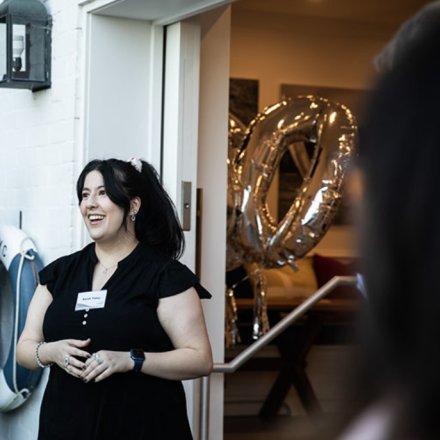
My name is Sarah, I’m in my final year of studying, I work a casual retail job, and I am a regular volunteer at ISRA (Islamic Sciences and Research Academy). I’m also an autistic Muslim woman, this comes with a lot of complications that people don’t always think about.
I enjoy openly talking about topics that are controversial and make people a little uncomfortable (some would say that this is a talent that comes with autism). Despite this discomfort, I think it fosters a climate of honesty, and that’s what we need more than ever.
Unpack is a series that came from a realisation, there are many social issues and topics that we avoid in the Muslim community. We need to have a format where we can discuss these social issues, with a Muslim perspective – some might say we should “unpack” these issues.
The youth team at ISRA came up with the idea that we’ll put together a panel, two young people and two professionals in their respective fields who would talk about topics that are contentious and avoided by our parents and community.
For example: tinder, minder & Halal dating; gender roles; spiritual abuse; losing my Iman; and pornography – all actual Unpacks we have done in this series which you can find on the ISRA YouTube channel! Our most recent Unpack was about disability in the Muslim community.
Disability is an area that has received a lot of attention over the years, particularly around a new wave of inclusion prompting a social movement with a slogan coined by activists, “nothing about us, without us”.
However, as Muslims we don’t talk about disability, we avoid it, and have literal structures that are built to exclude disabled people from participating in our religion. Almost all our mosques have huge stairs to enter them and don’t have disabled toilets.
As of writing this, Auburn Gallipoli and Lakemba mosques don’t have a ramp access for disabled or elderly people to enter the Mosque; or disabled toilets for people to use amenities / take wudu safely or even at all. This is just one example of the many barriers to Islamic participation we keep experiencing and seeing.
In my private discussions with people, I find that neurodivergent and disabled Muslims and their carers are often excluded and isolated from these religious spaces. This inspired the idea for an unpack on disability. However, it was important for us to include the perspectives of those who had lived experiences of disability, and to diversify this as much as possible.
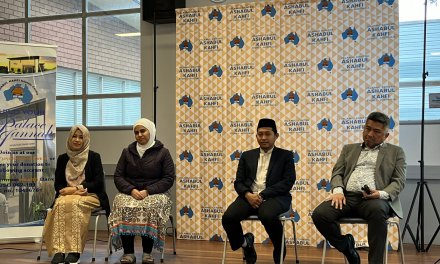
On Saturday 11 March at ISRA Auburn, I spoke about my experiences in terms neurodiversity; Basit Bahram (butterfly boy) spoke about his experiences with a physical disability; Nesibe Takimoglu spoke about her experiences in caring for her son who has special needs; and Nasreen Hanifi facilitated the discussion.
Each of us openly spoke about our complicated relationship with Allah and Islam, and challenges we’d experienced due to ableism and discrimination particularly within Muslim spaces. However, we also spoke about the kindness of strangers, little mercies that give us hope, and how we found solace in Islam.
We got a lot of positive feedback from the event. Disabled Muslims told us that this was the first time that they saw disabled Muslims / carers being represented and telling their story openly. Others sent emails about their own stories of discrimination, and how disappointed they were that their local Mosques and classes were not accessible for disabled people.
Many non-disabled people also told us that this was the first time they’d ever heard about the perspectives of disabled people, and that it opened their eyes to many issues they hadn’t considered before. The event was also streamed on zoom for accessibility purposes.
I would like to see change in the future. Where being “able bodied” doesn’t stop someone from engaging with religious programs, structures, and communities. Where we can hear from more people with these stories and experiences, and where inclusion is considered as a standard, not a second thought because “I didn’t need to consider that before”.
I want disabled Muslims to continue to thrive in all aspects, especially spiritually. It is my hope that these discussions are the first step to make this happen.




Comments